



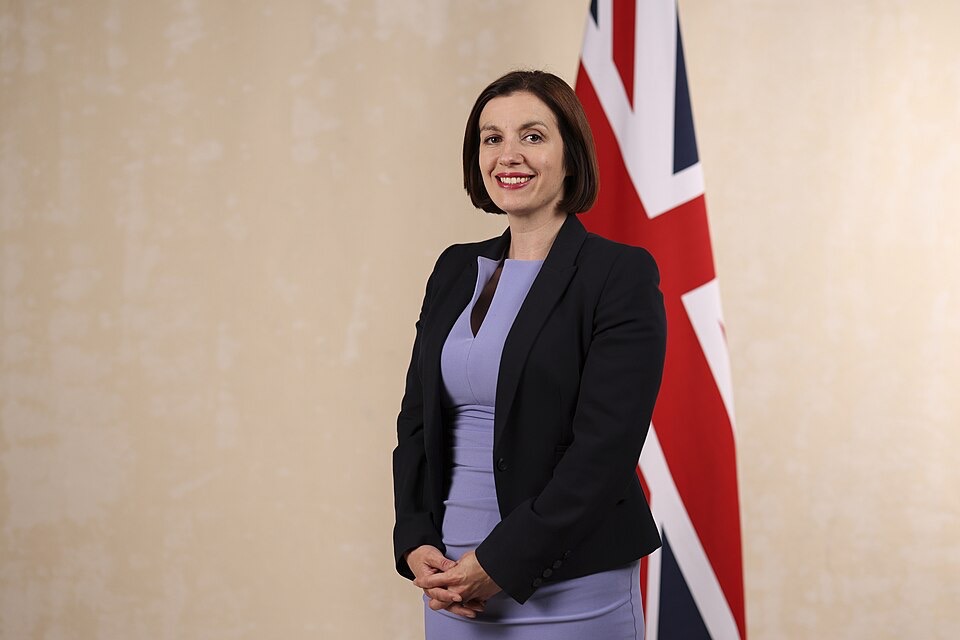
Party chair Bridget Phillipson says Labour will end co-operation with Green groups that cannot assure it they oppose the motion, as the equality watchdog writes to the Greens.
Labour has threatened to end power-sharing arrangements with the Green Party in local government unless Green branches publicly reject their party’s new policy that Zionism is racism. Labour chair Bridget Phillipson announced the ultimatum on Thursday, giving local Green groups seven days to respond. The motion, passed at the Greens’ conference, calls for Israel to be treated like apartheid South Africa and has been branded antisemitic. The Equality and Human Rights Commission has also contacted the Green Party.
Labour’s ultimatum
Ms Phillipson said: “Where local Labour parties currently have an arrangement with the Greens in local government, we expect their Green counterparts to make clear that they reject this position and to call on their national leadership to reconsider the policy.”
She added: “Where they are unable to provide that assurance, Labour will bring any such local arrangement to an end.”
Counting seven days from Thursday 15 October points to Thursday 22 October as the deadline, assuming the period runs from the announcement.
Which councils could be affected
The Financial Times identified 19 councils where Labour and the Greens share power through coalitions or other arrangements. They include Sheffield, Coventry, Lewes, Stafford, Havant, Warwick, Wealden, West Suffolk and Monmouthshire. Some are Labour-led and some Green-led, and the arrangements are not identical: some are formal coalitions, others support agreements or deals involving other parties.
A breakdown would not necessarily force an election. It could produce a minority administration or a different governing arrangement. There is no confirmation that any partnership has yet collapsed.
Southwark Greens have already disowned the national motion, reportedly to preserve their local co-operation with the Liberal Democrats. That suggests local groups can take positions different from the national party, and offers a possible route for some Labour-Green arrangements to survive. Not every affected council has said how its Green representatives will respond.
The equality watchdog steps in
The Equality and Human Rights Commission confirmed on Thursday afternoon that it had written to the Green Party. It received complaints raising concerns under the Equality Act 2010 and has asked for information to assess the policy’s practical implications and potential impact. It acknowledged concerns about the effect on Jewish communities.
This is an initial regulatory step, not a finding that the party has broken the law. No ruling has been announced.
The vote and dissent within the Greens
The motion was passed at the party’s Brighton conference on 4 October by 1,022 votes to 813, or 55.7% to 44.3%. Those in favour represented about 0.4% of the party’s total membership, which has prompted questions about whether the conference voting system reflects the wider membership.
Four of the Greens’ five MPs opposed the position. Former leader Caroline Lucas criticised it, and Ellie Chowns, the party’s Westminster parliamentary leader, warned about extremists and racists influencing the party. The chair of Jewish Greens, Vivien Lichtenstein, said she was considering leaving.
An amendment intended to stop members being pressured, excluded or disciplined over their links with Jewish communal institutions was rejected, which raised concerns among Jewish members. Supporters of the motion say members will not be disciplined merely for expressing Zionist beliefs. No disciplinary action against an individual member has been confirmed.
European Green parties have also objected. The organisation representing them said the policy conflicts with its support for a two-state solution, and a senior German Green politician condemned it.
Polanski’s position
Green leader Zack Polanski did not take part in the 4 October vote because he was campaigning in the Holborn and St Pancras by-election. He said afterwards that he would not have backed the motion without amendments. He has signalled support for reforming the party’s internal decision-making and has proposed giving leaders more control over strategic decisions, following concerns that a small number of activists can set policy for the whole party. He has defended aspects of the motion’s criticism of Zionism while insisting that Jewish members must not be excluded because of their religious or communal affiliations.
On 8 October, Labour’s Sagal Abdi-Wali beat him in the by-election by 12,292 votes to 8,928. The result does not in itself show that the policy caused his defeat.
