



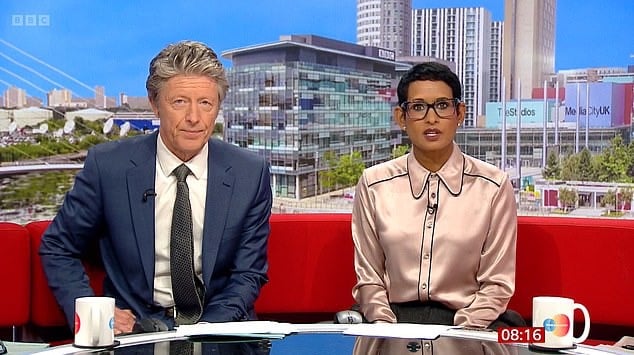
Radio 4’s The World Tonight is to be axed after more than half a century on air, BBC Breakfast will no longer broadcast on Sundays from September, and 550 jobs are to go from the corporation’s news, television and radio teams as the BBC embarks on its most sweeping cost-cutting programme in a generation.
The cuts, revealed to staff by new director-general Matt Brittin in an email on Wednesday, form part of a drive to save £500 million over the next two years. More than a quarter of the planned 1,800 to 2,000 total redundancies will come from editorial and broadcasting operations, with the changes expected to generate around £160 million of the overall target. A further 700 corporate roles are also set to disappear.
The World Tonight, the 45-minute weekday news programme that has been a fixture of Radio 4 since 1970, will be among the first confirmed casualties. The number of presenters on Radio 4’s Today programme will be cut from five to four. Sunday’s BBC Breakfast will end from September, while the production teams behind Sunday with Laura Kuenssberg and Newsnight will merge. TV production at weekends will be shared across the News Channel and BBC One bulletins, and the News Channel itself will shift toward an international focus in an attempt to broaden its reach beyond the UK.
The corporation’s chief news presenter roles — currently held by Clive Myrie, Ben Brown, Sally Bundock and Geeta Guru-Murthy among others, alongside Victoria Derbyshire and Faisal Islam on Newsnight, and Jon Kay and Sally Nugent on Breakfast — are also under review. Between 100 and 150 hours of originated programmes across all commissioning genres will be cut by the end of the 2027-28 financial year, alongside a reduction of between 350 and 400 hours in audio output across stations and genres. Content spending across news and commissioning will be reduced by £80 million. A wider review of the BBC’s television channel and radio network portfolio will follow, though no further details have been confirmed.
Brittin, the former Google executive who became director-general in May after Tim Davie stepped down in November 2025 amid the fallout from a £7.5 billion lawsuit brought by Donald Trump over BBC Panorama coverage, told staff the scale of savings required “tough choices.” He wrote: “We live in very uncertain times. Our audiences rely on us every day to keep them informed, entertained and equipped to make sense of the world. Making savings while fulfilling our mission means a doubly difficult time for everyone.” He committed to reducing the number of senior leaders by at least 10 per cent to make the organisation “simpler and faster,” and will host an all-staff question and answer session next Tuesday at 2pm.
The announcement drew an immediate and stark warning from broadcasting union Bectu. Head of media and entertainment Philippa Childs said the cuts were “expected” but would “still be devastating for the workforce and to the BBC as a whole.” She questioned how the corporation could plan its long-term future while dismantling itself ahead of the Royal Charter renewal process. “I’m not sure how you can make informed decisions about the long-term future of the organisation when it will be in a substantially diminished place at the end of the process than the beginning,” she said. “In an era of fake news and an industry that is becoming more concentrated in the hands of a few multinational corporations, the UK needs a confident, ambitious and sustainably-funded BBC more than ever. The charter renewal must put the BBC’s funding on a secure, long-term pathway or it risks death by a thousand cuts.” She added that the cuts would “have a direct impact on programming and output, and audiences will also notice the effects.”
