



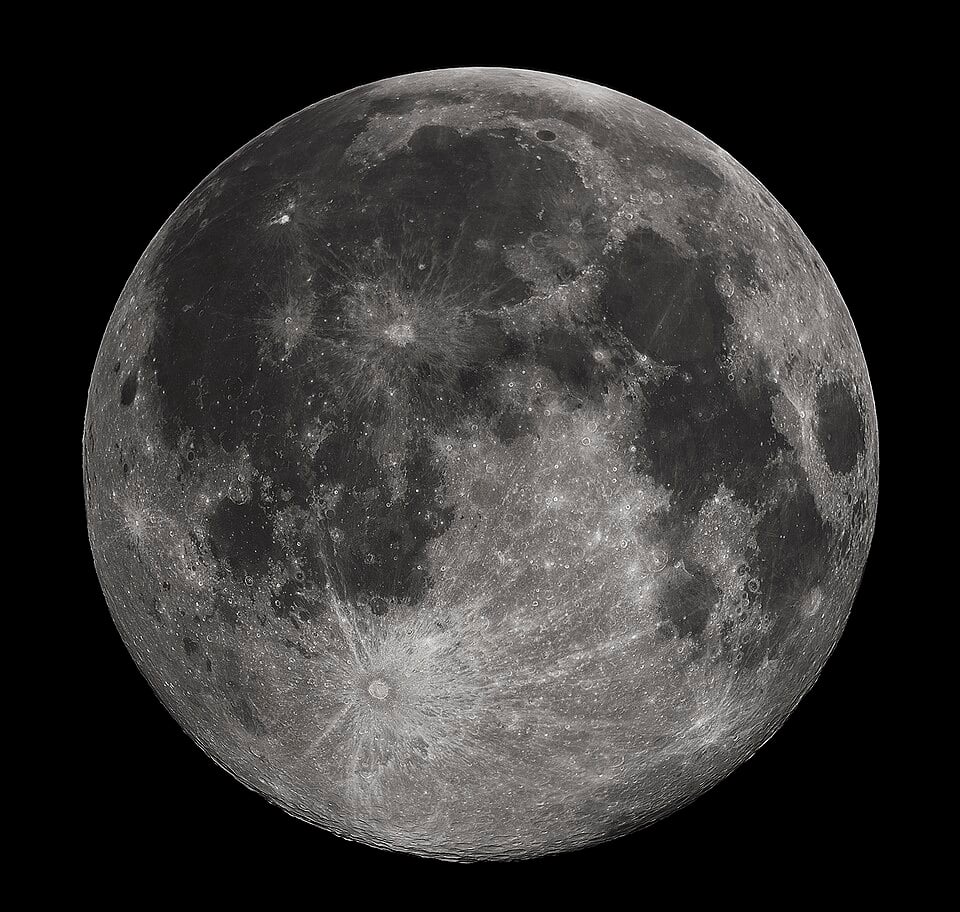
An out-of-control SpaceX rocket stage has crashed into the far side of the Moon with the force of roughly three tonnes of TNT, carving out a new crater and giving scientists a rare chance to study the effects of a known artificial impact.
An out-of-control SpaceX rocket has collided with the Moon, striking the surface with the force of around three tonnes of TNT and leaving behind a freshly formed crater. The 4,000-kilogram spacecraft sent up a cloud of dust on impact, though the collision took place on the Moon’s far side, making it impossible to observe directly from Earth. Researchers had predicted the impact would occur at around 7.35am UK time, or 2.35am eastern time, and while scientists had suggested a faint flash might be visible, amateur astrophotographers monitoring through telescopes reported seeing no sign of the crash.
The impact itself
Because the Moon has no atmosphere to slow incoming objects, collisions of this kind occur at extremely high speeds, producing craters that can remain visible on the lunar surface for millions of years. Scientists estimate the impact created a crater somewhere between 10 and 20 metres, or roughly 33 to 66 feet, across, though the precise size will need to be confirmed once lunar orbiters are able to photograph the site. NASA’s Lunar Reconnaissance Orbiter and other lunar spacecraft are expected to eventually image the location in order to identify the new crater and study the effects of the collision in detail.
How the rocket ended up on a collision course
The rocket stage responsible for the impact came from a Falcon 9 launched by SpaceX in January 2025, which had carried a lunar lander towards the Moon’s surface. Under normal circumstances, SpaceX’s upper stages fall back through Earth’s atmosphere, either burning up or splashing down in the ocean. This particular mission, however, required significantly more thrust than missions closer to Earth, leaving the rocket’s upper stage stranded in space once its job was done. SpaceX had never intended for the stage to strike the Moon. Earlier this year, astronomers realised it was on course to hit the lunar surface, and because the stage had already used up all of its fuel, there was no way to alter its trajectory.
Explaining what had happened, Julianna Scheiman, SpaceX’s director of NASA science and Dragon programmes, told reporters on Monday that “a mixture of solar activity and gravity forces have put it on a path toward the moon.” Astronomers rely on computer models that factor in the gravitational pull of the Earth, Moon and Sun, along with the effect of solar radiation pressure, to track the long-term paths of abandoned spacecraft drifting through deep space, which is how the rocket’s eventual impact came to be predicted with such accuracy. NASA officials were keen to stress that the collision posed no risk whatsoever to Earth.
A rare scientific opportunity
Despite being an accident, the crash has generated genuine excitement among scientists, who see it as an opportunity to better understand how impacts reshape the lunar surface, and to gauge the kind of risks such collisions might one day pose to astronauts living on the Moon. The Moon is regularly struck by natural objects from space, since, unlike Earth, it has no atmosphere to burn up incoming meteoroids before they reach the surface, but such impacts are notoriously difficult to predict and therefore hard to study in close detail. A known, precisely timed impact like this one offers researchers something rarer: a controlled comparison point against which naturally occurring asteroid and meteoroid strikes can be measured. Space agencies have previously carried out deliberate impacts on the Moon for similar scientific reasons, most notably NASA’s LCROSS mission, which intentionally crashed a spacecraft into the lunar surface in 2009 in a successful search for water ice.
A wider debris problem
Experts have also pointed to the incident as a reminder of the growing volume of debris now drifting through space as a result of rocket launches, and the risks such debris could pose in future, including the possibility of colliding with active satellites. Thousands of pieces of human-made debris already orbit the Earth, while a much smaller number of discarded rocket stages continue drifting through deep space following lunar and planetary missions. Most modern rocket launches are now designed to avoid leaving long-lived debris behind, either by safely de-orbiting upper stages or steering them into designated disposal orbits once their mission is complete. Even so, experts have increasingly called for clearer international guidelines governing deep-space debris, arguing that the growing pace of lunar exploration, from both government space agencies and private companies, will require far better management of abandoned spacecraft and rocket hardware in the years ahead. The incident has renewed broader discussion of space sustainability more generally, as concerns grow over how best to track and manage equipment left behind well beyond Earth’s orbit.
