



The Office for Budget Responsibility says soaring energy costs will dent growth, push up inflation and leave living standards in a “grim” place. The Chancellor has only £15bn of headroom against his main fiscal rule.
The UK may not be involved in the US-Iran war, but its economy is feeling the full force of the conflict. The Office for Budget Responsibility (OBR), in its first assessment since the Middle East conflict began, says soaring energy prices will hurt growth in the short term, raise inflation and leave living standards in a “grim” place. Interest rates are also forecast to rise, making borrowing dearer for households and for the Government. Chancellor John Healey said the country faces “real challenges ahead”.
Growth
The OBR named rising energy prices as the biggest near-term risk to the economy. It raised its growth forecast for this year, but cut next year’s sharply, from 1.6% to 1%. Growth is then forecast to rebound in later years.
Mr Healey said: “What we face today are global economic storms. We can’t wish them away. We must choose the course we steer through them.” He said his policies would offer households “breathing space” in the coming months.
Prices
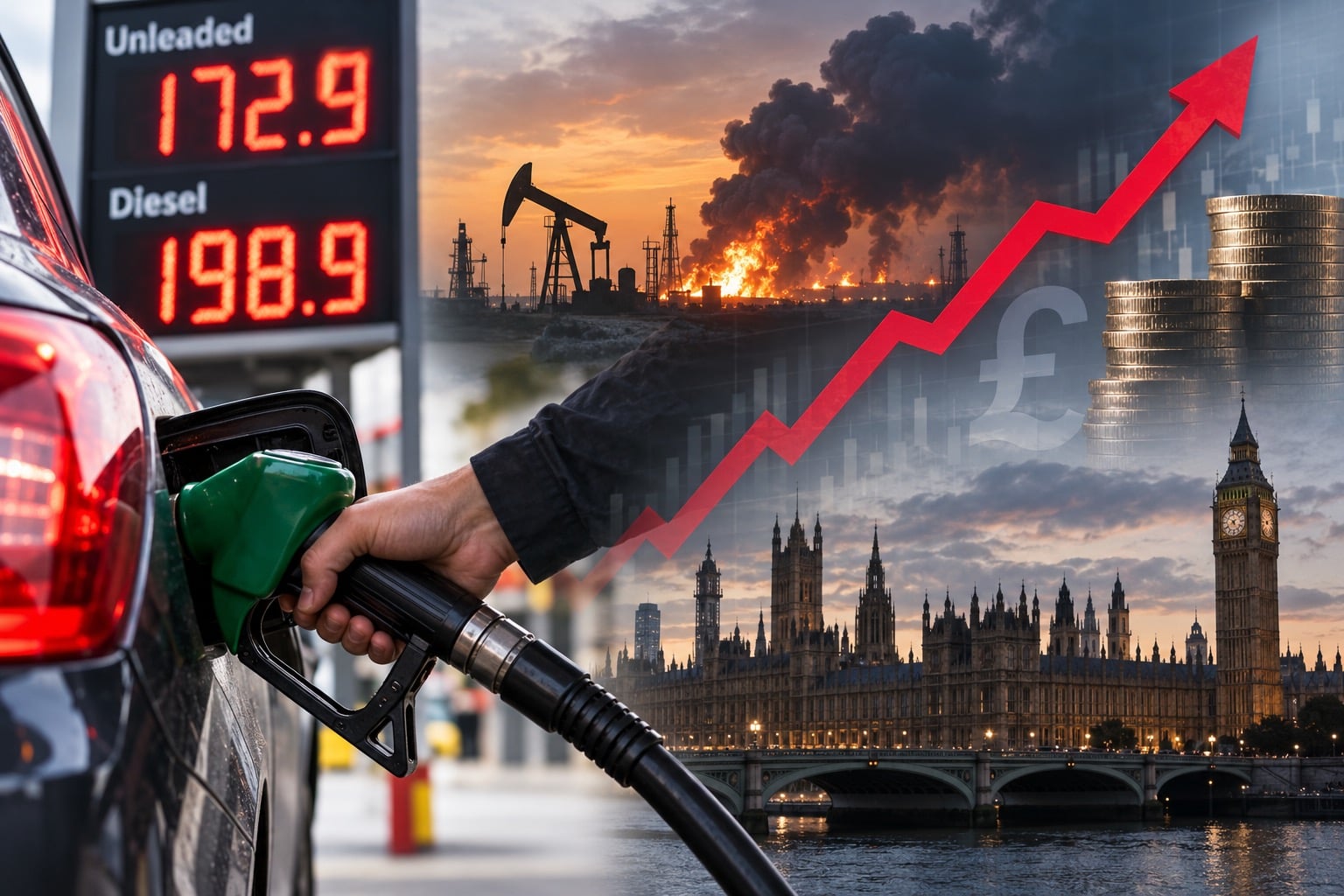
High global oil prices have already hit drivers. Petrol is priced at almost £1.73 a litre on average, and diesel is near £1.99. Fuel costs also feed through to the price of other goods, because lorries and vans carry them and companies pass on higher costs.
The OBR now expects inflation to stay higher for longer than it previously forecast. It sees prices rising faster as higher energy bills work through supply chains to consumers, especially in 2027, when inflation is forecast to peak at 3.8%. It is expected to average 3.4% next year, before falling to the Bank of England’s 2% target towards the end of the decade.
Economists at Pantheon Macroeconomics said the Government’s cost-of-living measures were “small beer given the surge in inflation we expect over the winter”.
Living standards
Real household disposable income, a measure of living standards, is forecast to dip next year as energy bills eat into spending power. It is forecast to grow from 2027, but by less than previously thought. People on lower incomes will be hit harder, because energy takes a larger share of their monthly budgets.
The OBR’s David Miles said: “It’s a pretty grim picture.” He said there had been “virtually no growth” for individuals since before the Covid pandemic. “It’s been a dismal period in British economic history,” he said.
Interest rates and borrowing
The Bank of England is widely expected to raise interest rates next week because of higher inflation in recent months. Rates are currently 3.75%, and the OBR now forecasts they could reach as high as 4.5% in the coming years. It had previously forecast two cuts this year. Higher rates make borrowing more expensive but can boost returns on savings.
Inflation also raises the Government’s borrowing costs, with spending on debt interest set to rise. Government borrowing is forecast to rise every year by more than the OBR previously expected. Higher welfare and pension spending, driven by inflation, will also add to borrowing, though it is forecast to fall as a share of the economy over the next five years.
Forecasts are a best guess. Donald Trump has suggested the war will end after next month’s midterms, but the OBR admitted there remained “significant uncertainty” about its predictions, and the future of the conflict could change inflation expectations.
What the Treasury and the IFS add
According to the Treasury, as set out in the research notes, the Budget leaves £15bn of headroom against the rule that day-to-day spending be covered by revenue in 2029-30. That is £9bn less than in March, and higher borrowing costs, partly linked to the Middle East conflict, account for more than the fall. The Government expects headroom to rise to £22bn in 2030-31, when the target year changes. A cushion of £15bn is modest against a worse economic outlook.
The Institute for Fiscal Studies (IFS) found the Chancellor’s measures add to borrowing by £8bn in 2026-27 and £4bn in 2027-28. It says he has chosen to accept higher borrowing over the next five years, and that borrowing, previously forecast to fall significantly, is now expected to stay broadly flat. It also warns that many departmental budgets are set in cash terms, so higher inflation means the same allocation buys less. The Government’s plans rely on a sharp slowdown in spending growth after this year, so the 2027 Spending Review could matter more for public services than today’s announcements. It would be premature to say specific hospital, school or police budgets have been cut. The IFS also says the Budget gives little detail on how the Government will reach its target of spending 3% of GDP on defence by 2030, and questions whether reprioritised budgets and investment in defence firms will be enough.
Taxes and household support
- Self Assessment: From April 2029, people who already make payments on account will pay smaller sums more often. The Treasury expects this to bring forward £1.36bn in 2029-30, £1.61bn in 2030-31 and £1.82bn in 2031-32. These are changes in timing, not extra tax owed, though they could affect self-employed people’s cash flow.
- HMRC powers: From July 2029, HMRC would be able to collect some smaller debts by regular instalments taken directly from bank accounts. The Treasury says it will apply to people and firms who can pay but repeatedly fail to. Safeguards and a code of practice are still being developed. The Government will also recruit another 670 tax compliance officers by 2029-30.
- Gas standing charges: The Treasury has asked Ofgem to abolish them, aiming for the end of 2027 or soon after. They average about £108 a year, but the costs would be recovered through higher unit prices, so not every household would save £108. Low users could gain, and heavier users might pay more. Reforms to electricity standing charges are due in 2027.
- Energy payment: A £100 Household Energy Payment is due from January 2027 for homes in council tax bands A to D in England, up to 20 million households, covering an estimated 83% of fuel-stressed households. About 17% would not qualify under the main criteria. Another £100m goes to local authorities for more targeted help, and devolved governments will get funding to set their own arrangements.
