



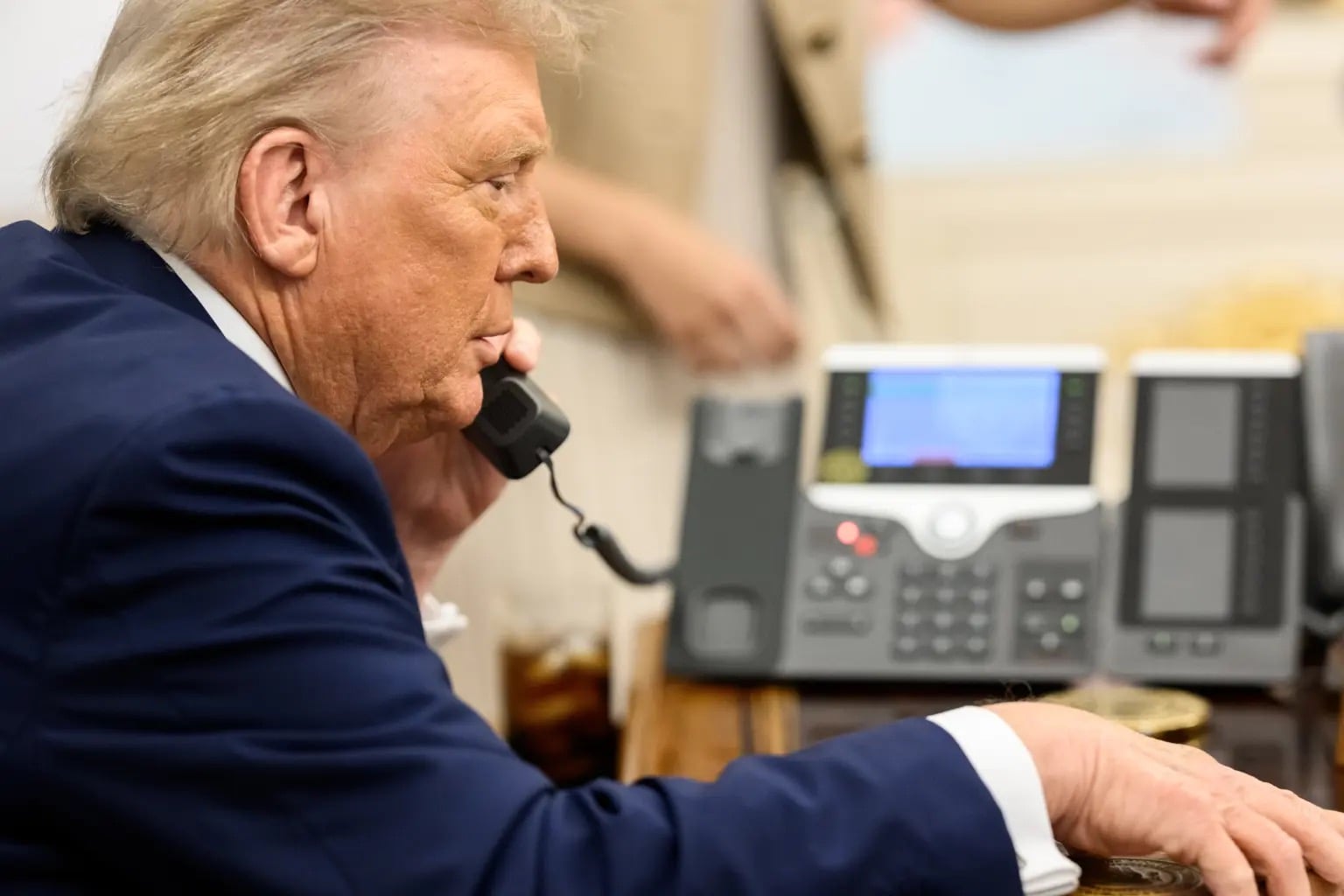
Ynet and Yedioth Ahronoth say the two leaders clashed in a weekend phone call over whether to restart the war. Netanyahu’s office has dismissed the reports as “fake news”.
President Donald Trump and Israeli Prime Minister Benjamin Netanyahu reportedly had a heated phone call over the weekend about the future of the war with Iran, according to Israeli media. Ynet and the newspaper Yedioth Ahronoth reported that Mr Netanyahu repeatedly pressed for hostilities to resume, while Mr Trump insisted on giving the diplomatic track a chance. Sources told both outlets the call descended into “a shouting match from hell”. Mr Netanyahu’s office has denied that characterisation. A senior Israeli official confirmed that a call took place but said no clash occurred.
What the reports say
According to the two outlets, Mr Trump stuck to the diplomatic approach so that peace talks with Iran could progress. The prime minister’s office dismissed the reports as “fake news”.
It is not the first time the two men have been reported to clash over the conflict. They have a history of heated calls, including several in June, when Mr Trump told The Post he had called Mr Netanyahu “f–king crazy” during one conversation. The latest reports came days after the Financial Times reported that Mr Netanyahu was calling the president every day to urge him to resume all-out war.
Netanyahu’s position
Mr Netanyahu has argued that the US must restart strikes on Iran and push for regime change. He lost seats in Israel’s general election in October, and his position as the country’s longest-serving prime minister is in the balance. Addressing the 26th Knesset on Tuesday, he said: “Iran is working to renew the nuclear threat. The only way to permanently remove this existential threat is by toppling the ayatollah regime.”
Mr Trump has preferred to let America’s economic pressure campaign run its course in the hope of forcing concessions from Tehran. Asked in his “60 Minutes” interview on Sunday whether he would restart the war, he said he did not think “there’s any reason to”.
Reported pressure on Netanyahu at home
The Times of Israel, citing Channel 12, reported that Israel Defense Forces Chief of Staff Lt Gen Eyal Zamir had again opposed unspecified military action against Iran that Mr Netanyahu wanted to pursue. Defence officials were reportedly concerned that renewed action could provoke escalation during Israel’s sensitive post-election transition. The specific objectives of the proposed operation were not disclosed. Channel 12 said Mr Zamir had resisted another proposed action before the 27 October election, amid fears that it could disrupt voting.
On 11 November, rival politician Gadi Eisenkot sent the caretaker prime minister a letter urging him not to deploy security forces unless there is an immediate threat that cannot wait for a new government. The letter did not name Iran, but followed the reports of disagreement. Mr Eisenkot warned that military decisions taken during the transition could leave security chiefs in a difficult constitutional position, especially if officers felt an operation lacked urgency.
Mr Netanyahu’s office responded that all government decisions had been made for security reasons and coordinated with the security establishment. It accused Mr Eisenkot of using sensitive security matters for political ends. Mr Eisenkot has asked Attorney General Gali Baharav-Miara to ensure he receives regular classified security briefings during the transition, and to oversee proper authorisation of military operations. No ruling from the attorney general has been reported.
Mr Eisenkot received recommendations from 67 of Israel’s 120 lawmakers in presidential consultations, against 46 for Mr Netanyahu, according to The Times of Israel on 6 November. These are recommendations, not an agreed coalition. Mr Netanyahu remains responsible for military decisions until a new government takes office. Asked about Mr Eisenkot on 8 November, Mr Trump said the two men were “very similar in terms of their policy”, and that he had not followed the coalition developments closely.
The state of the talks
Iran disputes Washington’s description of the diplomacy. Mohsen Rezaei, a senior Iranian security official, told Al-Mayadeen television on 10 November that no negotiations were under way between Tehran and Washington, Reuters reported. He said Iran wanted a clear response to demands tied to a June interim arrangement, and that Tehran insists seven conditions be met before formal talks resume or the Strait of Hormuz fully reopens.
A senior Iranian official told Reuters on 5 November that a nuclear proposal had been delivered to Washington through Qatar and was being reviewed, without disclosing its contents. Delivering a proposal does not establish that direct negotiations have resumed. According to Reuters, Iran’s demands include removal of US sanctions, release of frozen assets and compensation for war damage, while Washington wants the nuclear programme in the first round of talks. Iranian officials have also ruled out sending enriched nuclear material abroad, The Times of Israel reported.
Israel’s Channel 12 reported that Qatari mediators held three days of talks with Iranian officials in Doha, while staying in contact with Vice President JD Vance and Mr Trump’s envoys Steve Witkoff and Jared Kushner. It said Mr Netanyahu feared a deal could mean significant concessions to Iran and ease pressure on Tehran. Qatar’s prime minister, Sheikh Mohammed bin Abdulrahman Al Thani, made an unscheduled appearance at G7 talks in Paris on 10 November, Reuters reported. He briefed European diplomats after meeting Mr Trump, reportedly voicing cautious optimism about averting renewed fighting.
Diplomats briefed on the G7 talks told Reuters that Secretary of State Marco Rubio, Stephen Miller and Treasury Secretary Scott Bessent favour keeping up heavy economic pressure, while Mr Vance is reported to favour a deal. These are attributed accounts of internal positions, not government announcements. Four diplomats confirmed to Reuters that Mr Rubio told foreign ministers that Washington would impose further severe economic costs rather than immediately return to large-scale military action. He reportedly said sanctions were limiting Iran’s ability to fund allied armed groups, and that the US had options other than renewed war or accepting Iran’s demands. The US naval blockade remains in force, according to the Associated Press.
Missiles and the Strait of Hormuz
Citing Bloomberg, The Times of Israel reported on 11 November that an unnamed Western official estimated Iran still has about 1,700 ballistic missiles. The same assessment put production at about 50 a month, roughly half the pre-war rate. This is an intelligence estimate and not an independently verified inventory. Iran’s Revolutionary Guards released material showing what they described as a new underground missile complex, whose capabilities have not been verified.
A Reuters investigation published on 11 November found 37 vessels were attacked in October, a wartime high, and recorded 130 maritime incidents during the conflict. It said at least 25 seafarers have been killed, according to the International Maritime Organization’s tally. Liquefied natural gas traffic reached its highest level since the war began, with 31 tankers leaving in October, though Qatar’s overall LNG traffic remains far below pre-war levels. Three sources told Reuters that Iranian forces attacked navigation systems on Didamar island, off Oman, on 11 November. Reuters could not confirm the damage, and maritime specialists said alternative systems could limit disruption to ships. Reuters also reported that oil from a damaged tanker washed ashore in the United Arab Emirates, closing beaches and threatening a desalination plant.
