



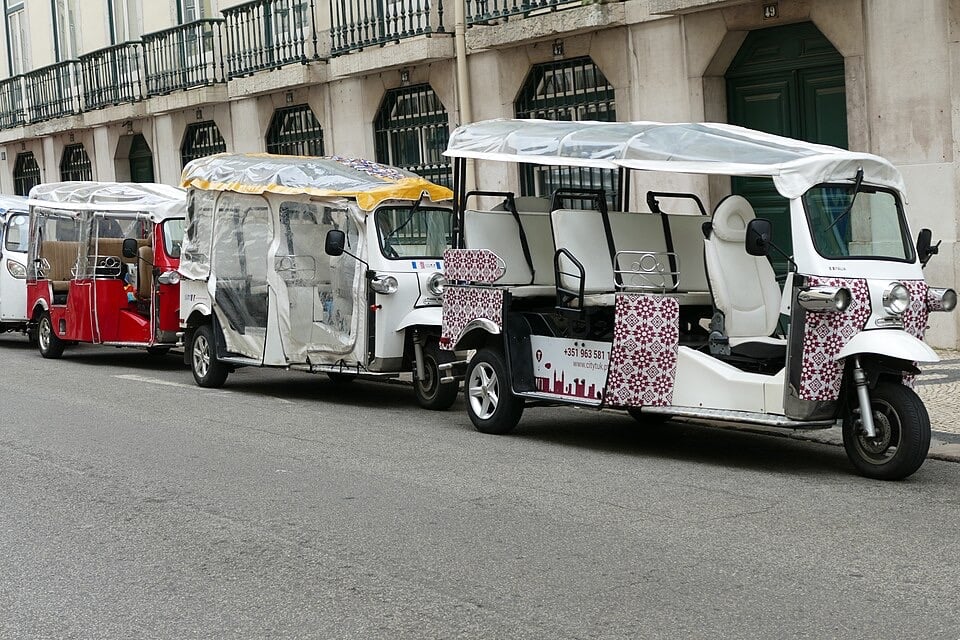
Prince William is set to reveal Indian electric vehicle manufacturer Mahindra as one of the first finalists for his Earthshot Prize, recognising the rapid rise of battery-powered autorickshaws that are already transforming urban transport and air quality across India.
Prince William is set to announce the manufacturers of electric tuk tuks as among the first finalists for his Earthshot Prize. Mahindra, India’s largest maker of electric autorickshaws, is one of 15 finalists shortlisted for the award, with the remaining names due to be announced next Friday. The five eventual winners will be revealed in Mumbai in November, each receiving £1 million to help scale their environmental solutions.
Why tuk tuks matter
Tuk tuks are a common sight across Asia, with an estimated ten million on the streets of India alone, prized for their low running costs and ability to navigate crowded city streets. However, the traditional petrol and diesel versions of these vehicles have long been notorious contributors to poor air quality in densely populated areas, producing high levels of smog.
That picture is now changing rapidly with the rise of electric tuk tuks, powered by a battery mounted beneath the seat. The shift has taken hold at remarkable speed: in 2025, more than 68% of new three-wheelers sold in India were electric, making the sector one of the fastest-moving parts of the country’s wider EV transition. In some cities, the change has gone even further; in Lucknow, around 80% of newly sold three-wheelers are now electric, showing the shift has moved well beyond a small pilot scheme to become the standard choice in some major urban markets.
What Prince William said
Prince William, who himself drives an electric Audi, praised Mahindra’s contribution, describing the manufacturer as a “great example” of everything the Earthshot Prize represents. The prize’s stated mission is to “find, celebrate and scale solutions to repair the planet.”
The vehicle behind the nomination
At the centre of the recognition is Mahindra’s Treo electric autorickshaw, which costs around £2,500. That relatively low price point has been central to the vehicle’s rapid uptake among Indian drivers, for whom affordability plays a major role in adoption decisions.
Beyond the upfront cost, electric tuk tuks also offer significantly lower running costs than their petrol or diesel equivalents, a particularly important factor given that many Indian three-wheeler drivers operate as independent or small-business owners, for whom fuel expenses represent a substantial part of their daily outgoings.
A measurable environmental impact
Mahindra’s electric three-wheelers are estimated to have already prevented approximately 180,000 tonnes of CO2 emissions, giving Prince William’s recognition of the company a concrete, measurable impact rather than simply acknowledging a promising new technology.
The environmental case is closely tied to a public health one. India’s urban air pollution problem remains severe, with recent estimates suggesting more than two million premature deaths annually in the country are attributable to air pollution. Replacing large numbers of small petrol and diesel vehicles with electric alternatives therefore carries a significant potential public health benefit, in addition to reducing greenhouse gas emissions.
The compact size of three-wheelers also gives them a practical advantage over cars and buses in India’s densely populated cities: they can navigate narrow streets, carry several passengers, operate cheaply, and require considerably less road space than conventional vehicles. This makes electrifying an already widely used form of transport potentially more straightforward than encouraging a mass shift from private cars to entirely new modes of travel.
Mahindra’s wider ambitions
Mahindra’s plans extend well beyond India’s domestic market. The company has set a target of putting approximately one million electric vehicles on the road by 2031, with ambitions to expand into other Asian markets, as well as Africa and Brazil, giving its Earthshot nomination significance that reaches beyond India’s own transport network.
Why Mumbai and India matter to Earthshot
This year’s Earthshot ceremony marks the first time the prize has been awarded in India, with the event set to take place in Mumbai in November 2026. The 2026 prize will showcase 15 finalists in total, with five eventual winners each receiving £1 million. According to the Earthshot organisation, India has already produced seven finalists across the prize’s history, including four previous winners, more than any other country.
Prince William has described India as one of the world’s most important forces for climate and nature, and the choice of Mumbai as host city was not purely ceremonial. The Earthshot organisation says it selected the city because India is demonstrating that economic development and environmental progress can occur simultaneously, a theme that makes the electric tuk tuk finalist particularly fitting, combining climate technology with a product built for ordinary working people rather than a luxury market.
What finalist status means for Mahindra
Being named an Earthshot finalist offers Mahindra considerably more than publicity. Finalists receive tailored support and access to investors, businesses and other organisations designed to help them scale their solutions further. While the five eventual winners each receive the £1 million prize, the wider finalist network is intended to help the remaining ten solutions attract investment and expand internationally.
A different kind of EV story
One of the more striking aspects of Mahindra’s nomination is that it reflects an electric vehicle transition not led by premium products such as Teslas, but by small commercial vehicles used daily by millions of ordinary people. Because these vehicles are used intensively and often operate throughout the day, their electrification could ultimately have a greater practical impact on urban emissions than the spread of premium electric cars.
