



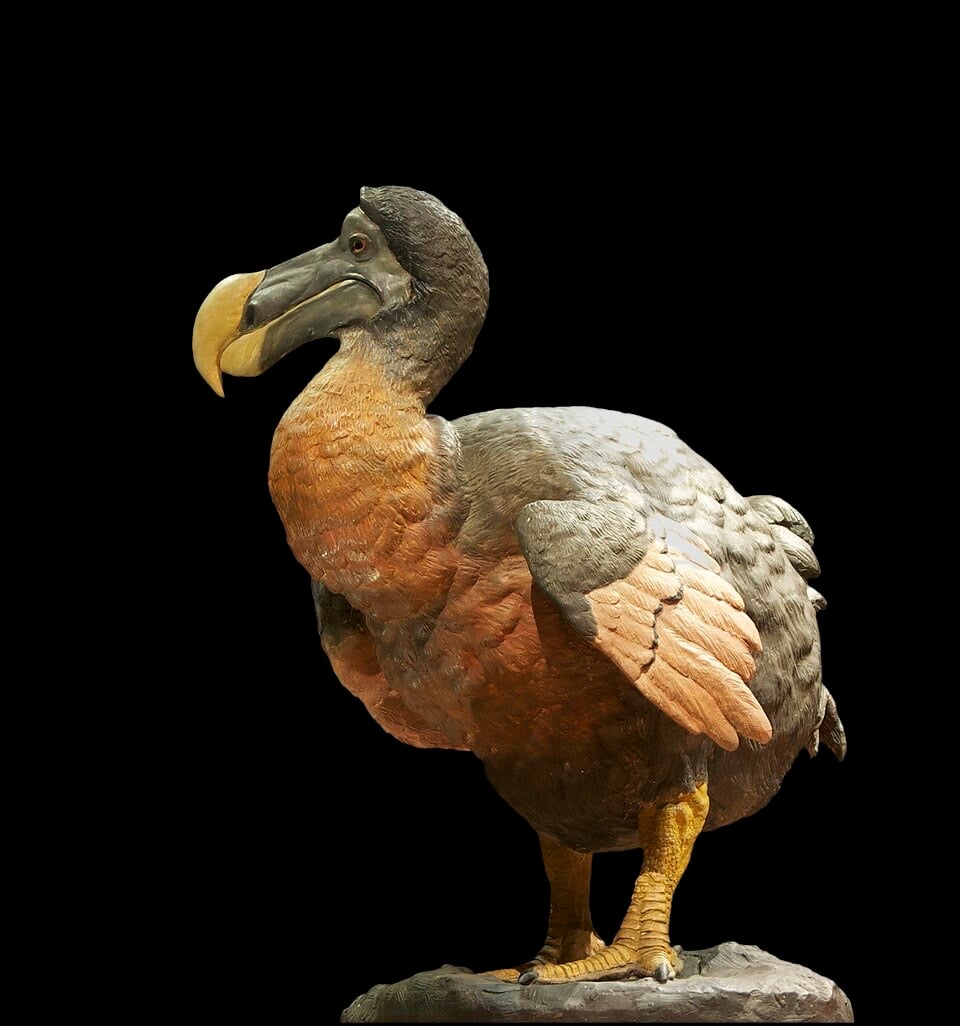
The US biotech firm’s new platform has produced a shortlist of DNA targets that could be tested in the dodo’s closest living relative, though no living dodo has been recreated.
Researchers at Colossal Biosciences say they have used artificial intelligence to identify more than 2,300 pieces of regulatory DNA linked to the dodo’s characteristic skull and beak. The company describes it as a major step in its effort to bring the extinct bird back. The findings give scientists a genetic roadmap for recreating some of the dodo’s recognisable features in the Nicobar pigeon, its closest living relative. The researchers stress that the results do not yet prove the genetic switches caused those traits.
What the AI found
Unlike ordinary genes, which carry the instructions for building an animal, regulatory DNA acts as a set of switches. It controls when and where those instructions are activated during development.
The company’s new AI system, called GenoMorph, analysed genetic information from living birds and compared it with detailed measurements of their skulls and beaks. The team built what it calls an avian regulatory atlas, using hundreds of samples from chickens, quail, ducks and pigeons across several stages of embryonic development. It combined this with scans and genome data from more than 70 bird species, including the Nicobar pigeon.
The system flagged 653 candidate regulatory elements linked to beak size and a further 1,698 linked to beak thickness and breadth, a total of 2,351. These are predictions based on relationships between DNA and physical traits in living birds. They are not necessarily unique to the dodo, and some may affect several developmental processes. A statistical association does not show that editing a sequence will produce the expected change. Experimental testing is needed, and the research notes say it was not possible to verify whether the findings have been peer reviewed.
Colossal’s explanation
Ben Lamm, Colossal’s chief executive and co-founder, said: “De-extinction is as much a data problem as a biology problem. Because so few dodo genomes survive, we cannot rely on the population-level comparisons available for many living species.”
He added: “Our platform provides another path – it learns how regulatory DNA shapes living birds, then identifies the genetic switches that may have contributed to the dodo’s distinctive anatomy. This is more than a solution for the dodo. It provides a repeatable approach for extinct species whose genomic records are similarly limited.”
The shortlist of targets can now be tested and potentially edited into living birds. Colossal has also expanded its colony of Nicobar pigeons in Texas to 36 birds. It says it has developed a new gene-editing delivery system able to insert DNA, RNA and CRISPR-based tools into developing bird embryos. The company says these advances provide the technological foundation to eventually recreate key traits of the dodo.
The route to a living bird
In September 2025, Colossal announced that it had grown pigeon primordial germ cells, which go on to form sperm or eggs, in the laboratory. It also developed genetically modified chickens that do not produce their own germ cells. The proposed process involves taking reproductive precursor cells from Nicobar pigeons, editing them to add dodo-like characteristics, and transferring them into prepared chicken embryos. The resulting surrogate birds would produce eggs carrying the modified genetic material. Colossal has not yet shown the whole process by producing a living dodo-like bird.
Reuters reported that Colossal says its analysis of the dodo genome is about 95% complete. DNA from extinct animals is often fragmented or damaged, so reconstructing most of a genome does not mean every relevant sequence has been recovered or understood.
Timescale and caveats
In September 2025, the company outlined a timeframe of five to seven years for producing a dodo-like bird, which would put the target at roughly 2030 to 2032. Reuters reported that Colossal has not announced a hatching date linked to the latest discovery. The earlier timeframe is a company ambition, not a confirmed scientific deadline.
The Nicobar pigeon is a relative of the dodo and not a miniature version. The two differ substantially in size, anatomy, behaviour and ecology, and recreating a dodo-like beak would be only one part of a much larger challenge. A review in Nature Biotechnology notes that a bird made by editing Nicobar pigeon DNA could reproduce important dodo characteristics without having the original species’ exact genome, developmental history or behaviour. The distinction is between restoring selected extinct traits and genuinely recreating a species.
Funding and Mauritius
Colossal announced $200m of funding in January 2025 for its wider de-extinction work, which includes the woolly mammoth and the thylacine as well as the dodo. In September 2025 it announced a further $120m, taking its reported valuation to $10.3bn. Those figures concern the whole company, not spending on the dodo.
The company is working with Mauritian scientists and conservation organisations on how a dodo-like bird might eventually be reintroduced to Mauritius. The plans include restoring native habitat, dealing with invasive species and considering how a population might survive and reproduce, as well as the birds’ possible ecological role in seed dispersal. The dodo died out on Mauritius in the 17th century after human settlement and the arrival of animals that damaged its habitat. Even if scientists produce an edited bird, building a self-sustaining population would be a separate challenge.
