



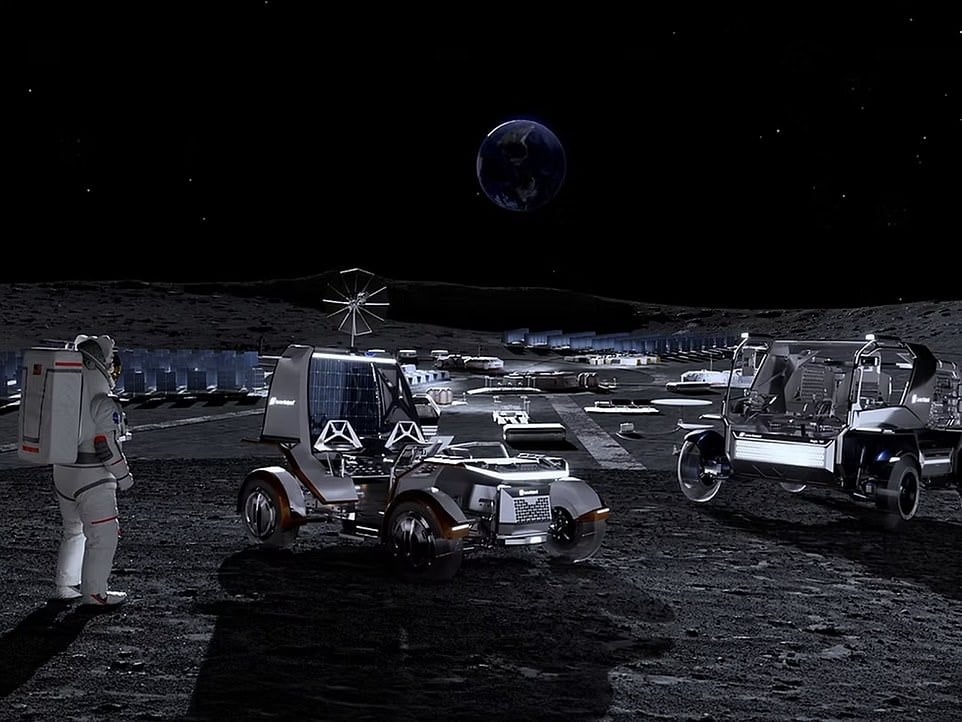
NASA has awarded nearly $440 million in contracts to two companies to build crewed electric rovers for the Moon — the centrepiece of a sweeping nearly $1 billion investment in lunar infrastructure designed to establish a permanent American presence on the Moon’s south pole by the end of the decade.
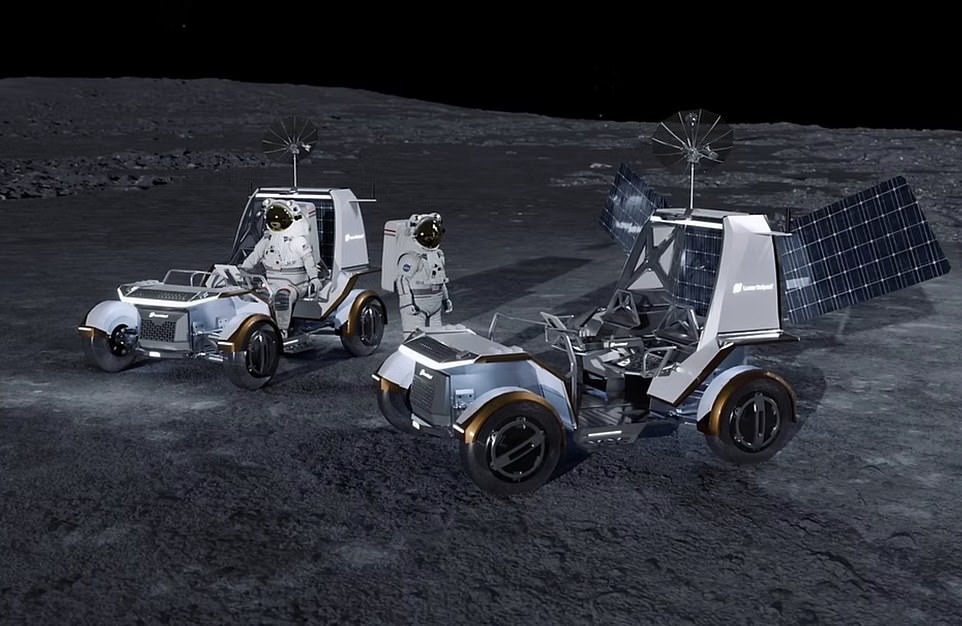
Astrolab has been awarded $219 million for its Crewed Lunar Vehicle, known as the CLV-1, while Lunar Outpost has received $220 million for its Pegasus rover — a lighter, mission-ready vehicle evolved from its earlier Eagle design. Both rovers are crewed electric vehicles capable of carrying two astronauts across the lunar surface, weighing approximately one tonne each, travelling at speeds of up to 6mph and capable of climbing slopes as steep as 20 degrees. Crucially, both can also be operated autonomously or remotely controlled from Earth — allowing them to arrive on the surface before astronauts and meet crews at their landing sites.
NASA Administrator Jared Isaacman announced the contracts at a briefing at NASA headquarters in Washington, describing the Moon Base as “America’s and humanity’s first outpost on another celestial world.” The announcement follows the successful Artemis II crewed lunar flyby completed on 10 April 2026, which brought four astronauts within 695,000 miles of the Moon’s surface for the first time in more than 50 years — a mission Isaacman described as “the opening act.”
NASA has also awarded Blue Origin up to $468 million to provide two Blue Moon Mark 1 landing missions to deliver the rovers to the lunar surface, with both vehicles targeted for delivery before the Artemis IV crewed landing, currently scheduled for early 2028.
The agency is focusing heavily on the Moon’s south pole, where scientists believe vast deposits of water ice in permanently shadowed craters could eventually be converted into drinking water, breathable oxygen and rocket fuel for deeper space missions. Moon Base Programme Executive Carlos García-Galán described a vision covering “hundreds of square miles with different assets, all building up to the objective of permanent lunar presence on the Moon.”
Firefly Aerospace has also been awarded a $75 million subcontract to deploy a series of robotic “hopper” drones as part of the MoonFall mission — a technology demonstration in 2028 in which its Elytra Dark spacecraft will fly to the Moon over 45 days, enter orbit and deploy four hopper drones approximately 50 kilometres above the south pole to capture high-resolution imagery across the entire mission area.
The approach marks a significant shift in strategy. Originally, NASA had planned to build a single advanced rover designed to last a decade on the lunar surface. Under Isaacman, the agency scaled back requirements in favour of faster, cheaper and more flexible commercial designs — a philosophy that has accelerated timelines considerably.
For the companies involved, the programme offers a dual dividend. General Motors is helping develop space-rated battery systems for the Pegasus rover, while Goodyear is supplying tyres engineered to withstand the Moon’s extreme conditions. The work is expected to drive improvements in battery performance for electric vehicles on Earth — particularly in extreme cold, where EV range typically drops sharply. “Helping astronauts once again travel safely across the lunar surface will be a proud moment for our team and our country,” said GM Defense President Stephen duMont.
When asked whether the Moon Base perimeter would function as a keep-out zone for nations not party to the Artemis Accords, Isaacman said it underlined the importance of reaching the Moon before adversaries — naming China specifically.
