



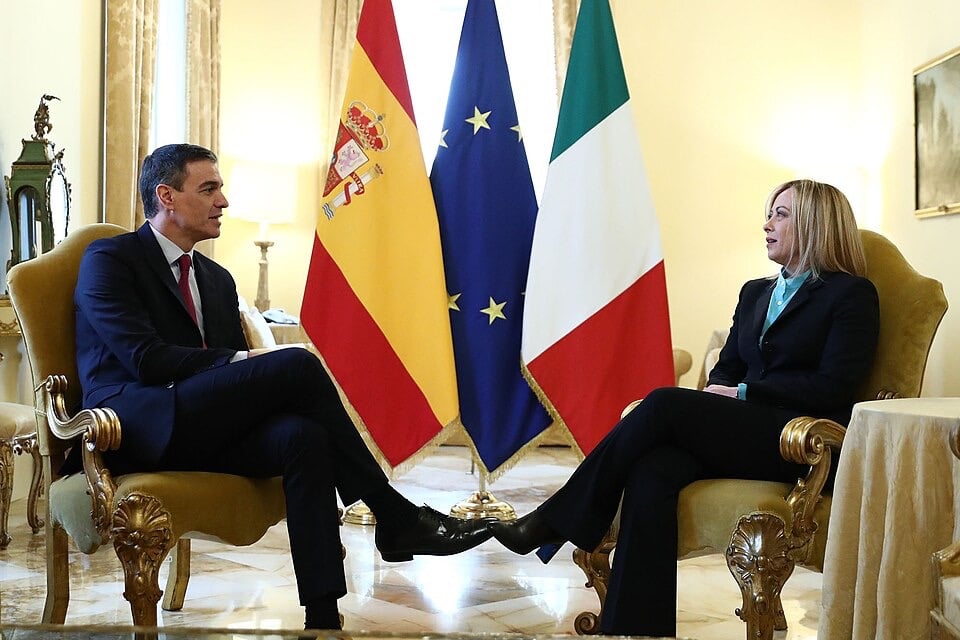
Italy has temporarily reinstated border checks for travellers arriving from Spain after a surge of migrants entered the Spanish enclave of Ceuta from Morocco, prompting Rome to cite security concerns and fears of onward migration across Europe. The move affects air and sea passengers despite both countries belonging to the Schengen free-travel zone and has reignited debate over Europe’s internal borders.
Italy has confirmed it is temporarily suspending aspects of the Schengen free-travel arrangements with Spain following a sharp increase in migrants crossing into the Spanish territory of Ceuta from neighbouring Morocco. The decision means passengers travelling from Spain to Italy by air or sea may now face passport and identity checks that are not normally required under Schengen rules. Italian authorities said the measure is designed to address irregular migration and security concerns while remaining under continuous review.
The Italian Interior Ministry said the temporary controls have been introduced under Article 25 of the Schengen Borders Code, which allows EU member states to restore internal border checks when there is a serious threat to public policy or internal security.
Although Italy and Spain do not share a land border, the decision will affect people travelling between the two countries by ferry and commercial flights.
Temporary border checks introduced
Under the new arrangements, travellers heading from Spain to Italy are being advised to carry a valid passport or national identity card, as transport operators may conduct additional document checks before departure.
Italian officials emphasised that the temporary controls are aimed at tackling irregular migration and disrupting human trafficking networks rather than discouraging tourism or legitimate business travel.
The government said the restrictions will remain in place only for as long as necessary, with migration levels and the wider security situation being monitored before any decision is made on whether to extend or remove the measures.
Cooperation with France strengthened
Alongside the suspension, Italy announced closer coordination with France to tighten oversight along the Franco-Italian border.
According to the Interior Ministry, the two countries have agreed to expand information-sharing and joint monitoring efforts to reduce the risk of migrants moving onwards through Europe after arriving in southern EU states.
The additional cooperation comes amid concerns that migrants who entered Ceuta could continue travelling through several European countries if border controls remain unchanged.
Why Ceuta has become the focus
The latest measures follow reports that thousands of migrants entered Ceuta from Morocco within a short period, triggering concern among several European governments over the potential for secondary migration across the continent.
Ceuta, a Spanish autonomous city located on the North African coast, has long been one of the European Union’s most sensitive external borders because it shares a frontier with Morocco.
Large-scale crossings into the enclave have previously prompted political tensions between Madrid, Rabat and other EU partners over migration management.
Schengen debate returns
Italy’s decision has added fresh momentum to the wider debate over the future of the Schengen Area, Europe’s passport-free travel zone.
While Schengen normally allows unrestricted movement between participating countries, EU legislation permits member states to temporarily restore internal border checks in exceptional circumstances.
Under current EU rules, such measures can generally remain in force for up to six months, although they may be extended in certain cases if the threat that prompted them continues.
Several Schengen countries have reintroduced temporary internal border controls in recent years in response to migration pressures, terrorism concerns and other security challenges, highlighting ongoing tensions between free movement and border security across the European Union.
