



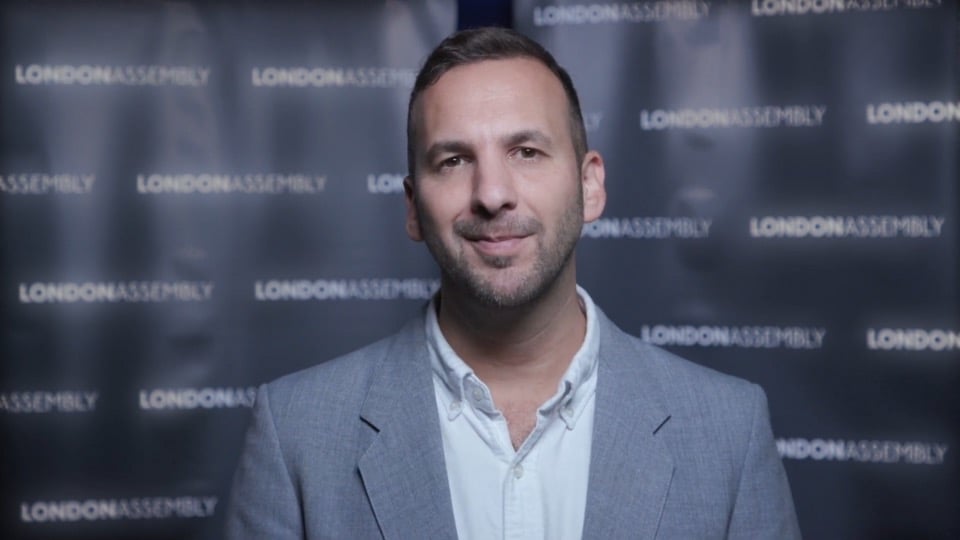
Israel’s Foreign Ministry has banned Green Party leader Zack Polanski from entering the country, days after Green Party members voted to adopt a motion declaring “Zionism is racism” at their Brighton conference, a decision Israeli officials have branded antisemitic.
Green Party leader Zack Polanski has been barred from entering Israel after his party formally adopted a motion stating that “Zionism is racism.” Israel’s Foreign Ministry confirmed the decision in a statement, saying Foreign Minister Gideon Sa’ar had decided “this evening” to bar Polanski, with the move “coordinated with the relevant authorities.” The ban follows a vote at the Green Party’s Brighton conference, where the motion passed despite Polanski himself not taking part in the vote, having been away campaigning in the Holborn and St Pancras by-election.
The motion and the vote
The Green Party formally adopted the “Zionism is racism” motion at its Brighton conference on 4 October, with members voting 1,022 to 813 in favour, making it official party policy. The motion goes further than simply asserting that “Zionism is racism,” describing Zionism as an ethnonationalist political project and expressing support for the creation of a single democratic state across historic Palestine, rather than maintaining Israel as a separate Jewish state. The motion also reaffirms the Green Party’s existing support for an arms embargo on Israel.
Polanski’s position on the motion
Polanski did not vote on the motion, as he was campaigning elsewhere at the time of the Brighton conference. Prior to the vote, he had reportedly raised concerns about parts of the motion and sought amendments, including protections for Jewish Green members who identify as Zionists, as well as a separate amendment intended to keep open the possibility of a future two-state solution. Both amendments were ultimately rejected by conference delegates.
Opposition to the motion also came from senior figures within the party, including former Green Party leaders Caroline Lucas and Adrian Ramsay, along with several sitting Green MPs who voiced their disagreement with the policy.
Israel’s response
Announcing the ban, Israel’s Foreign Ministry said the motion “constitutes a clear antisemitic text” according to the definition of antisemitism used by the International Holocaust Remembrance Alliance, arguing that it “denies the Jewish people’s right to self-determination.” The ministry further claimed that by adopting the motion, the Green Party was “legitimising armed struggle against Israel.” These characterisations reflect the position of the Israeli government rather than any independent legal ruling on the matter.
Division within the Green Party
The vote has exposed a significant internal rift within the Greens. Some Jewish party members and senior figures have expressed concern that the new policy risks alienating Jewish members who personally identify as Zionists. Those who backed the motion have maintained that their opposition is directed specifically at Zionism as a political ideology, rather than at Jewish people as a group.
The issue carries particular sensitivity given that Polanski himself is Jewish and has previously described himself as anti-Zionist, while simultaneously arguing that Jewish party members who identify as Zionists should still be able to participate fully within the Green Party. The controversy surrounding the vote has also led to heightened security arrangements at the party’s conference, reportedly introduced amid concerns over hostility directed at Jewish members and other attendees.
Timing amid live by-election campaign
The Israeli government’s decision to ban Polanski comes just days before the 8 October by-election in Holborn and St Pancras, where he is standing as the Green Party’s candidate. As a result, the party’s newly adopted position on Zionism has been thrust directly into the spotlight in the middle of an active British election campaign.
