



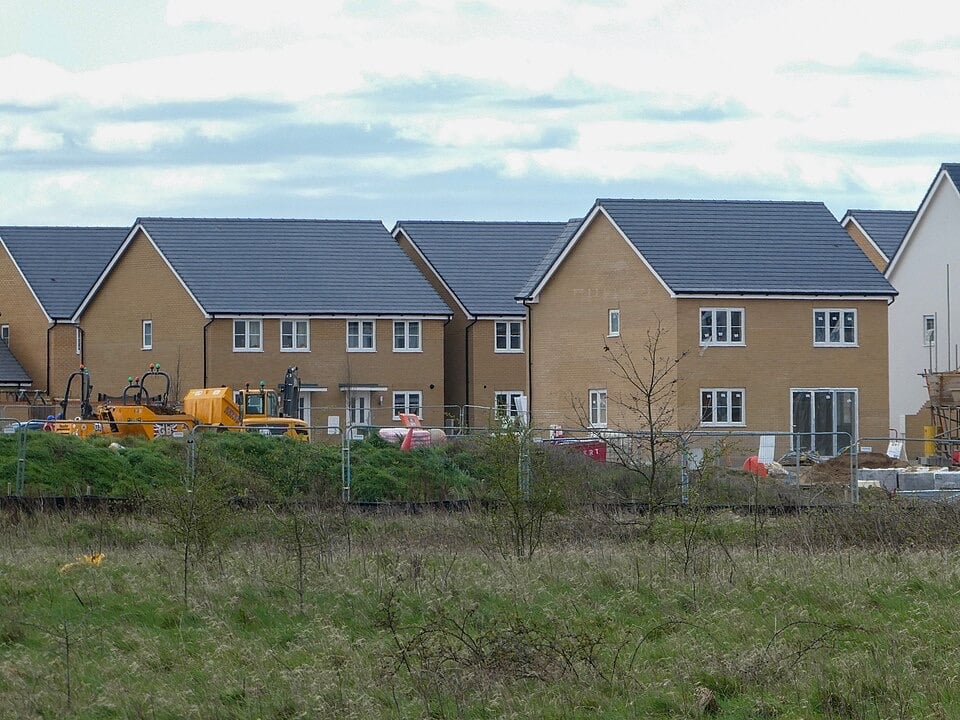
Sales of newly built homes in London have fallen to their lowest level on record, according to property consultancy Molior, with soaring construction costs, the end of Help to Buy and growing concerns over leasehold ownership all combining to drive buyers away from the market.
Sales of new-build homes in London have dropped sharply this year, with just 5,606 sold in the first six months of 2026, according to the latest figures from property consultancy Molior. That figure marks a fall of almost 37% compared with the same period last year, when 8,840 new homes were sold, and represents the lowest first-half sales total since Molior began collecting data. Developers are now sitting on a record 4,629 completed but unsold homes, worth an estimated £3.5 billion, while dozens of building sites across the capital have ground to a halt.
Scale of the slowdown
The decline has been steep and sustained. As recently as 2022, some 20,380 new homes were sold across London in a full year, a figure that puts the current slowdown into sharp relief. Molior described the current level of unsold, newly completed stock as the highest it has ever recorded, with the £3.5 billion in unsold homes adding significant pressure on housebuilders to offer incentives or delay bringing further projects to market.
That pressure appears to already be affecting construction activity. Molior said 56 developments across London have been halted altogether, with sites padlocked and building work paused, leaving 3,913 partially completed homes in limbo. Developers are pausing construction, the consultancy said, until market conditions show signs of improvement.
The total number of homes under construction has also fallen dramatically. There are currently 33,000 private homes being built across the capital. Of these, 20,700 are expected to complete between now and the end of 2027, leaving just 8,750 homes forecast to still be on site by January 2028, alongside whatever new developments begin in the meantime.
Rising costs squeeze developers
Industry sources point to a combination of collapsing buyer demand and steeply rising construction costs as the main drivers of the slowdown. An anonymous construction industry source told This is Money last month that the cost of building a home in London has increased by 75% since 2016. According to the source, the cost of constructing a typical two-bedroom flat of 70 square metres has risen from around £245,000 in 2016 to approximately £430,000 today.
Despite these rising costs, the average value of a London flat has fallen over the same period, according to Land Registry figures, a combination that has squeezed developers’ profit margins even as the price they can charge for finished homes has stagnated or dropped. Higher labour costs, inflation and more expensive building materials have all contributed to the increase in construction costs across the capital.
British buyers all but disappear
Perhaps the starkest sign of the slowdown is the near-total absence of British owner-occupiers from the new-build market. Just 3,220 new-build homes in London were bought by British owner-occupiers, including both first-time buyers and home movers, across the whole of last year. This year, that number is on course to fall further still, with just 1,219 such sales recorded in the first six months of 2026.
The contrast with recent years is significant. In 2022, there were 7,942 new-build sales to British owner-occupiers, of which 4,223 were made through the Help to Buy scheme, which was coming to an end the following year. The scheme had previously supported thousands of first-time buyers into new-build homes, and its withdrawal appears to have removed a significant source of demand from the market.
Higher mortgage interest rates have further reduced affordability for first-time buyers, while stricter lending criteria have made it harder for many households to secure the finance needed to purchase a new-build property.
Investors and landlords also pull back
British owner-occupiers are far from the only group to have retreated from the market. Overseas investors, who have traditionally accounted for a substantial share of London’s new-build sales, have become increasingly cautious in the face of higher borrowing costs, tax changes and weaker investment returns.
Buy-to-let landlords have also been leaving the market in significant numbers, following a series of changes including higher stamp duty, restrictions on mortgage interest tax relief, and tougher energy efficiency requirements for rental properties. Together, these changes have removed another key source of demand for new London apartments.
Leasehold concerns deter buyers
A further factor weighing on the market is a growing reluctance among buyers to purchase leasehold homes, which make up the majority of new-build flats in London. Leasehold properties have been affected in recent years by a number of high-profile issues, including unsafe cladding and rapidly escalating service charge costs.
When polled by estate agent membership body Propertymark, 90% of the 1,200 leaseholders surveyed said they regretted buying their home, a finding that underlines how significantly leasehold concerns may now be shaping buyer decisions across the capital.
Long-term implications
Industry figures have warned that the current slowdown could result in significantly fewer homes being completed over the coming years, making it harder for London to meet its long-term housing targets. London already consistently delivers far fewer new homes each year than housing experts say are needed to meet demand, and a prolonged decline in construction risks worsening the capital’s existing housing shortage once demand eventually recovers.
