



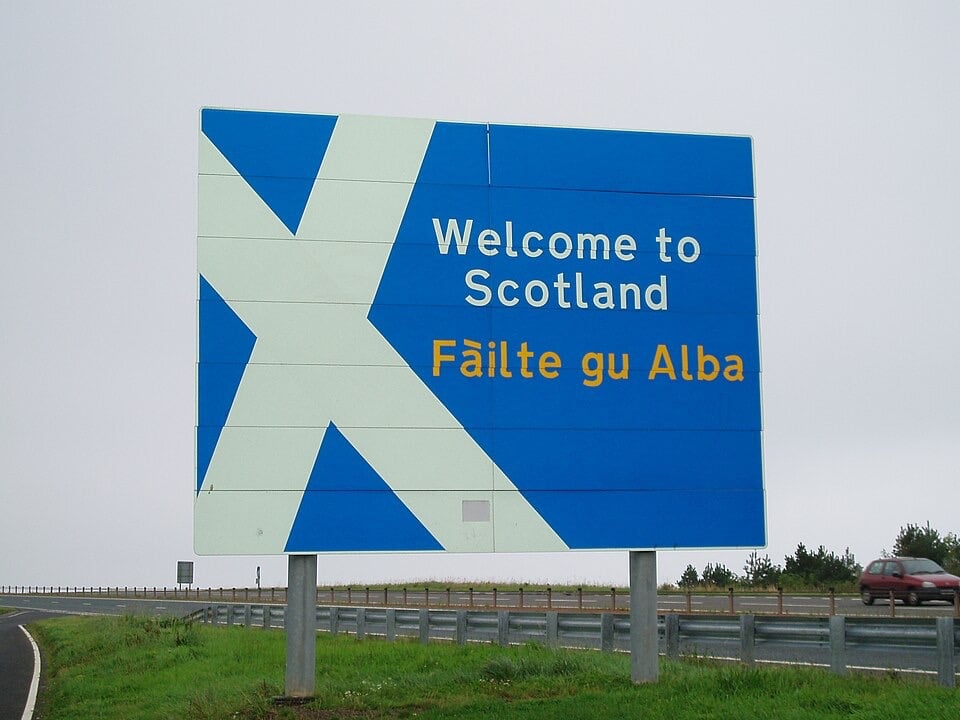
Growing numbers of Scottish workers are choosing to live south of the border and commute into Scotland for work, as tax experts and estate agents point to a widening gap between income tax rates in Scotland and the rest of the UK under the SNP government.
Scottish workers are increasingly opting to live in England while commuting across the border for work, as a widening gap between Scottish and UK-wide income tax rates makes basing a household south of the border financially attractive. Under the Scotland Act, a person’s tax status is determined by where they live rather than where they work, meaning professionals such as consultants or finance workers who reside in towns like Berwick-upon-Tweed can pay English income tax rates on their full salary while still working daily in Scotland. Estate agents in north Northumberland have told the Telegraph, the Times and the Scotsman that tax has become an explicit factor for house buyers, alongside cheaper property prices and convenient rail links to Edinburgh.
How the tax gap has widened
Income tax on earnings has been substantially devolved to Holyrood since 2017–18, and the SNP government has progressively diverged from tax policy in the rest of the UK. By 2024–25, Scotland had six separate income tax bands: a 19% starter rate, 20% basic rate, 21% intermediate rate, a 42% higher rate beginning at £43,663 (compared with 40% from £50,270 in England), a 45% “advanced” rate introduced in 2024 for earnings above £75,000, and a 48% top rate for income above £125,140, compared with 45% in the rest of the UK.
In practical terms, someone earning £50,000 pays roughly £1,500 more in tax annually in Scotland than they would in England, rising to around £3,300 more for someone earning £100,000. Above £125,000, the gap exceeds £5,000 and continues to widen with income. There is also a notable marginal-rate spike affecting Scottish earners between roughly £43,663 and £50,270, who face marginal rates close to 52%, since National Insurance thresholds remain set on a UK-wide basis. Beyond income tax, Scotland’s Land and Buildings Transaction Tax is significantly higher than English stamp duty on more expensive properties, and the Additional Dwelling Supplement has been raised to 8%.
Why living across the border works
Because Scottish taxpayer status depends on residence rather than place of work, professionals such as a consultant at Borders General Hospital or an Edinburgh-based finance worker can legally pay English tax rates on their entire salary simply by buying a home in areas such as Berwick-upon-Tweed, Cornhill-on-Tweed or around Carlisle, while commuting into Scotland for work. This arrangement requires no special scheme or financial structuring; it follows directly from how the devolution settlement was designed. Berwick, which sits just 2.5 miles from the Scottish border and has an East Coast Main Line station roughly 40 minutes from Edinburgh, has become a particularly popular choice for those seeking to reduce their tax bill while keeping their commute short.
What the evidence shows
The picture on taxpayer migration is more complicated than a simple exodus from Scotland. An analysis of taxpayer migration by HMRC and the Scottish Government, published in late 2024, found that Scotland has experienced net in-migration of taxpayers overall since tax divergence began, meaning more people have moved into Scotland than have left. However, among the highest earners, broadly those earning above £100,000, the pattern reversed after 2018–19, with a small net outflow that analysts have linked to the growing tax gap. While the absolute numbers involved are small, amounting to hundreds of people a year at the top end, the fiscal impact is disproportionately significant because the top 1% of Scottish taxpayers contribute a very large share of total income tax revenue.
The Scottish Fiscal Commission has built substantial behavioural responses into its forecasting, estimating that the top and advanced tax rates raise considerably less revenue than a straightforward, static calculation would suggest, with some analysis indicating the 48p top rate raises only tens of millions of pounds net. Both the Institute for Fiscal Studies and the Fraser of Allander Institute have warned that Scotland may be at or near the point where further tax rises would fail to raise additional revenue. Behavioural responses to the tax gap are not limited to relocation, and also include incorporation, since dividend tax remains undevolved and paying oneself through a company can sidestep Scottish income tax rates, as well as increased pension contributions and reduced working hours.
The political debate
The Scottish Government has defended its approach as a form of “social contract,” arguing that higher tax rates fund policies including free university tuition, free prescriptions and the Scottish Child Payment, and that lower earners in Scotland pay slightly less tax than their counterparts in England, though the saving amounts to only around £20 to £28 a year. Critics, including the Scottish Conservatives, business groups such as CBI Scotland and the Scottish Chambers of Commerce, and employers in sectors including finance, law and medicine, argue the growing tax gap is deterring senior professionals from taking up roles in Scotland, with NHS Scotland consultants’ bodies and Edinburgh’s financial sector among the most vocal critics.
The issue featured prominently in the run-up to the May 2026 Holyrood election. By late 2025, the Scottish Government, led by John Swinney with Shona Robison as finance secretary, had signalled that further tax divergence would be paused, with the 2025–26 budget freezing rates while uprating certain thresholds.
