



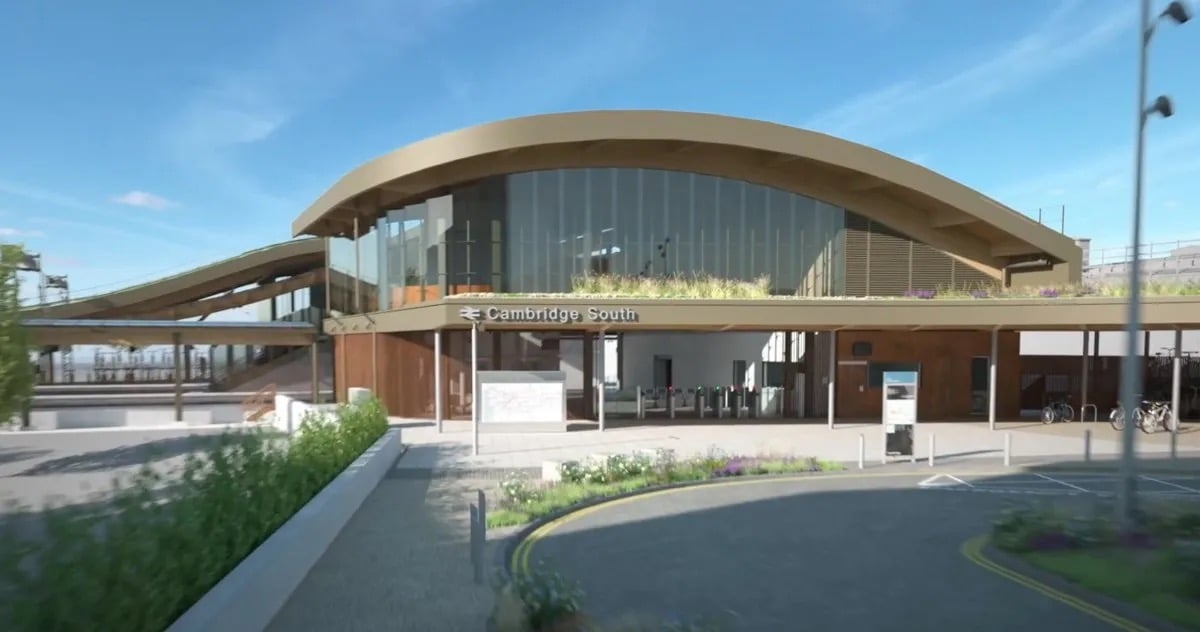
A brand new £183 million train station has opened in Cambridge with just six car parking spaces, sparking immediate anger from locals who say the decision to prioritise cyclists over drivers is a “total missed opportunity” that will push more traffic onto an already congested city centre.
Cambridge South, the city’s third railway station, welcomed its first passengers after three years of construction, offering links to London, Brighton, Birmingham and Stansted Airport. Expected to serve more than one million passengers a year, the station sits next to Cambridge’s busy Biomedical Campus and has been designed with more than 1,000 bicycle parking spaces. For motorists, however, the provision is almost non-existent — just six spaces in total, three of which are reserved for taxis, with all six designated for drop-offs and pick-ups only. Five disabled bays are available for Blue Badge holders. Drivers who overstay face fines of £100.
The lack of car parking has drawn fierce criticism from residents who say the station will be inaccessible to older and less mobile passengers. Retail worker Margaret Perry, 84, told the Daily Mail: “It’s terrible. I think it’s disgusting. People my age need to drive their cars.” Another Cambridge resident described it as “a total missed opportunity,” warning that excluding cars would simply push frustrated drivers into already overcrowded areas elsewhere in the city. “Banning cars just means those that can’t use here will fight their way into places like Cambridge Central, which is a nightmare to get to and park,” they said.
GBR Anglia, representing Greater Anglia, Network Rail and c2c, defended the design as intentional. “The station design was based on the Cambridge Local Plan 2018, focusing on sustainable transport and promoting modal shift to access the station, and takes account of its position in Cambridge’s Green Belt,” a spokesperson said, adding that the site’s connections to the local cycle network and the guided busway system provided passengers with park-and-ride and city centre alternatives.
Peter Denton, chairman of Cambridge Biomedical Campus, offered a warmer reception, describing the station as “transformational” for the campus and wider region. “Cambridge South will deliver long-term growth and have an immediate impact for hospital visits and those seeking jobs and career opportunities within the world-leading life sciences, health, research and education organisations,” he said.
