



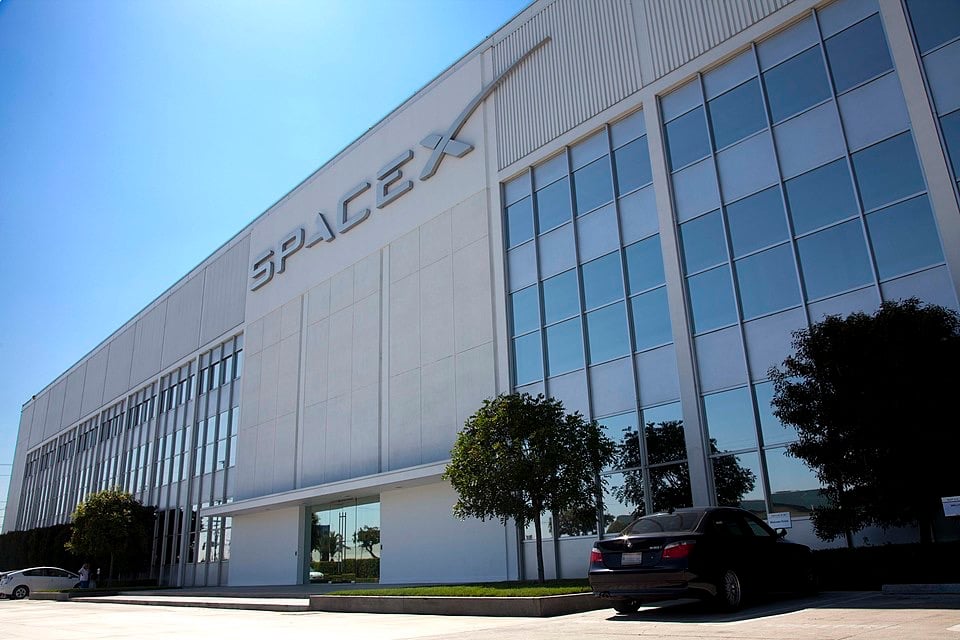
SpaceX is set to list on Nasdaq today in what is expected to be the largest IPO in history, with a valuation of £1.75 trillion — but analysts are warning retail investors piling into the offering that the numbers behind the hype tell a far less reassuring story.
The deal is reportedly more than twice oversubscribed, with demand running at double the $75 billion fresh capital raise, and up to 30 per cent of the offer earmarked for retail investors. Ed Croft, founder and chief executive of investment research platform Stockopedia, has run the numbers from the prospectus and concluded that SpaceX fits what his firm calls a “Momentum Trap” — a stock with strong price action that isn’t matched by improving fundamentals.
The underlying business is undeniably impressive. Starlink, SpaceX’s connectivity arm, booked over $11 billion in revenue in 2025, up 50 per cent year on year, with operating income of nearly $4.5 billion growing 120 per cent. Its space launch business is close to a monopoly. The issue, Croft argues, is the price being asked for it.
SpaceX spent roughly $20.7 billion in capital expenditure against just $18.7 billion in revenue last year, with free cash flow deeply and structurally negative — a deliberate choice to fund an aggressive AI infrastructure build-out. The valuation rests almost entirely on that bet paying off. Renowned valuation expert Aswath Damodaran said the prospectus’s total addressable market estimates push “into fantasy land for AI ($26 trillion) and the limits of plausible for space and connectivity,” and values the company’s equity at closer to $1.3 trillion.
Lead underwriter Goldman Sachs reportedly shared forecasts with investors projecting SpaceX’s AI revenue growing roughly 100-fold, from about $3.2 billion in 2025 to around $322 billion by 2030, with total revenue reaching $474 billion by 2030. The figures imply a unit that lost $6.4 billion last year — and currently rents out spare capacity to rival Anthropic because its own Grok AI model has struggled for traction — will outgrow the entire history of corporate America while commercialising space-based data centres.
The share price has already risen roughly fivefold over 18 months, set entirely through private tender rounds with no open-market price discovery. “The IPO doesn’t test that valuation — it ratifies it and hands it to willing retail investors who are buying the dream,” Croft said.
Stockopedia’s StockRanks system scores companies on Quality, Value and Momentum from 0 to 100. Croft’s estimate for SpaceX places it at roughly 30 for Quality, 2 for Value and 96 for Momentum — a combination his firm’s research identifies as a historically “losing” profile.
History offers a cautionary precedent. Of 14 IPOs with sales above $100 million that came to market at a price-to-sales ratio above 40, twelve underperformed the broader market over the following three years when bought at the first close. SpaceX is debuting at 94 times sales. Recent comparable IPOs have suffered severe twelve-month declines from their offer prices — roughly 65 per cent for Lyft, 55 per cent for Coinbase, 67 per cent for Rivian and a 78 per cent collapse for Robinhood. Facebook’s 2012 listing offers perhaps the closest parallel: it IPO’d at $38, fell more than 50 per cent to around $17 by September that year, and did not return to its float price until August 2013 — before going on to become one of the great long-term compounders.
Croft acknowledged that Momentum Traps can remain highly profitable in the short term, and that betting against one prematurely “is how careers end.” With a wall of largely price-insensitive buying expected from index funds — fast-track inclusion is anticipated from Nasdaq, FTSE Russell and MSCI, and roughly 95 cents of every dollar saved in America flows into index funds — a sharp melt-up remains entirely possible before any reckoning, particularly given the tight free float.
“SpaceX may be a great company,” Croft concluded. “But the StockRanks aren’t a measure of how good a company is — they’re a measure of the odds you’re being offered right now. And at $1.75 trillion, with a Quality of around 30, a Value of around 2 and a Momentum of around 96, the odds say avoid for now.” He added that insiders are likely to begin selling as soon as the lock-up period expires at second-quarter earnings, and that history suggests hyped tech IPOs typically offer a better long-term entry point within 12 to 18 months.
