



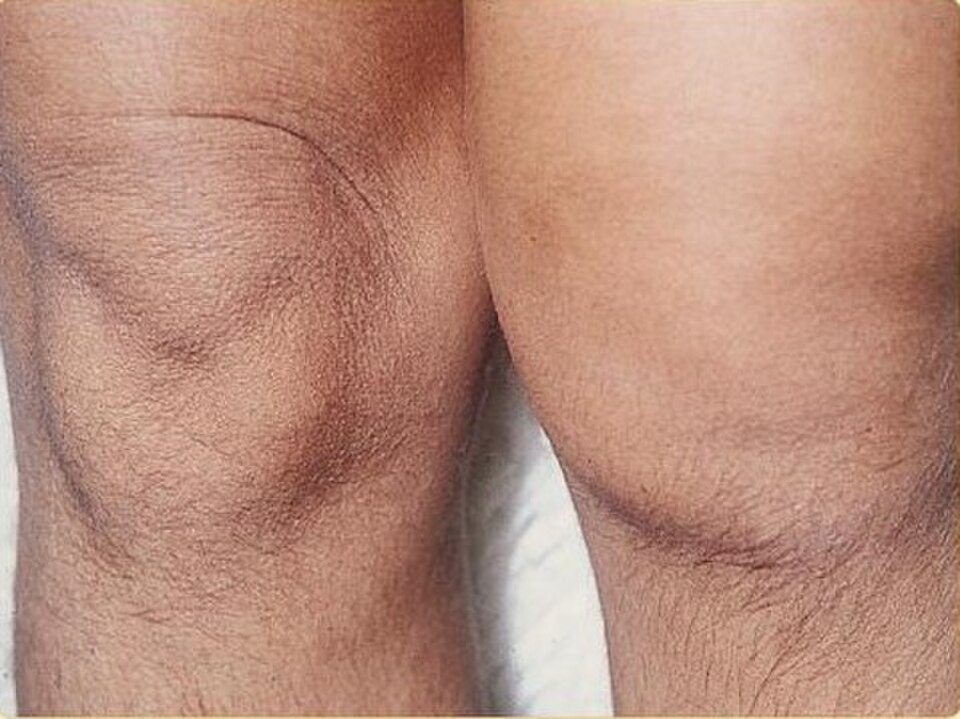
A minimally invasive procedure that significantly reduces knee pain without surgery could offer a major breakthrough for the more than five million Britons living with knee osteoarthritis, after a large study found it provided “significant, lasting pain relief” and dramatic improvements in mobility and quality of life.
The treatment, known as genicular artery embolisation or GAE, works by targeting abnormal blood vessels that accumulate around arthritic joints and drive inflammation and pain. During the procedure, a radiologist guides a thin tube into these abnormal vessels and injects tiny gelatin-based particles to block them, reducing inflammation and easing pain. The particles dissolve within hours of completing their job.
Researchers from Charité University Medicine Berlin published their findings in the journal Radiology, describing GAE as safe and effective based on data from 194 patients with knee osteoarthritis-related pain who had all previously failed to respond to at least three months of traditional treatment. The study group included 114 women and 80 men with an average age of 69.
The results were striking. Before treatment, participants rated their average pain at seven out of ten. After just six weeks, that dropped to four out of ten, and by the six and twelve-month follow-up points it had fallen further still to three out of ten. Over the course of twelve months, patients also reported improvements across every measure of knee health, including greater ability to participate in sport and recreation. Quality of life scores more than doubled.
Lead author Florian Fleckenstein, deputy head of interventional radiology at Charité University Medicine Berlin, said the findings addressed a significant gap in available treatments. “For many patients there is a real treatment gap today. Conservative measures such as intra-articular injections no longer provide sufficient relief, but joint replacement is not an option for medical or personal reasons,” he said. He added that GAE “may be the first procedure that alters the course of the disease, slowing its progression,” by reducing both inflammation and pain simultaneously.
Currently, the NHS treats osteoarthritis of the knee through a combination of lifestyle changes such as exercise and weight loss, medications including painkillers and anti-inflammatories, and surgical interventions including joint replacement, injections and joint fusing. GAE has already been used on a limited basis for patients who have not responded to conventional therapy, but the new study represents the largest body of evidence yet supporting its wider use.
Fleckenstein said the study’s conclusions “carry real weight because they come from real-world data,” adding: “For the right patient, it can mean lasting relief from a single, minimally invasive procedure — a meaningful new option between injections and joint replacement.”
Knee osteoarthritis affects an estimated 5.4 million people in the UK and more than 365 million worldwide. Common risk factors include being overweight, previous knee injuries and genetics.
