



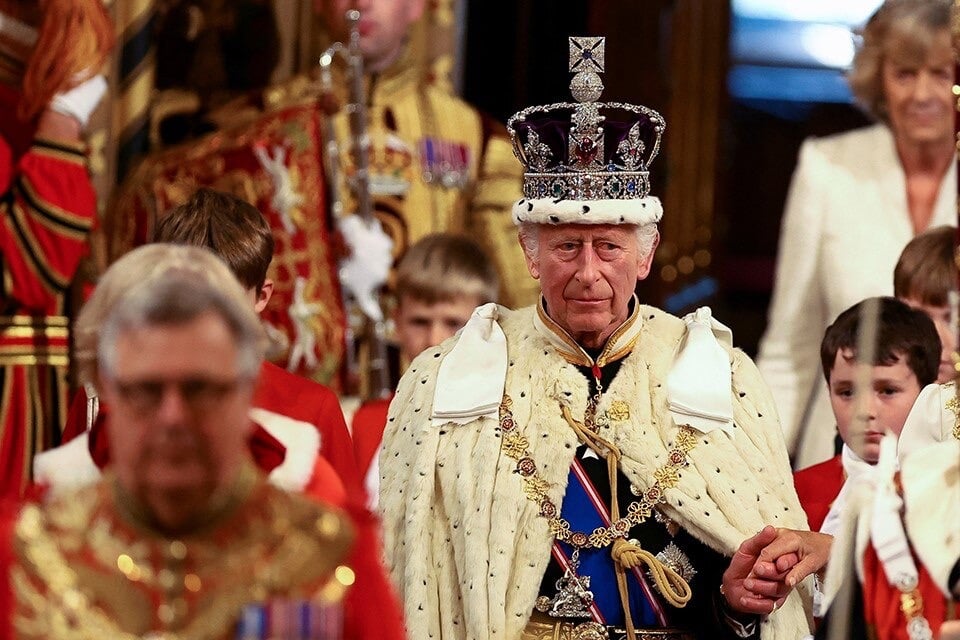
King Charles has announced the government’s intention to introduce a national digital ID scheme as part of a sweeping legislative programme unveiled at today’s State Opening of Parliament — a move that will allow citizens to interact with public services through a single digital profile, but which has already drawn scepticism from experts and civil liberties groups.
King Charles set out the government’s legislative plans for the second session of parliament today, 13 May, including the introduction of digital IDs, framed as a measure to modernise how citizens interact with public services under a proposed Digital Access to Services Bill.
The King’s Speech also committed the government to continued investment in apprenticeships and tackling youth unemployment, a new Education for All Bill to raise school standards and reform the special educational needs system, and a European Partnership Bill to strengthen ties with the EU.
The digital ID announcement is among the most contentious items in the legislative programme. Experts have warned that bringing together sensitive personal data — including HMRC income records, NHS health information, Department for Work and Pensions benefits data and Home Office immigration status — into a single digital profile will be “an unlikely easy sell” with the public. One analyst said uptake among workers was unlikely to be high given the scale of data consolidation involved.
The National news had reported ahead of the speech that the UK risked repeating the missteps of earlier digital ID programmes without honest public engagement, citing the Estonian model — launched in 2002 and built with cross-party support and publicly available source code — as the benchmark for building genuine public trust.
The King acknowledged the broader global context, saying “an increasingly dangerous and volatile world threatens the United Kingdom, with the conflict in the Middle East only the most recent example,” and pledging that the government would “respond to this world with strength.”
The State Opening took place against an extraordinary backdrop of political turmoil. The Palace reportedly warned the government ahead of the ceremony to keep King Charles out of Sir Keir Starmer’s ongoing leadership crisis, with one source saying: “The Palace view is ‘we do not want to be any part of this conversation — do not bring us into it.'” Four ministers resigned on Tuesday alone, and Starmer arrived at Parliament under intense pressure from within his own party to set a timetable for his departure.
