



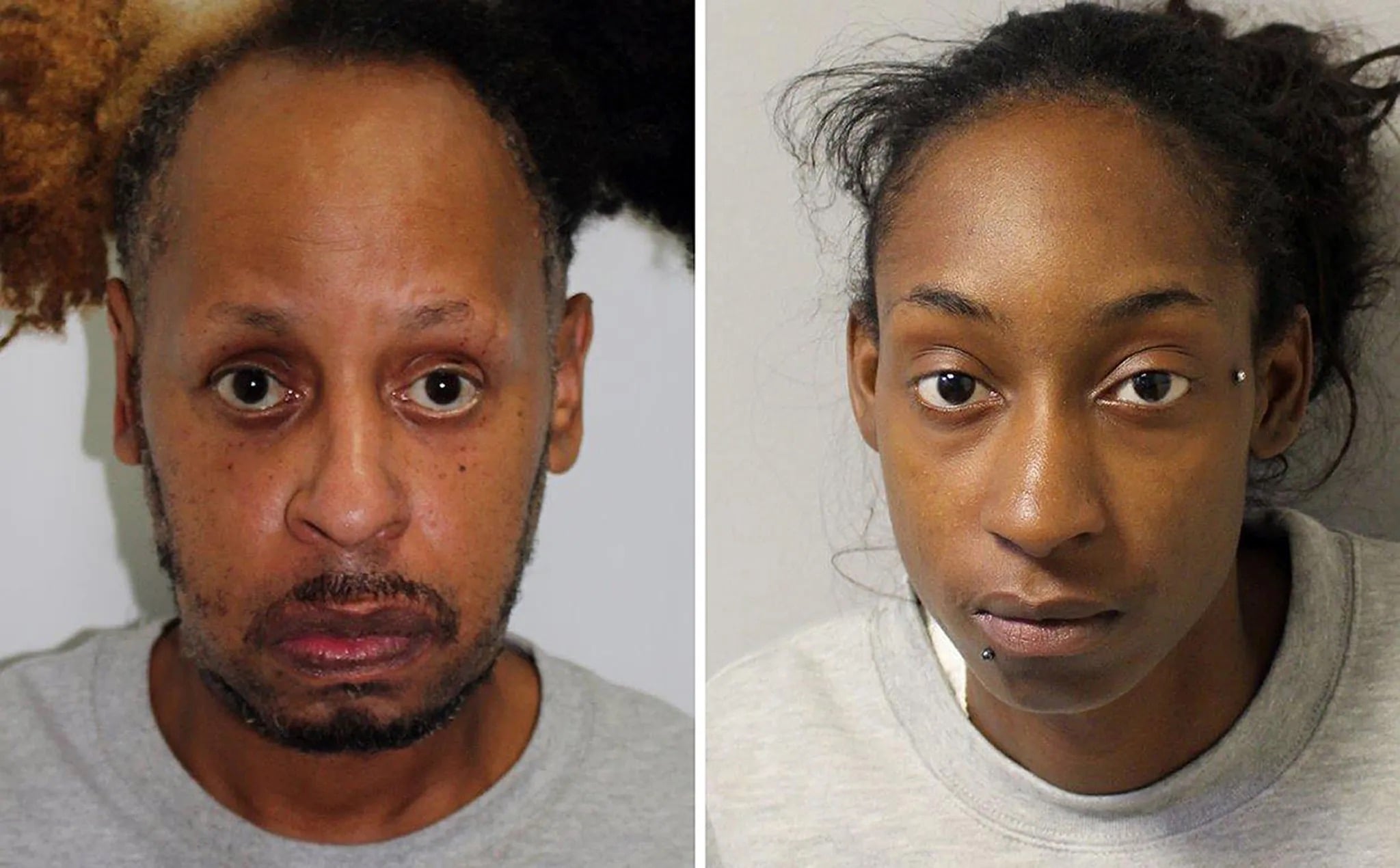
A mother carried her dead baby daughter onto a bus and pleaded with fellow passengers to save her — while knowing the child had already been killed hours earlier by her and her partner, a new documentary series has revealed.
Rosalin Baker, 25, strapped the lifeless body of 16-week-old Imani to her chest in a baby carrier and boarded a bus in London, where she sat impassively texting on her phone for around 20 minutes before raising the alarm that her daughter had stopped breathing. Traumatised passengers rushed to help, attempting CPR on the tiny body, while Baker remained emotionless — at one point another passenger assumed a distressed bystander was actually the mother, so detached was Baker from the unfolding scene. A postmortem later established that Imani had been dead for up to 24 hours before the bus journey.
The case is revisited in detail in a new documentary series, Staged: Deadly Deceptions, in which journalist Katie Gibbons and former murder detective Gary Holmes piece together the full horror of what happened to baby Imani and the devastating impact it had on those who unwittingly tried to save her.
“Some of the other passengers gave really, really compelling evidence,” Gibbons explains. “They spoke of how they were trying really hard to revive this little body, this little girl, thinking that there might be a chance that they could save her life. To learn that actually, this baby had been dead the whole while and that her mother was sitting there knowing this was happening — that must have just been horrifying. Some of them said that they actually had the effects of trauma, unable to sleep, had to take medication because of it.”
When paramedics arrived, Baker continued texting calmly to one side, making contact first with her sister and then with her partner, Jeffrey Wiltshire. Phone records later showed she sent her sister a message reading: “Imani is dead sis x.” At her 2017 trial, prosecutor Duncan Atkinson QC told the court: “They were panicking and distressed. In contrast, Baker was noted to be cold and calm.”
A postmortem revealed the full extent of the abuse Imani had suffered. Forensic scientist Jim Fraser, speaking in the documentary, described what investigators found. “What the postmortem encountered was a whole series of serious injuries. When a baby has 40 rib fractures, a fractured skull, a subarachnoid haemorrhage and an injury to the brain stem, these are not accidental injuries. These are injuries that have been inflicted by someone, and they’ve been inflicted over a period of time.”
Baker, described as an addict with a chaotic life, was in a relationship with Jeffrey Wiltshire, a cocaine and heroin addict and rapper 23 years her senior who had fathered 23 children with 18 different women. Imani was born prematurely at 28 weeks and spent her first 64 days in an incubator. Baker visited only 16 times during that period. Wiltshire did not visit once, and Baker refused to give social services his name. Nine days before the bus incident, Baker had moved with the baby into Wiltshire’s Manor Park bedsit. CCTV footage from the day of the bus journey showed Wiltshire giving Baker a kiss and a thumbs up as she boarded with Imani strapped to her chest.
Holmes described the impact on one particular witness — an Italian woman who had been on her way to work and administered CPR. “She discovered that this baby was cold as ice, as she described it, and then saw the bruise under the eye, and still had massive CPR, even though she might well have known that she was dead. She could not get on a bus again. If she saw a baby, she’d be upset because she was worried the same thing would happen again. That’s the level of trauma that Rosalin Baker subjected this lady to.”
At trial, Baker and Wiltshire turned against each other. Baker claimed Wiltshire was coercive and abusive and that she had gone along with his plan out of fear. Wiltshire denied any involvement. The jury deliberated for 14 hours but could not agree on murder beyond reasonable doubt. Both were convicted of causing or allowing the death of a child and jailed for 11 years, later reduced to ten on appeal.
Gibbons concluded: “The overwhelming sense is just pure sadness and pain for this little girl who had nobody looking out for her. She didn’t have the love and support of her parents. She didn’t have the wider protection of social services. Probably the safest she had ever been was when she was in the incubator. And that’s just a really, really tragic start to any life.”
