



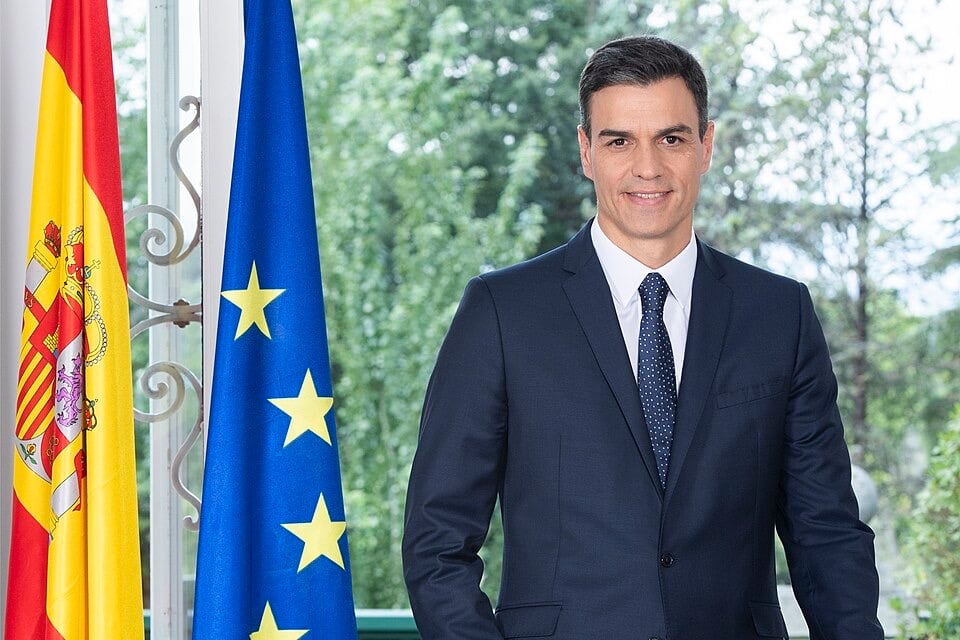
Spanish police have raided the headquarters of the ruling Socialist Party in Madrid as Prime Minister Pedro Sanchez faces mounting pressure on two fronts — a deepening corruption crisis enveloping his inner circle and fierce backlash over plans to legalise the status of 500,000 undocumented migrants.
Civil Guard officers searched the party’s central Madrid offices on Tuesday under judicial orders linked to an ongoing probe into alleged financial wrongdoing involving a former Socialist Party member connected to a state-run company. The raid represents the latest in a series of corruption blows to strike Sanchez’s government since he came to power in 2018.
The scale of the legal jeopardy surrounding those close to the prime minister is striking. His wife and brother are both under investigation for alleged influence peddling — allegations both have denied. A former minister under Sanchez and a senior party official are being investigated over allegations they were involved in a kickback ring that began during the Covid-19 pandemic, which they have also denied. Last week, a separate court announced it was investigating former prime minister José Luis Rodríguez Zapatero for alleged influence peddling and other possible crimes linked to a government airline bailout — an allegation he too has denied.
Sanchez has previously described the cases involving his family as a “smear campaign,” though the breadth of the allegations against former colleagues led him to ask the nation for “forgiveness” in 2025. Tuesday’s raid adds further pressure to a government already struggling to maintain its footing.
The timing is particularly damaging because Sanchez is simultaneously facing fierce domestic criticism over his government’s migrant regularisation scheme, which aims to grant legal status to approximately 500,000 undocumented migrants living in Spain. The initiative was approved at a cabinet meeting, immediately triggering large queues at immigration offices across the country as applications opened.
Spanish police have now warned that Islamist terrorists could exploit the programme. An internal memo from the National Police’s General Commissariat for Immigration and Borders, seen by Spanish outlet La Gaceta, revealed that complaints over missing passports and identity documents had risen sharply among applicants. The document noted that the largest increases in lost document reports were recorded among Pakistani, Algerian and Moroccan nationals — nationalities that the memo said overlapped with profiles previously appearing in investigations related to Islamist extremism. Officers were ordered to intensify identity and background checks because of what the document described as the difficulty, and in some cases impossibility, of reliably confirming applicants’ true identities.
The warnings arrive against an already heightened security backdrop. Spain remains under its long-standing level four anti-terrorism alert — one step below the maximum — and official figures from the Interior Ministry show that more than 100 arrests linked to jihadism were carried out in 2025, the highest annual total since the 2004 Madrid train bombings.
