



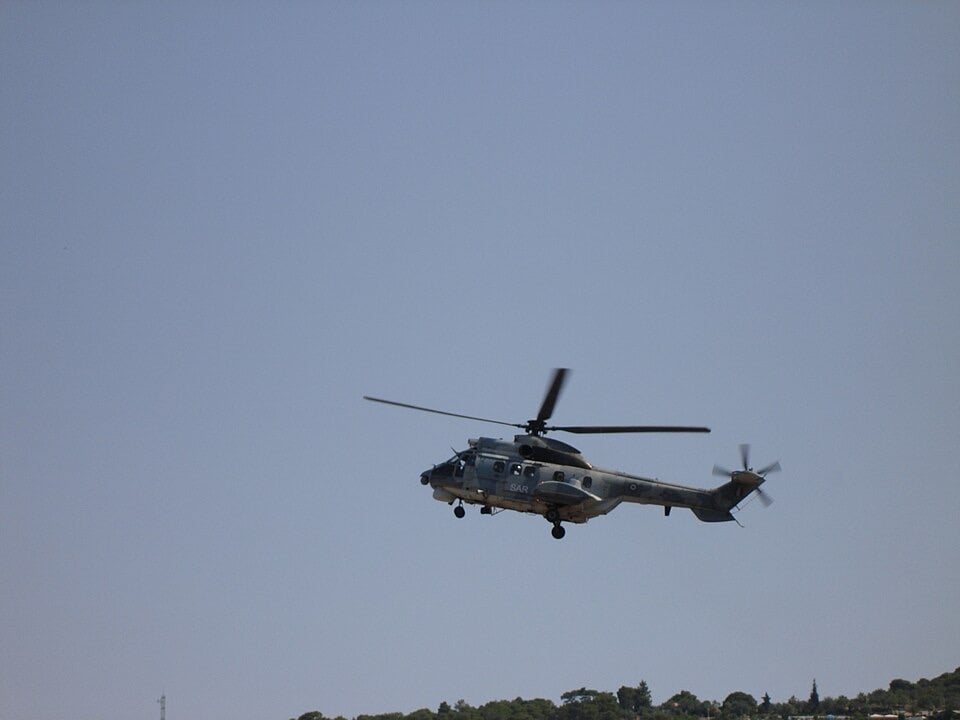
A search and rescue operation is under way after two Bell firefighting helicopters, each carrying two crew members, collided during aerial wildfire operations near Psatha, west of Athens, Greece’s fire department has confirmed.
Two firefighting helicopters collided while battling wildfires west of Athens, prompting an immediate search and rescue response, Greece’s fire department has said. The Bell helicopters, both leased by the fire service, had been deployed to tackle a blaze in the Psatha area of the Attica region when the collision occurred. Each aircraft was carrying a crew of two, meaning four people were on board across the two helicopters at the time. Search and rescue teams have since been mobilised to the scene as authorities work to establish what happened.
What is known so far
According to a statement issued by Greece’s fire department, the two helicopters crashed in the wider Psatha area while taking part in an aerial firefighting operation. Both aircraft had taken off from Elefsina military airport, west of Athens, before being sent to help tackle the wildfire in the area. The fire department confirmed that a search and rescue operation was under way, though further details of the crash itself have not yet been released.
Search and rescue effort
Authorities have mobilised a wide-ranging search and rescue response, involving firefighters, police, coastguard personnel and military assets, all working to locate the helicopter crews and assess the crash site. The scale of the response reflects the seriousness with which Greek authorities are treating the incident, given the ongoing uncertainty over the fate of those on board.
Why the Psatha area is prone to wildfires
The Psatha area has seen repeated wildfire outbreaks in recent years, a pattern attributed to its dry vegetation, mountainous terrain and strong summer winds, all of which can cause fires to spread rapidly once ignited. Conditions of this kind have made the region, like much of Greece, particularly vulnerable during the summer fire season.
The risks of aerial firefighting
Mid-air collisions involving firefighting aircraft are extremely rare, but aerial firefighting is widely regarded as one of the most hazardous forms of aviation, largely because multiple aircraft often operate simultaneously at low altitude in smoke-filled conditions. Pilots involved in wildfire operations frequently contend with reduced visibility, strong turbulence, mountainous terrain and rapidly shifting wind patterns, all of which add to the operational risks they face. Greece relies heavily on leased helicopters and fixed-wing aircraft during the summer wildfire season to supplement its own firefighting fleet, a reliance that has grown as the country has faced increasingly severe fire seasons in recent years.
Investigation under way
Greek authorities have launched an investigation into the collision, with investigators expected to examine the helicopters’ flight paths, radio communications, prevailing weather conditions and standard operational procedures in an effort to determine what caused the crash.
Part of a difficult wildfire season
The collision occurred as Greece continues to battle multiple major wildfires during what has become one of its most challenging fire seasons in recent years. Firefighters remain engaged across several regions of the country amid high temperatures, drought conditions and strong winds, all of which have significantly increased the risk of fires spreading quickly. Greece has repeatedly sought assistance through the European Union’s Civil Protection Mechanism in recent years, with several member states providing aircraft and firefighting personnel during periods of severe wildfire activity. Following a series of destructive wildfire seasons, the country has also increased its investment in aerial firefighting resources, early warning systems and broader emergency response capabilities.
