



The European Commission president says Ukraine would repay only once Russia pays for the damage it caused. Her plan faces a unanimity hurdle in the EU.
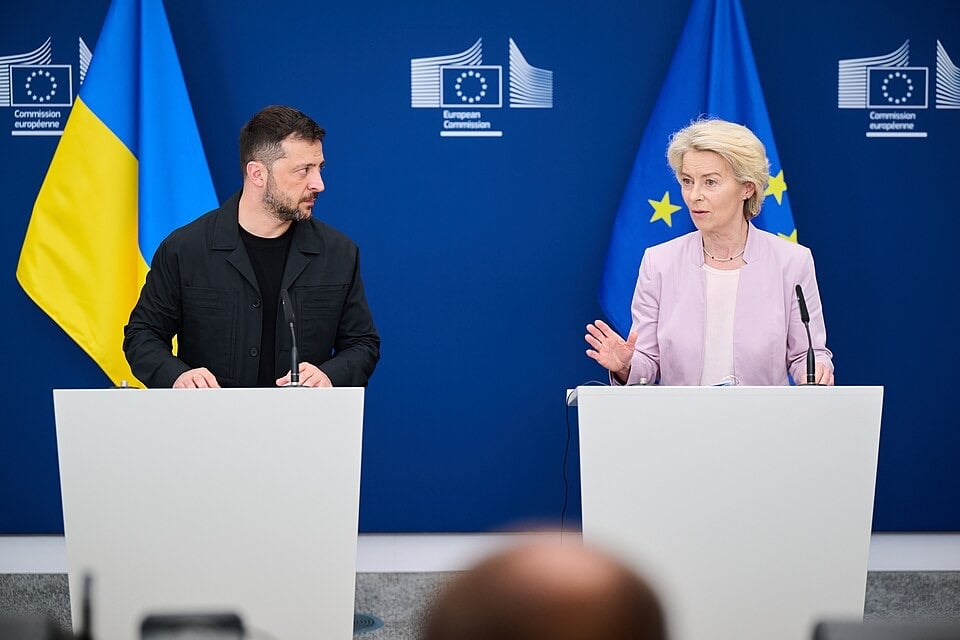
European Commission President Ursula von der Leyen on Wednesday proposed a new loan of €45bn ($49.4bn) to Ukraine to cover its budget and defence needs in 2027. She said Ukraine would only have to repay once Russia pays for the damage it has caused. Slovakia, Czechia, Hungary and Bulgaria have said they do not plan to take part, Euronews reported. Mrs von der Leyen said she was confident that all 27 member states would back the plan, and that governments unwilling to support military aid could choose to fund civilian support only.
What is proposed
“We think this is the best way to give Ukraine a strong hand at the negotiating table,” Mrs von der Leyen said. “We are sending a clear message to Russia: We want peace. Five years since the start of this war of aggression, Europe stands united. We are as committed as ever to support Ukraine, in war and in peace.”
The new money would be on top of €45bn already earmarked for Ukraine in 2027 under the €90bn Ukraine Support Loan, which covers 2026 and 2027, according to the Commission. That would take potential EU-backed lending for 2027 to €90bn, subject to approval and conditions. Last month, President Volodymyr Zelensky told the EU that Ukraine faced a funding gap of $76.8bn next year. The Commission says the new loan would cover about two-thirds of Ukraine’s additional €70bn gap for 2027, with non-EU allies such as Norway, Canada and Britain expected to cover the rest.
Up to €25bn would go on military needs, including air defence, drones, counter-drone equipment, missiles and ammunition. The Commission says the military element would also support cooperation between Ukrainian and European defence manufacturers. Up to €20bn would be for general government spending to keep public services running. Payments would depend on reforms, including anti-corruption safeguards, rule-of-law measures and public financial management.
Mr Zelensky said on X that the plan could “GREATLY help Ukraine, our resilience, and our diplomacy”. “This will cover a significant part of the budget and defence needs for next year, 2027,” he said, adding that he hopes for “swift adoption” by the European Parliament and the Council. “Strong support for Ukraine is the best signal to Russia that this war must end.”
Repayment and cost
Mrs von der Leyen’s statement that Ukraine repays only when Russia pays is qualified by the proposed regulation, COM(2026) 636. Article 17 sets repayment triggers that include Ukraine receiving reparations or another qualifying settlement from Russia. It also covers certain payments or recoveries involving frozen Russian assets, other contractual circumstances, and fraud, corruption or other illegal activity harming the EU’s financial interests. In proven fraud or corruption cases the EU could demand repayment of the affected funds, and non-compliance could lead to payments being suspended or cancelled.
The money would be raised by EU borrowing on capital markets, with the EU budget guaranteeing repayment to investors. Reuters reports that interest subsidies could cost about €2bn to €2.5bn a year from 2028, when the next seven-year EU budget takes effect. These are estimates and not an approved allocation. The Commission also proposes using future profits from immobilised Russian sovereign assets to help repay the new loan and the existing €90bn loan, after earlier G7-backed loans. Reuters estimates those assets generate €4bn to €6bn a year in windfall profits. The mechanism is proposed and not fully approved, and it does not establish that Russia has agreed to pay reparations.
A further €5bn of lending could be made available through guarantees from non-EU partners with AAA or Aaa sovereign credit ratings.
EU defence commissioner Andrius Kubilius said Russia could increase its drone deployments to 20 million units in 2027, according to Reuters, and that Ukraine may need to spend about 62 per cent of its military budget on drones. These are projections.
Obstacles to approval
The proposal needs the European Parliament and the Council to approve the new loan programme. Amending the EU’s long-term budget to guarantee the borrowing needs unanimous approval from member governments, as well as parliamentary consent. Hungary, Slovakia and Czechia opted out of financial participation in the earlier €90bn arrangement, and Bulgaria is also reported to oppose the new package. No unanimous agreement was announced on Wednesday.
German Chancellor Friedrich Merz previously said he would block the EU’s seven-year budget if all member states did not support financial aid for Ukraine, The Guardian reported. The four countries opposed are beneficiaries of the EU budget. Germany is its largest contributor and the biggest EU donor to Ukraine.
Under the proposed text, Ukraine could request funds about six times a year, with the Commission checking compliance before releasing instalments. The instrument would stay available until 30 June 2028, with all payments completed by 31 December 2028. An evaluation is required by 2029. The Commission says the EU and its member states have provided nearly €238bn in assistance to Ukraine and Ukrainians since the full-scale invasion in February 2022. That figure covers several categories of aid and not only transfers to the government budget.
