



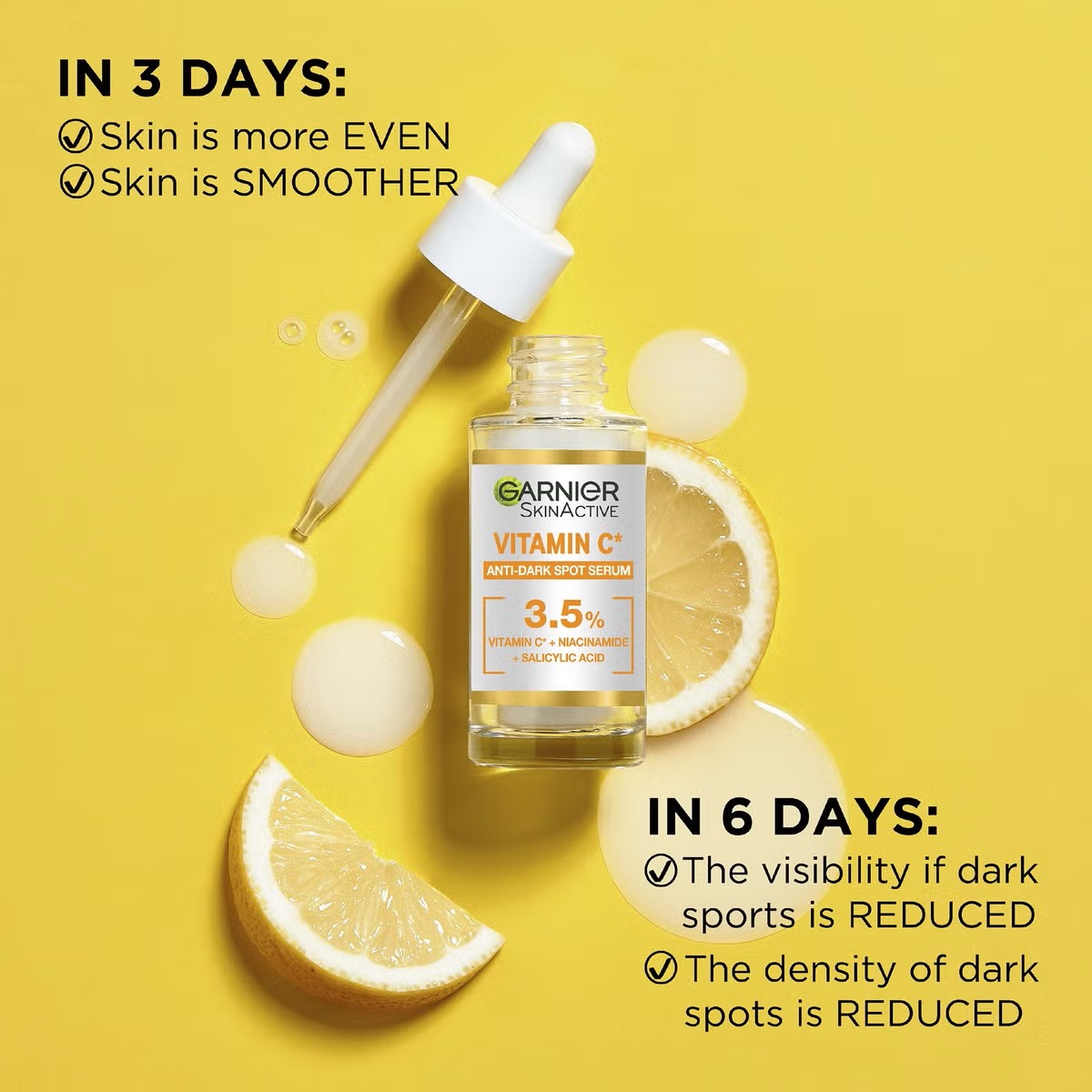
A television advertisement for Garnier’s Vitamin C Serum has been banned by the Advertising Standards Authority after the regulator found that a key clinical claim in the ad could not be adequately substantiated in the form it was presented.
The advert, which aired on 28 October 2025, featured a model applying the product to her skin alongside a computer-generated close-up of a dark spot on her face. The central claim under scrutiny — “clinically proven to reduce hyperpigmentation in two weeks” — prompted the ASA to investigate whether the accompanying small-print qualifier accurately reflected the evidence behind it.
The text displayed at the bottom of the screen throughout much of the advert read: “72% of 111 women agree. Clinical study, 44 subjects 10 weeks.” The ASA’s assessment centred on whether this disclaimer properly supported the two-week claim made in the main body of the advertisement.
L’Oréal UK, which owns the Garnier brand, acknowledged during the investigation that the qualifier as it appeared in the advert was inaccurate due to an error, and that consumer confusion between subjective and objective claims could have resulted. The company said the qualifier would not appear in its current form in any future advertising.
Despite accepting the ruling, L’Oréal UK expressed disappointment and stood firmly behind the product’s scientific credentials. “We are naturally disappointed as we stand firmly behind the science and the testing results for this product,” a spokesperson said, adding that the clinical study had been specifically designed to test the serum’s effectiveness at reducing dark spots across a broad range of skin types. “Eight out of ten people who took part saw a visible reduction in their dark spots — and those results were robust and scientifically validated,” they added.
The company also noted that its study had been conducted in a sunnier climate to account for the fact that hyperpigmentation is worsened by sun exposure, describing this as consistent with industry standards for this type of research.
The ASA reviewed the advert against updated wording and evidence provided by L’Oréal UK, which included an unpublished clinical trial and a published paper on the active ingredient Melasyl. Despite this, the authority concluded the advertisement breached its guidelines and issued a ban, prohibiting it from appearing again in its current form.
