



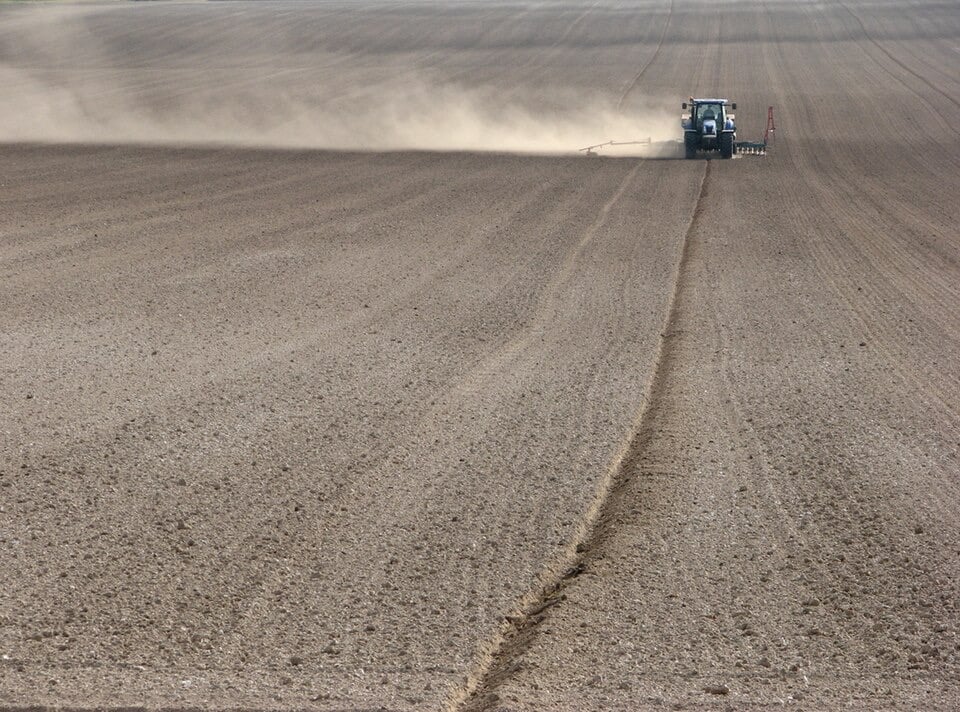
Ministers have ordered water companies to step up monitoring after the driest April to September in more than a century left reservoirs dangerously low, though household supplies are not currently affected.
A severe drought has been declared in parts of Cornwall, Devon, Dorset, Somerset, East Sussex and West Sussex, prompting the Government to activate measures to protect water supplies. According to the Government, the South East and South West had their driest April to September in more than 100 years. Water companies have been ordered to increase monitoring and take further action to prevent disruption. Household supplies will remain uninterrupted for now, the Government said.
What the Government is doing
The new measures include daily checks on reservoir and river levels, tougher monitoring of water quality, and more Environment Agency checks on businesses abstracting water from rivers and other natural sources to make sure they stay within permitted limits. Local Resilience Forums are being brought in so support can be organised quickly if the situation worsens.
Environment Secretary Dame Angela Eagle said: “This level of drought is something we have not experienced for decades, so this government is stepping up our support and planning.” She said ministers were working closely with water companies and urged people to use water carefully over the coming weeks. Water Minister Emma Hardy has instructed the Environment Agency to prioritise public water supplies in affected areas where difficult decisions are needed, which could let companies keep more water in depleted reservoirs.
Environment Agency chief executive Philip Duffy said record-breaking summer heat had put water resources under enormous pressure. “Recovery depends on both rainfall and how much water we use,” he said. “We cannot change the weather, but water companies can act now.”
The announcement followed another meeting of the National Drought Group, which has coordinated the response since August. The Government said the measures were being introduced now to safeguard supplies before more serious problems develop.
Reservoirs at critically low levels
According to figures reported on 15 October, Wimbleball Reservoir in Somerset is about 16% full and Ardingly Reservoir in West Sussex about 19%, against a normal seasonal level of around 75%.
Ardingly serves about 95,000 properties in and around Haywards Heath and Uckfield. South East Water has warned that without enough rain the reservoir could face extremely serious shortages within weeks, and earlier reporting raised concerns about a critical point by mid-November. That is a risk projection, not confirmation that customers will lose supplies.
Other reservoirs are also under pressure. Drift and Stithians in Cornwall serve 56,000 households and Tottiford and Venford in Devon serve 47,000, a combined 103,000.
Restrictions
South East Water, South West Water and Southern Water have asked for permission to impose non-essential water-use restrictions on business customers. These could affect commercial car washes, golf courses, private schools’ non-essential use, businesses filling swimming pools and some commercial cleaning. Ms Eagle had not approved them as of 15 October, so the proposed bans are not in force.
South East Water tightened its hosepipe restrictions in Sussex on 9 October by withdrawing several exemptions, leaving mainly those needed for health and safety. South West Water’s hosepipe ban, introduced on 8 August, remains in place across Devon, Cornwall, parts of Dorset and Somerset, and the Isles of Scilly.
A wider and longer problem
The Environment Agency said on Thursday that 82% of England remains in drought. Some areas need about 120% of their usual rainfall over the next six months to recover, and the agency expects dry conditions to continue through much of October. Drought could therefore persist well into 2027 if winter rain falls short.
The agency clarified that a severe drought declaration is not automatically a civil emergency. If matters worsen, possible steps include lower mains water pressure, further business restrictions, temporary interruptions to supply in extreme circumstances, more abstraction from alternative sources and reduced environmental water releases. No widespread household cuts have been announced.
Environmental and infrastructure effects
Emergency permits are already being used to conserve water. On 29 September, South East Water was allowed to reduce releases from Ardingly into the Shell Brook tributary of the River Ouse. On 2 October, South West Water received a permit to reduce compensation flows from Wimbleball. These measures conserve storage but can reduce water available to wildlife and river habitats, and environmental groups are concerned about further damage to depleted rivers.
Dry ground can also shrink and shift, putting pressure on underground pipes and raising the risk of leaks and bursts. Water suppliers have been told to increase leak detection and repairs.
Longer term, the Department for Environment, Food and Rural Affairs points to £104bn of planned infrastructure investment, including nine new major reservoirs. These will take years and cannot ease the present shortage.
