



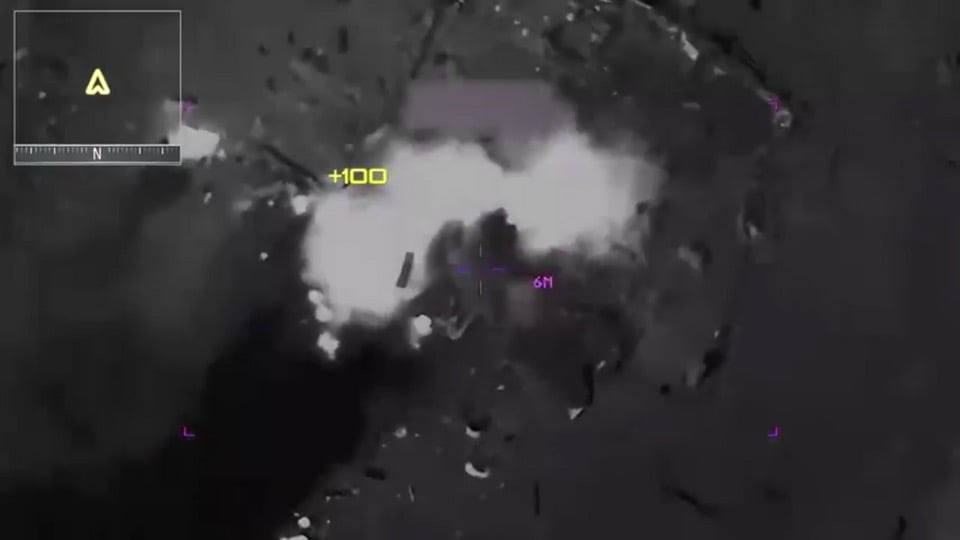
Washington says it targeted Iranian missile positions after Revolutionary Guards fired on a US aircraft, while Iran reports explosions on the island and puts forward a new 48-hour plan to reopen the Strait of Hormuz
The United States has carried out limited strikes on Iranian targets around the Strait of Hormuz, including Qeshm Island, US officials said on Monday, hours before the American midterm elections. An official, speaking anonymously because he was not authorised to comment, said the strikes were defensive and aimed at Iranian surface-to-air missile positions that had been used against US assets. Other officials said they were a response to the Islamic Revolutionary Guard Corps (IRGC) firing on a US aircraft. Iran’s state news agency IRNA reported several explosions on the island.
What US officials say
The strikes appeared limited and not a return to full hostilities. President Donald Trump had said the US would not launch new strikes on Iran before the midterms. He told Axios earlier on Monday that he was in “no rush” to step up action: “One way or the other, we will do something, but there is no rush. We crippled them financially. They have no money, no gasoline and their people are getting very tired of it.” Asked whether strikes would resume after the elections, he replied: “no”.
The administration was last known to have attacked Iran in early September. However, officials told The Wall Street Journal, The Washington Post and ABC News that Monday’s action was the latest in a series of limited, unannounced strikes over several weeks, reportedly aimed at missile launchers. ABC said the administration did not want them seen as the formal resumption of large-scale combat. The Pentagon referred questions to US Central Command, which had not issued a detailed statement when Reuters reported the story.
Thousands of US troops remain in waters off Iran, enforcing a naval blockade meant to stop tankers carrying Iranian oil reaching world markets. The Associated Press reported that a third aircraft carrier and thousands more personnel are heading to the region. The war and its effect on petrol prices and the wider economy have been seen as a political vulnerability for Republicans as they try to keep control of Congress.
Iran’s account
IRNA reported five explosions in rapid succession on Qeshm and said their strength suggested locations on the island itself may have been hit. Residents reported two aircraft overhead, but their type and nationality are unknown. The semi-official Fars agency also reported explosions near the mainland city of Bandar Lengeh, apparently from the direction of the sea. It is unclear whether this was the same operation. No casualty or damage figures have been confirmed.
The IRGC separately claimed to have shot down two American reconnaissance drones south of Qeshm. A US official disputed the Iranian claims, and ABC reported that Iran had also claimed earlier on Monday to have downed two RQ-170 drones, which an American official called false. No wreckage or US loss has been independently verified.
Diplomacy continues
Iran’s Foreign Ministry spokesman Esmaeil Baghaei said on 2 November that Tehran’s seven-step peace plan, rejected by Washington in September, could be put into effect within 48 hours. Reuters reported it would require the US to end its blockade of Iranian ports, allow Iranian oil sales and cancel recent sanctions, with Iran reopening the Strait and talks on other issues to follow. Iran says it will not restart nuclear talks until it has verified its conditions have been met, and rejects sending its stock of highly enriched uranium abroad. Iranian negotiators left Doha on Sunday without a deal, and Qatari mediators travelled to Tehran on Monday night to meet Foreign Minister Abbas Araqchi.
The AP reported that Vice President JD Vance wrote last week to Iranian security official Mohsen Rezaei. Mr Trump said the letter concerned medical supplies and other assistance. Mr Rezaei confirmed receiving it but said he had not replied. Two regional officials and a third person familiar with the matter said Israeli Prime Minister Benjamin Netanyahu has pushed for another wave of strikes on Iran after the US elections.
Markets and shipping
Brent crude fell 7.6% to $104.77 a barrel on 2 November and US WTI fell 7.4% to $96.46, the biggest daily falls since July, as traders reacted to the prospect of talks, Dow Jones Newswires reported. Brent had risen more than 13% in October. The AP said October saw the most attacks on commercial shipping in the Strait since March, and Qatar’s Nakilat confirmed a liquefied natural gas tanker was struck by unidentified objects in the Gulf on 30 October.
China’s foreign minister Wang Yi urged a political settlement in meetings with Iranian and Saudi security officials in Beijing on Monday, and China plans to send an envoy to the region in November. Russia voiced concern, and Reuters reported President Vladimir Putin spoke to Mr Rezaei by phone.
