



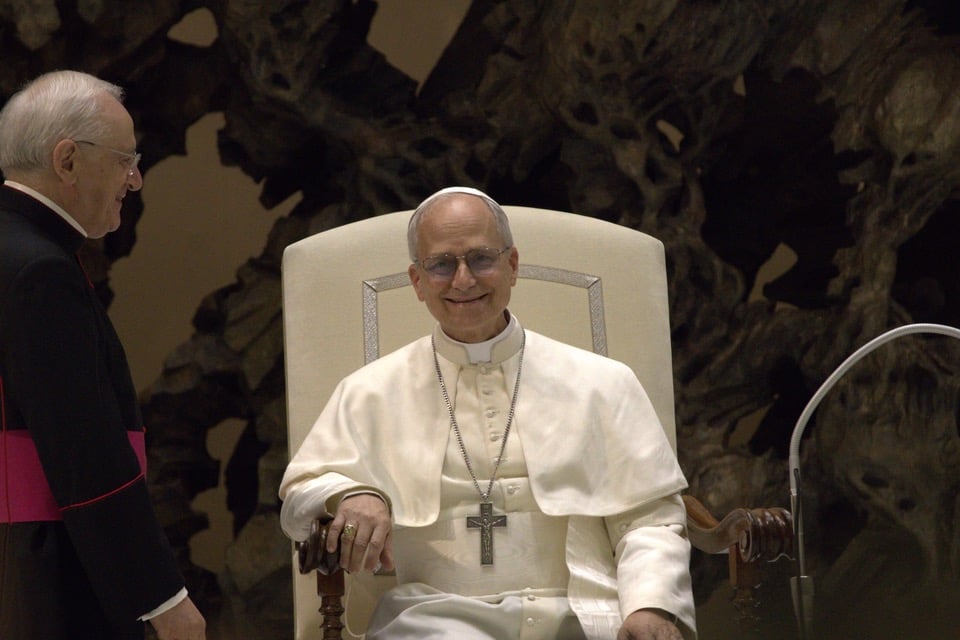
Tests on the tissue removed from the pontiff showed his lung cancer was localised, and an oncology assessment concluded that no more treatment is necessary.
Pope Leo XIV’s doctors have announced that he requires no further cancer treatment after surgery to remove the lower lobe of his right lung. In a statement, his personal physician, Dr Luigi Carbone, and his surgeon, Dr Stefano Margaritora, said tissue and molecular tests had shown the cancer was localised. “A subsequent oncology assessment confirmed that no further treatment is necessary,” they said. The announcement came on the day the 71-year-old returned to St Peter’s Square in the popemobile.
What the doctors found
The Pope had the lower section of his right lung removed on 13 October after being diagnosed with lung adenocarcinoma, the most common form of the disease. He was discharged four days later and went back to the Vatican.
According to reporting by Reuters, the Associated Press and Vatican News, as set out in the research notes, tissue removed during the operation was examined, including lymph nodes. The malignant growth was confined to the lung, and the lymph nodes showed no evidence of spread. On that basis, doctors are not currently recommending chemotherapy, radiotherapy or immunotherapy. That does not rule out follow-up appointments or surveillance scans, which are distinct from further cancer treatment. The Vatican has not published a long-term monitoring schedule.
Professor Margaritora said the growth was found by chance during radiological examinations focused on the abdomen, which captured part of the lower chest. The Pope was reported to have had no symptoms. The operation used a video-assisted technique and lasted about 90 minutes, with around three hours in the operating theatre, and no complications were reported.
Back in St Peter’s Square
The source says the Pope returned to the square on Wednesday, waving to crowds and blessing children from the popemobile. “The first thing I want to say to you is thank you for the support and prayers,” he told those gathered. Reuters reports that he gave an address lasting about 50 minutes and greeted pilgrims in seven languages, in his first weekly general audience since the operation. A vigorous appearance does not by itself confirm that his recovery is complete.
He has already thanked the medical team at Rome’s Gemelli hospital. On 17 October, before leaving, he celebrated Mass in the hospital chapel, and he repeated his thanks at the Angelus on 18 October. On 19 October, the Holy See confirmed that he would stay in his Vatican residence and not go to Castel Gandolfo, where he ordinarily spends time early in the week. He had cancelled formal audiences through 20 October.
The November tour and Assisi
Attention now turns to the Pope’s visit to Uruguay, Argentina and Peru from 6 to 17 November, a 12-day trip with many flights and public engagements. It includes Cusco, about 3,400 metres above sea level. Dr Margaritora has said he sees no clinical reason why it should not go ahead. The research notes cite The Times as saying Cardinal Pietro Parolin, the Vatican Secretary of State, has suggested that the Pope may need to moderate his workload. No cancellation has been announced.
He is also due to attend an event in Assisi on 27 October marking 40 years since the interreligious gathering begun by Pope John Paul II in 1986. It is organised by the Community of Sant’Egidio and focuses on peace and dialogue. The Holy See had not confirmed whether he would attend, and it would be one of his first journeys beyond Rome since the operation.
