



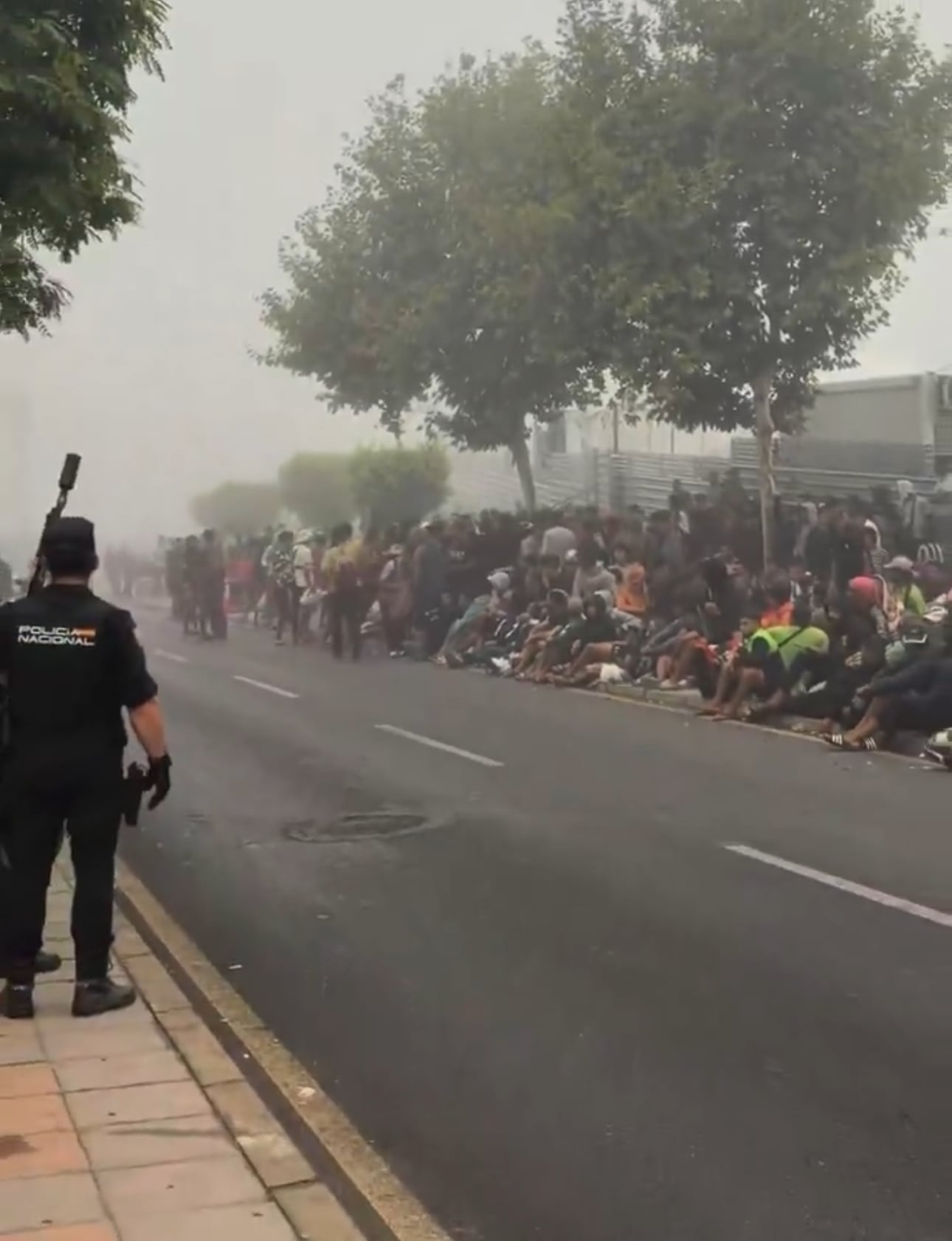
Weeks after tens of thousands of migrants crossed into the Spanish enclave of Ceuta over a single weekend in July, thousands remain in the territory amid growing political controversy after a police report suggested Moroccan security personnel actively directed people toward the crossing point.
Large groups of migrants continue to gather in public spaces across the Spanish enclave of Ceuta, weeks after a mass border crossing overwhelmed the territory’s capacity to respond. On 2 September, many were still seen sleeping outdoors near border barriers and beaches in makeshift tents, following the huge influx of 30–31 July, when between 50,000 and 72,000 people entered Ceuta, most of them Moroccan nationals alongside others from sub-Saharan Africa. While the majority have since returned to Morocco, Spain’s central government estimates that around 5,000 people remain in the enclave, though local authorities in Ceuta put the figure considerably higher, at more than 10,000.
A disputed police report on the crossing
A Spanish police report submitted to the Audiencia Nacional has alleged that Moroccan security personnel guided migrants toward specific crossing points during the mass entry on 30 and 31 July. The report describes the Moroccan security presence at the time as unusually permissive, with officers allegedly seen directing people toward the water crossing at El Tarajal.
Investigators concluded that the mass crossing does not appear to have been a spontaneous migration event, but rather one that was organised and designed to overwhelm Spain’s ability to respond, though the report stops short of directly accusing the Moroccan government of ordering the operation. Spanish investigators identified three distinct waves of arrivals, with the first involving large numbers of young people and later waves including families, a sequence they believe was designed to overwhelm Spanish border forces.
According to the investigation, around 90.8% of migrants in the sample examined by Spanish police had Moroccan telephone numbers, reinforcing the conclusion that the overwhelming majority of those involved had travelled from Morocco. Investigators also uncovered evidence of a substantial social media mobilisation campaign in the run-up to the crossing, with messages circulating claiming the border had opened and encouraging groups to travel to Ceuta.
The police investigation found no evidence to date of a known criminal trafficking organisation coordinating the mass crossing. Instead, investigators point to social media mobilisation and alleged permissiveness on the part of Moroccan security personnel as the primary drivers behind the event.
A political dispute over responsibility
The police findings have triggered a significant political dispute within Spain. Prime Minister Pedro Sánchez has repeatedly rejected the suggestion that Morocco bears responsibility for the crisis, instead blaming criminal networks and online disinformation. Morocco has denied any involvement in organising the influx, and Spanish police have stressed that their report does not formally attribute responsibility to the Moroccan state.
Spanish authorities had issued eight separate warnings between 29 July and 4 August about potential problems at the border. However, the national police director has said the key warning issued on 29 July was classified only as a general or frequent-risk alert, and did not predict the extraordinary scale of the influx that followed the next day.
The scale of the humanitarian response
The number of migrant minors involved in the crisis is significant. Spanish officials recently put the number of migrant children in Ceuta at approximately 1,800, including around 300 girls still living in temporary, community-run facilities. Authorities began transferring vulnerable children out of makeshift accommodation this week, with 65 girls and two boys among the first group moved into formal protection facilities, as part of a wider plan to transfer around 400 children into the official protection system.
Spanish authorities have recorded 21 reported sexual assaults involving migrant girls and women during the crisis, while prosecutors have counted 23 cases in total. These figures represent reported cases currently under investigation, rather than confirmed convictions.
Shelter capacity in Ceuta has increased dramatically as a result of the crisis, rising from around 500 places before the influx to more than 3,400, with the government planning to expand capacity further still. More than 1,600 police officers have been deployed to the enclave in an effort to maintain order and prevent further crossings or clashes.
Returns and future plans
Spain says approximately 3,222 migrants voluntarily returned to Morocco between 10 August and the end of the month, and officials expect the majority of those still in Ceuta to eventually be returned once their individual legal situations have been assessed. The government has ruled out transferring the remaining migrants to mainland Spain for processing, saying it expects the expanded facilities already established in Ceuta to provide sufficient capacity to manage the situation.
According to recent reporting, at least 90 people died during the mass crossing attempt, although human rights organisations have suggested the actual death toll could be higher than currently confirmed.
Public reaction
The crisis has triggered nationwide demonstrations across Spain, including protests on 2 September, with demonstrators demanding that the government resolve the situation and restore security in Ceuta. A citizen movement called “Por Ceuta” has collected almost 65,000 signatures calling for an orderly solution that combines security, human rights protections and the return of individuals with no legal right to remain in Spain.
The political row surrounding the crisis has grown increasingly bitter. The conservative People’s Party and Vox are demanding tougher measures and the return of migrants, while the government has accused the opposition of exploiting the crisis for political gain.
