



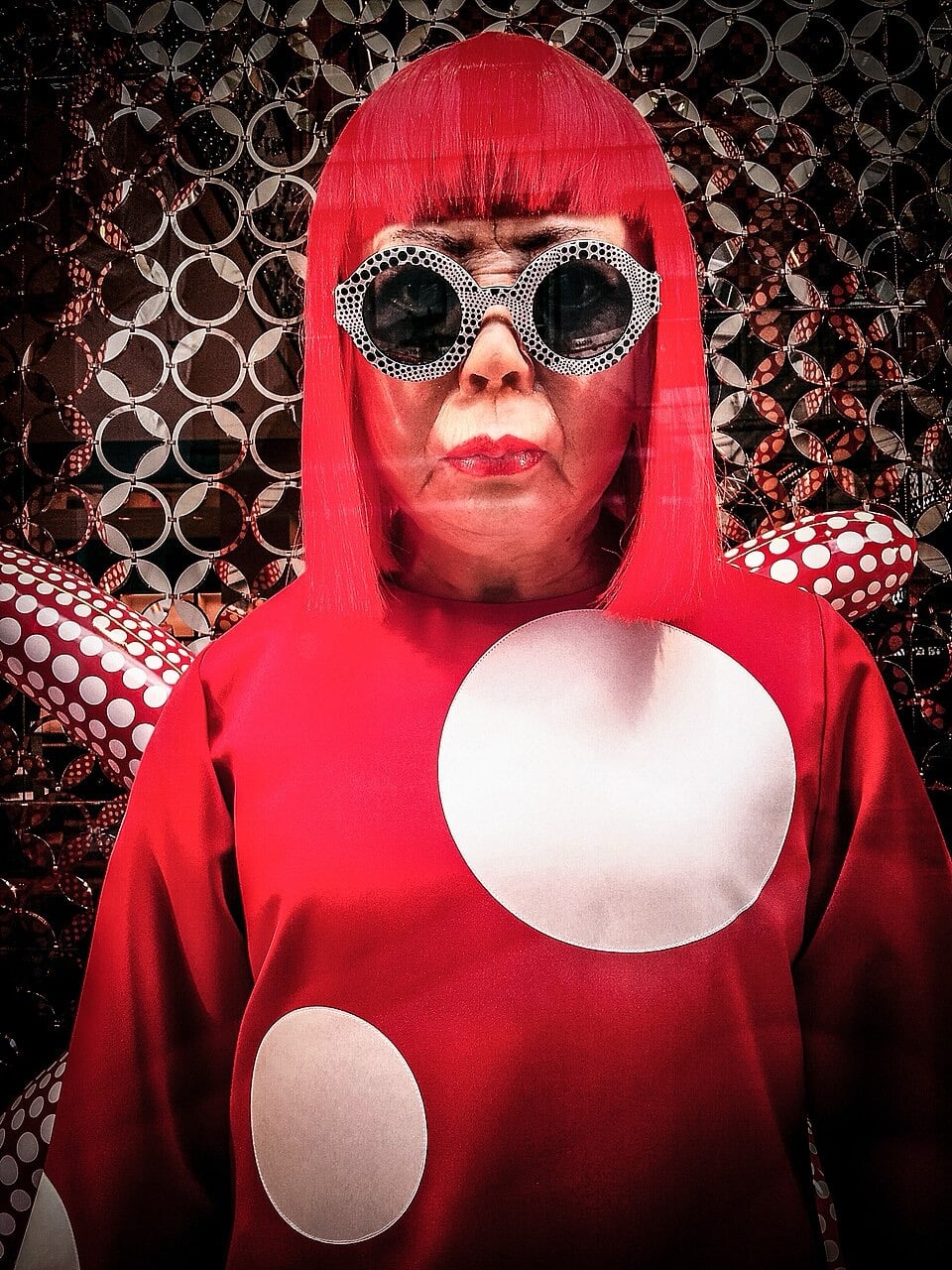
Yayoi Kusama, the Japanese avant-garde artist whose hallucination-inspired dot patterns and immersive mirror rooms made her one of the world’s most recognisable living artists, has died aged 97, according to an announcement on her official website.
Yayoi Kusama, the Japanese avant-garde artist renowned for her immersive mirror rooms and dot-covered artworks, has died at the age of 97. An announcement on her official website confirmed she died on 14 August, though no cause of death was given. Over the course of her career, Kusama became known for transforming lifelong hallucinations into art, producing signature dot-covered paintings and pumpkin motifs that made her one of the most instantly recognisable figures in contemporary art.
Leaving Japan for New York
Frustrated by what she experienced as the confining nature of Japanese society, Kusama left for New York at the age of 27. There, she quickly established her reputation through paintings inspired by hallucinations of flashing lights, dots and flowers, visions she had experienced since childhood.
During her time in New York, Kusama also took part in anti-war activism during the 1960s and reportedly influenced other prominent artists of the era, including Andy Warhol.
A candid relationship with mental illness
Kusama was open throughout her career about her struggles with mental health, once saying that New York had given her “neuroses.” Around 1977, a few years after returning to Japan, she voluntarily entered a mental hospital, where she went on to live for decades, being driven each morning to her nearby studio to continue her work.
Reflecting on her lifelong hallucinations in a 2017 interview, Kusama said: “I still see hallucinations even now. Dots come flying everywhere — on my dress, the floor, things I’m carrying, throughout the house, the ceiling. And I paint them.”
