



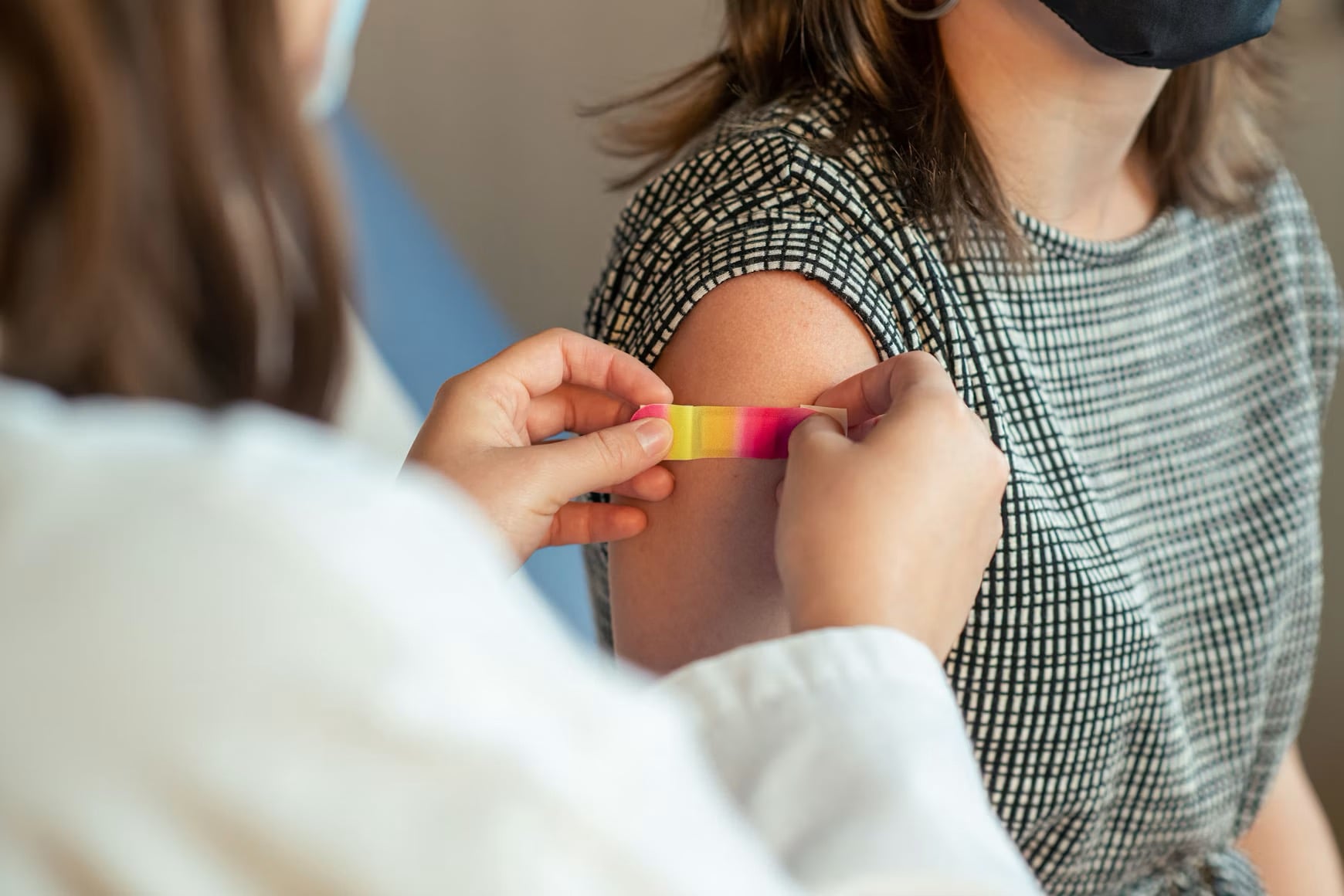
A large trial of more than 1,100 patients found the Moderna vaccine, given with the immunotherapy Keytruda, reduced recurrence or death after surgery. Overall survival data are not yet mature.
The world’s first personalised mRNA cancer jab for melanoma has cut the risk of patients’ cancer returning or of them dying by 42% when combined with immunotherapy, a large trial shows. The vaccine, called intismeran, was paired with Keytruda, made by MSD, which is known as Merck in the US. The comparison was with Keytruda alone, two years after treatment. Patients in the UK and worldwide took part, and the vaccine is also being tested in other cancers, including kidney, bladder and lung.
The results
According to the companies, the combination also cut the risk of the cancer spreading or of death by 38%. About 82% of patients on the combination were alive with no return of melanoma after two years, against 70% of those who received Keytruda alone. Research notes citing CancerNetwork say 88.5% were alive without distant spread, against 80.2%.
The 42% figure applies to recurrence or death combined, not to death alone. The companies acknowledge that overall survival data are still immature, and the trial is continuing to assess whether the vaccine reduces deaths from melanoma. This is why the source’s headline claim of a 42% cut in “risk of death” is not supported, and I have reworded it.
The notes cite a prespecified analysis, reported by the American Journal of Managed Care, which found that the benefit emerged after the first six months. There was no clear difference between the groups before that point, and afterwards the risk of recurrence or death was 58% lower. The risk of distant spread or death was 50% lower. The analysis does not show that benefit starts at exactly six months. A further analysis excluding patients who never received their first planned dose found a 49% cut in recurrence or death, and a 45% cut in spread or death.
How the trial worked
The phase III trial, INTerpath-001, enrolled 1,137 people, allocated 2:1 to the combination or to Keytruda plus a placebo. The patients had stage IIB, IIC, III or IV melanoma that had been completely removed, and had not had systemic treatment. They received up to nine personalised injections of 1mg at three-week intervals, and Keytruda at 400mg every six weeks for up to nine cycles, over about 56 weeks.
The vaccine targets neoantigens, markers produced by a particular patient’s tumour that the immune system can recognise. It codes for up to 34 of them. A tumour sample is taken during surgery, followed by DNA sequencing and the use of artificial intelligence, to build a personalised jab. Making each one takes about six weeks, according to the Associated Press.
Side effects
According to the American Journal of Managed Care, 95.8% of patients on the combination had at least one treatment-related side effect, against 90.0% on Keytruda and placebo. Serious events of grade 3 to 5 occurred in 14.2% and 13.4% respectively. These grades run from severe to fatal events, and the figures do not mean that 14.2% died. The most common side effects in the combination group were fever (52.2%), injection-site pain (51.0%) and fatigue (38.5%). The companies say safety was consistent with earlier studies.
What experts say
Susanna Daniels, chief executive of Melanoma Focus, said: “These positive trial results represent a really exciting milestone in melanoma skin cancer treatment. With melanoma accounting for over 20,000 new diagnoses and 2,600 deaths in the UK each year, innovations that help prevent recurrence and stop the cancer spreading offer vital new hope for melanoma patients.”
Alan Melcher, professor of translational immunotherapy at the Institute of Cancer Research, London, said: “These are very impressive results. Cancer vaccines have been researched for many years, but advances in genetic sequencing, immunotherapies and mRNA technology, including experience gained from Covid vaccines, have transformed what is possible.”
He said the jab “essentially trains the immune system to recognise those cancer cells as a threat and attack them, while pembrolizumab helps release the brakes on the immune response”. “This is a large phase III trial, so it provides much stronger evidence than we have previously had that a personalised cancer vaccine can make a meaningful difference to patients,” he added.
Professor Melcher cautioned: “We’re closer to cancer vaccines becoming part of routine treatment than we’ve ever been, but they are not going to replace existing treatments across the board. The more realistic prospect is that they become another powerful tool that we can combine with treatments such as immunotherapy.” He said the challenge now was working out which cancers and patients were most likely to benefit.
Dr Lennard Lee, associate professor of AI and cancer vaccine research at the University of Oxford, said: “This is the Rolls-Royce of clinical trials. It is a large, randomised, double-blind, well-controlled study, representing the highest standard of clinical evidence. The results are compelling … This is a major breakthrough for cancer vaccine research.”
Professor Georgina Long, the study’s principal investigator and medical director of Melanoma Institute Australia, said the results “have the potential to make a foundational shift in how we treat patients with earlier-stage melanoma in the adjuvant setting”.
What happens next
The companies are preparing regulatory submissions, and Reuters reports they see a possible US launch in 2027 if approved. The vaccine remains investigational and is not a routine NHS treatment. No UK price, NHS funding agreement or rollout date has been identified. The full findings are due to be presented at the ESMO Congress in Madrid on Saturday 24 October, and have been accepted by The New England Journal of Medicine. Some results emerged early after an embargo breach, according to Fierce Biotech. Moderna’s shares fell more than 17% on Thursday, as some outcomes did not exceed expectations, and Merck’s fell about 1.8%, Reuters reported.
The effect was smaller than in an earlier phase IIb study with five years of follow-up, which showed a 49% reduction in recurrence or death and a 59% reduction in spread or death. The trials had different populations and follow-up, so the figures are not directly comparable. Nine phase II and III trials are now testing intismeran, including three phase III studies in non-small-cell lung cancer, and early-stage studies in pancreatic and stomach cancer.
