



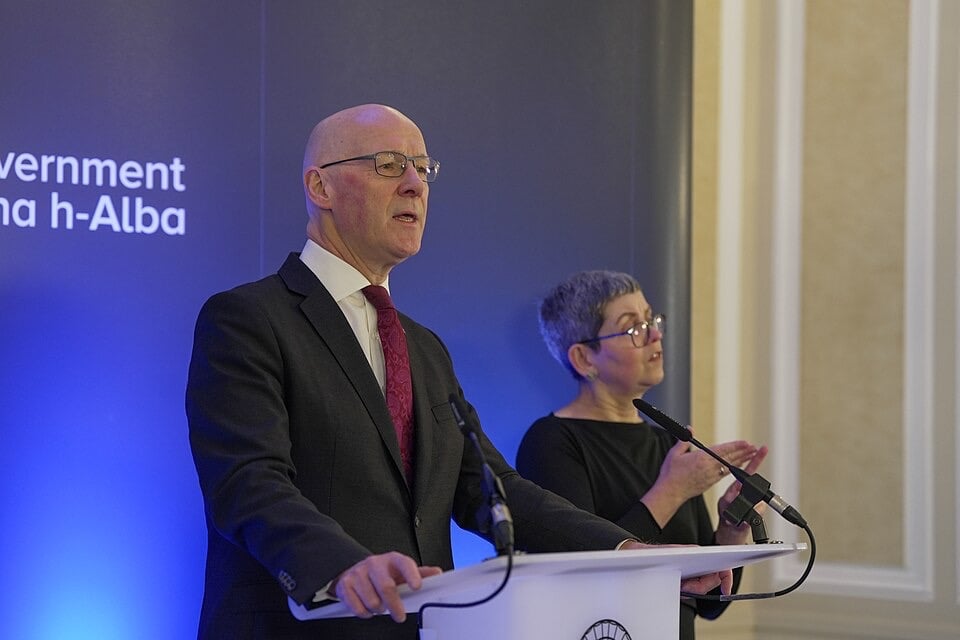
Senior officials are being invited to apply for voluntary exit packages as part of John Swinney’s reform of the public sector, just as staff are told to spend more time in the office.
Senior Scottish civil servants earning more than £62,000 are being offered a month’s pay for every year of service, up to a maximum of 21 months, to leave their jobs under a voluntary exit scheme. ITV Border reported that the scheme has been opened to ‘C band’ officials and those in the senior civil service. The offer follows the First Minister’s promise last month, in his programme for government, of major reform of the state. From 9 November, all civil servants will also be required to work in the office for at least 40% of the working week.
How the exit scheme works
According to ITV Border, C band officials have a starting salary of £62,111. The 21-month maximum is subject to a £95,000 cap, so the highest-paid officials cannot necessarily receive 21 months of their full salary. The scheme is also not an automatic offer to everyone above the salary threshold. Applications are assessed against affordability, workforce requirements, the retention of critical skills and business needs. Voluntary severance arrangements must also meet public-finance rules on value for money.
A Scottish Government spokesman said the scheme “will support the aim of becoming a smaller and more focused organisation by giving eligible staff at managerial and senior civil service grades the opportunity to apply to leave on agreed terms taking account of business requirements, workforce priorities, affordability and the need to retain critical skills and capacity”.
Voluntary exits are one of several tools in the wider reform plan, alongside restructuring and natural staff turnover.
Political reaction
Max Bannerman, public service reform spokesman for Reform UK Scotland, criticised the move. “This frivolity proves the SNP is not serious about slimming down the public service in order to plug the gaping hole in our national finances,” he said. “The SNP knows they have a job to do so it’s beyond time they get on with doing it.”
His comments follow figures showing the Scottish public sector has continued to grow despite years of promised reform. An extra 6,640 people were employed in the year to June 2026, taking total public-sector employment to 603,800.
That figure covers far more than the civil service. It includes NHS workers, council employees, police and fire staff, colleges, public corporations and other public bodies. NHS employment rose by about 3,700 and local government employment by around 2,320 over the period, while the devolved Scottish Civil Service grew by only about 280. The reserved Civil Service, which works for the UK Government, is counted separately in the wider public-sector figures.
Office attendance becomes mandatory
Under the new rules, staff must spend at least 40% of the working week in person from 9 November, rising to 60% for more senior officials. Staff will have to use a ‘self-reporting tool’ to record where they are working, and managers will raise the matter with anyone who falls short. One possible sanction is the removal of the right to hybrid working.
The 40% figure is not new. Since October 2025, core Scottish Government staff below senior civil service grade have been asked to work in person for at least that proportion of the week. A Scottish Government spokesman said they would now be required to do so, while senior civil servants must be in person 60% of the time. The spokesman said the change followed a period of formal consultation with the Council of Scottish Government Union.
In-person work does not necessarily mean sitting at a government office every day. Qualifying activity can include meetings with stakeholders, work in communities, training, conferences and other approved in-person activities.
Permanent Secretary Joe Griffin told staff in an email that he saw “huge value in a balanced hybrid approach” to working.
