



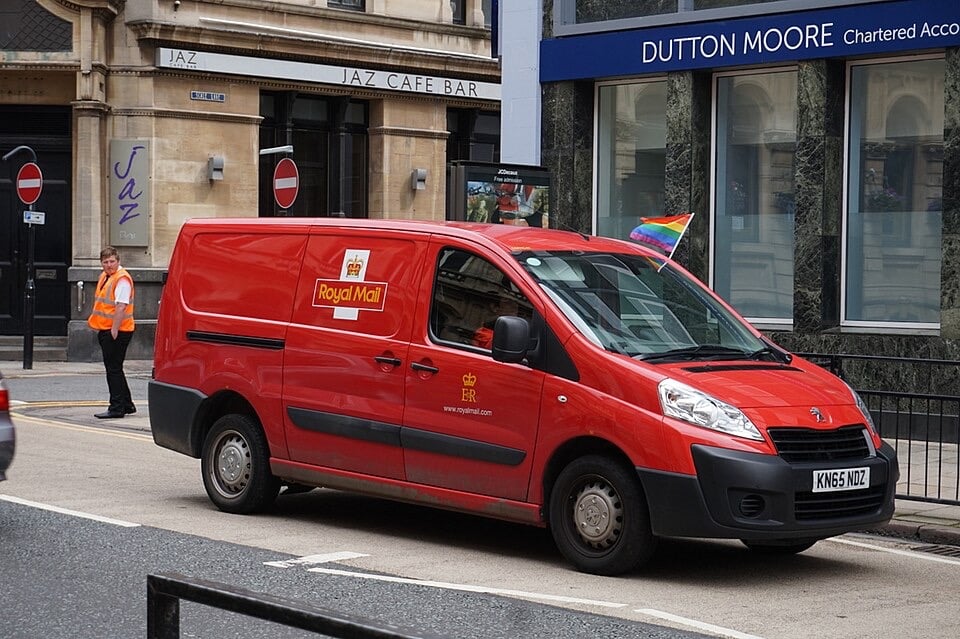
Royal Mail missed its delivery targets for the year to March 2026 by a wide margin, prompting fresh criticism from ministers — but customers hit by delays may already be entitled to compensation under the company’s existing rules.
Royal Mail is facing renewed government pressure after missing its delivery targets for the year to March 2026, with ministers warning that its service has “not been good enough.” Kate Dearden, Minister of State at the Department for Business, Innovation, Science and Trade, set out the government’s position this week, responding to a parliamentary question from John Slinger, Labour MP for Rugby. The criticism comes as Ofcom investigates Royal Mail’s performance and as the company faces fines totalling more than £37 million in recent years, though customers affected by delays may already be entitled to compensation.
Ministers press Royal Mail for improvement
Responding to Mr Slinger’s question, which asked what steps were being taken to “hold Royal Mail senior management accountable” for missed delivery targets, Ms Dearden said the government had been clear that the service’s quality “has not been good enough.” She said ministers had raised Royal Mail’s performance directly with the company and with Ofcom as the independent regulator, and that both understood more needed to be done to improve stability and reliability. She added, however, that the most recently published quality-of-service figures, covering the first quarter of 2026/27, showed an improvement.
Ms Dearden pointed to Ofcom’s ongoing investigation into Royal Mail’s quality of service during 2025/26, and noted that the company had published its own improvement plan alongside a £500 million investment in frontline resourcing. She said the government would continue pressing Royal Mail for further progress.
A year of missed targets
Royal Mail’s performance for the year ending March 2026 fell well short of its obligations. The company delivered only 75.7% of First Class mail on the next working day, against a target of 93% — a shortfall of 17.3 percentage points. Second Class performance was also weak, with only 90.2% of items delivered within three working days against a target of 98.5%, a gap of 8.3 points.
This was not a one-off. Ofcom’s monitoring data shows First Class performance has lagged well behind target for several years, running at around 73.7% in 2022/23, 74.5% in 2023/24 and roughly 77% in 2024/25 after the regulator’s adjustment. The regulator has characterised the problem as persistent underperformance rather than a single bad year.
Ofcom investigation and a history of fines
Ofcom opened a formal investigation on 1 June 2026 into whether Royal Mail breached its legally binding quality-of-service obligations during 2025/26. Should the regulator find a breach, it has the power to impose a further financial penalty. Royal Mail has already been fined repeatedly in recent years: £5.6 million for 2022/23, £10.5 million for 2023/24, and £21 million for 2024/25, the latter announced in October 2025. Together, those penalties total £37.1 million over three consecutive regulatory years, with the newest investigation still under way.
New targets and a changing delivery model
From 1 April 2026, Ofcom reduced Royal Mail’s formal targets to 90% of First Class mail delivered the next working day and 95% of Second Class mail delivered within three weekdays. It also introduced new reliability targets requiring 99% of First Class mail to arrive within three days and 99% of Second Class mail within five days. Because the 2025/26 regulatory year ended in March, Royal Mail’s poor performance for that period was still measured against the older, higher targets.
Royal Mail has also changed how it delivers Second Class post. Under its new operating model, agreed with the Communication Workers Union, Second Class letters are now delivered on alternate weekdays rather than every weekday — meaning, for example, that a letter posted on a Friday might typically arrive the following Wednesday. The change forms part of wider Universal Service reforms intended to reduce costs while maintaining nationwide coverage. The new system is being rolled out across around 1,200 delivery offices over five to six months, with completion expected by December 2026, meaning delivery patterns may currently vary depending on whether a local office has already transitioned.
Investment plan amid persistent complaints
Royal Mail’s improvement plan includes £500 million of investment over five years, alongside a quarter-by-quarter path intended to bring performance towards the new regulatory targets — a response, in part, to Ofcom’s view that the company’s previous recovery plans had proved ineffective. Complaint volumes remain high regardless: Ofcom’s latest monitoring recorded around 2.47 million complaints about Royal Mail in 2024/25, a 3% fall on the previous year but still a substantial number. Lost mail was the largest single category, accounting for roughly 1.12 million complaints, or about 45% of the total.
What compensation customers can claim
Royal Mail is obliged to pay compensation to either the sender or recipient of a delayed item in certain circumstances, where the item has not been delivered or where no delivery attempt has been made. Under the standard scheme, this can apply:
- three or more working days after the due date, except where an item is redirected using the Royal Mail Redirection Service;
- six or more working days after the due date for items using the Redirection Service;
- 24 or more hours after the due date for Special Delivery Guaranteed by 1pm items not posted on account.
Customers may also be eligible for what Royal Mail terms “substantial delay compensation” if an item remains undelivered, or no delivery attempt has been made, seven or more working days beyond the expected date.
For ordinary First and Second Class items, the compensation threshold is generally three or more working days after the item’s due date. However, the standard payout for these eligible retail services is a book of First Class stamps rather than a cash payment. Special Delivery Guaranteed by 1pm operates under a separate scheme: a delay of one or more working days past the guaranteed date can qualify for £5 compensation, rising to £10 if the item is seven or more working days late, with separate rules covering refunds of the delivery fee itself.
It is also worth noting the distinction between delayed and lost post. An item that eventually arrives late can potentially qualify for delay compensation under the rules above, but an item that never arrives at all is not treated as a delay claim — it may instead fall under Royal Mail’s separate loss compensation scheme. The full compensation rules are published on the Royal Mail website.
