



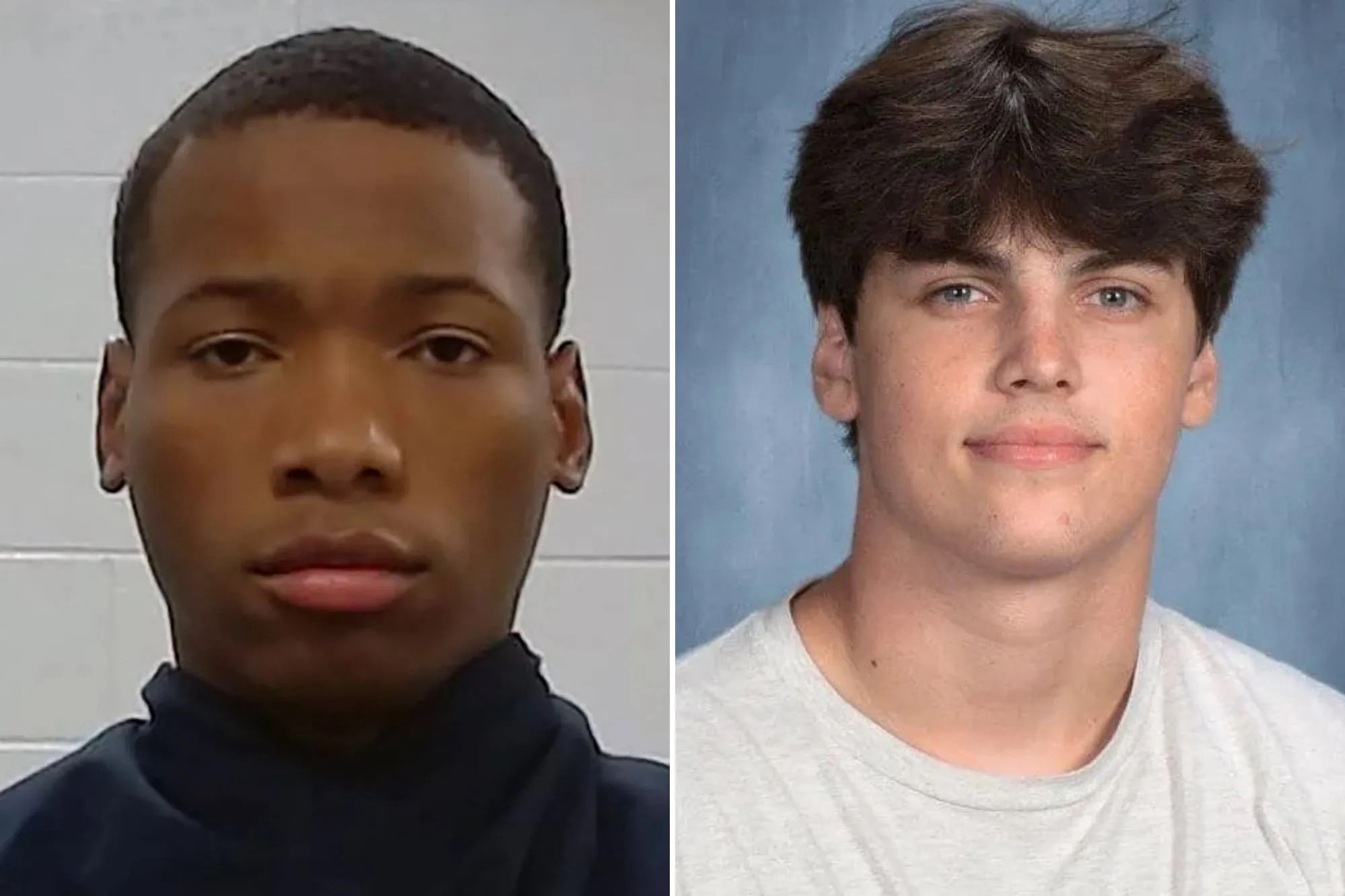
The family of Karmelo Anthony, convicted of fatally stabbing 17-year-old Austin Metcalf at a Texas high school track meet, has launched a fundraiser seeking $250,000 to cover the cost of his appeal, after a judge rejected his bid for a new trial despite acknowledging a disputed agreement between prosecutors and his original defence team.
Karmelo Anthony’s family is asking supporters to contribute $250,000 towards funding his appeal, after a Texas judge rejected his request for a new trial. Anthony, 19, was sentenced to 35 years in June for the fatal stabbing of Austin Metcalf, 17, at a high school track meet in Frisco in 2025. A GiveSendGo fundraiser launched by his family has already raised $27,000 from grassroots supporters. Family spokesperson Dominique Alexander told reporters on Wednesday: “We understand that the pursuit of justice through the appellate system requires tremendous resources. This is why the legal fund has been established.”
The new trial hearing
Last month, a Collin County judge denied Anthony’s motion for a new trial, though the hearing itself brought previously undisclosed evidence into public view, having originally been kept out of court under an informal agreement between the prosecution and defence.
According to attorneys, that agreement saw the defence agree not to raise Metcalf’s criminal record, stemming from racist graffiti he and two others were alleged to have spray-painted, in exchange for keeping details of Anthony’s history of violent, threatening text messages out of court, along with claims from his ex-girlfriend that he had been stalking her shortly before the stabbing.
Anthony’s new legal team argued during the hearing that last-minute disagreements over the scope of this agreement ultimately prevented him from taking the stand, a decision they say effectively undermined his defence. “So much evidence came out. That evidence showed not only this family but the entire world that he did not receive a fair trial,” Anthony’s co-counsel Sean Daredia told reporters on Wednesday.
It is worth noting that the judge’s refusal to grant a new trial does not mean the disputed agreement was found not to exist. Prosecutors acknowledged that the two sides had reached an understanding about limiting character evidence; the dispute centred instead on its precise scope, and whether it improperly influenced Anthony’s decision not to testify.
What happened during the hearing
During the two-day new-trial hearing, Anthony’s former defence attorney, Toby Shook, testified that the defence had originally intended for Anthony to testify in his own defence. Shook told the court that the informal agreement with prosecutors had been intended to prevent both sides from introducing potentially inflammatory evidence about Anthony and Metcalf’s respective backgrounds.
Prosecutor Bill Wirskye disputed the defence’s interpretation of events, telling the judge there had never been an agreement preventing Anthony from taking the witness stand. Anthony’s lawyers countered that the resulting disagreement between prosecution and defence over the agreement ultimately caused Anthony to lose confidence in the process, leading him not to testify.
The judge ultimately issued a brief written order rejecting the new-trial motion, without providing a detailed explanation addressing each individual argument raised. His order stated that he had reviewed the motion, trial record, evidence, arguments, briefs and relevant case law.
A judge removed from the case
Anthony’s appeal is not limited to the disputed agreement between prosecutors and his original defence team. His lawyers have also argued that restrictions on public access to the courtroom violated his constitutional right to a public trial, and separately challenged the continued involvement of Judge John Roach, who presided over the original trial.
Visiting Judge Sid Harle subsequently ruled that Roach’s impartiality could reasonably be questioned, an issue that arose partly because Roach gave a television interview shortly after Anthony’s conviction in which he said jurors “got it right.” The defence argued that such a public comment created the appearance that the judge had already endorsed the verdict. Following Roach’s removal from the case, retired Kaufman County District Judge Michael Chitty was appointed to oversee the new-trial proceedings.
What happens next
The denial of the new-trial motion does not bring Anthony’s appeal to an end; his lawyers have explicitly said they intend to continue challenging the conviction through the appellate courts. His appellate legal team, working pro bono, includes attorneys with backgrounds in criminal defence, civil rights and appellate law: Russell Wilson, Gary Bledsoe, Michael Ware, Brooke Cluse, Sean Daredia and Justin Moore.
According to Collin County court records, Anthony filed his notice of appeal less than 24 hours after receiving his 35-year sentence. His appellate lawyers have described the next stage of the process as a full review of the entire trial record, meaning the formal appeal can raise issues beyond those discussed during the August retrial hearing.
Collin County District Attorney Greg Willis said following the ruling that the prosecution remains confident in the original guilty verdict, while acknowledging that Anthony retains the legal right to appeal. Anthony’s conviction remains first-degree murder, and his 35-year sentence remains in effect while the appellate process continues. His legal team has warned that the appeal could take considerably longer than the new-trial proceedings, with litigation potentially continuing into 2027 and beyond.
Family’s gratitude and previous fundraising
Speaking after Alexander’s remarks, Anthony’s father, Andrew Anthony, thanked supporters for their continued backing, saying: “We want to thank everybody, from the internet family to our personal family.” He extended particular thanks to what he described as the “angels” who have supported the family throughout the case.
This is not the first time the Anthony family has turned to crowdfunding. An earlier GiveSendGo fundraiser had already raised more than $600,000 before being taken down the day after Anthony’s conviction. In a statement, the fundraising organisation said: “This fundraiser was created to support pre-trial needs, and those funds were disbursed over the past year for lawful purposes including legal defense and family relocation.”
