



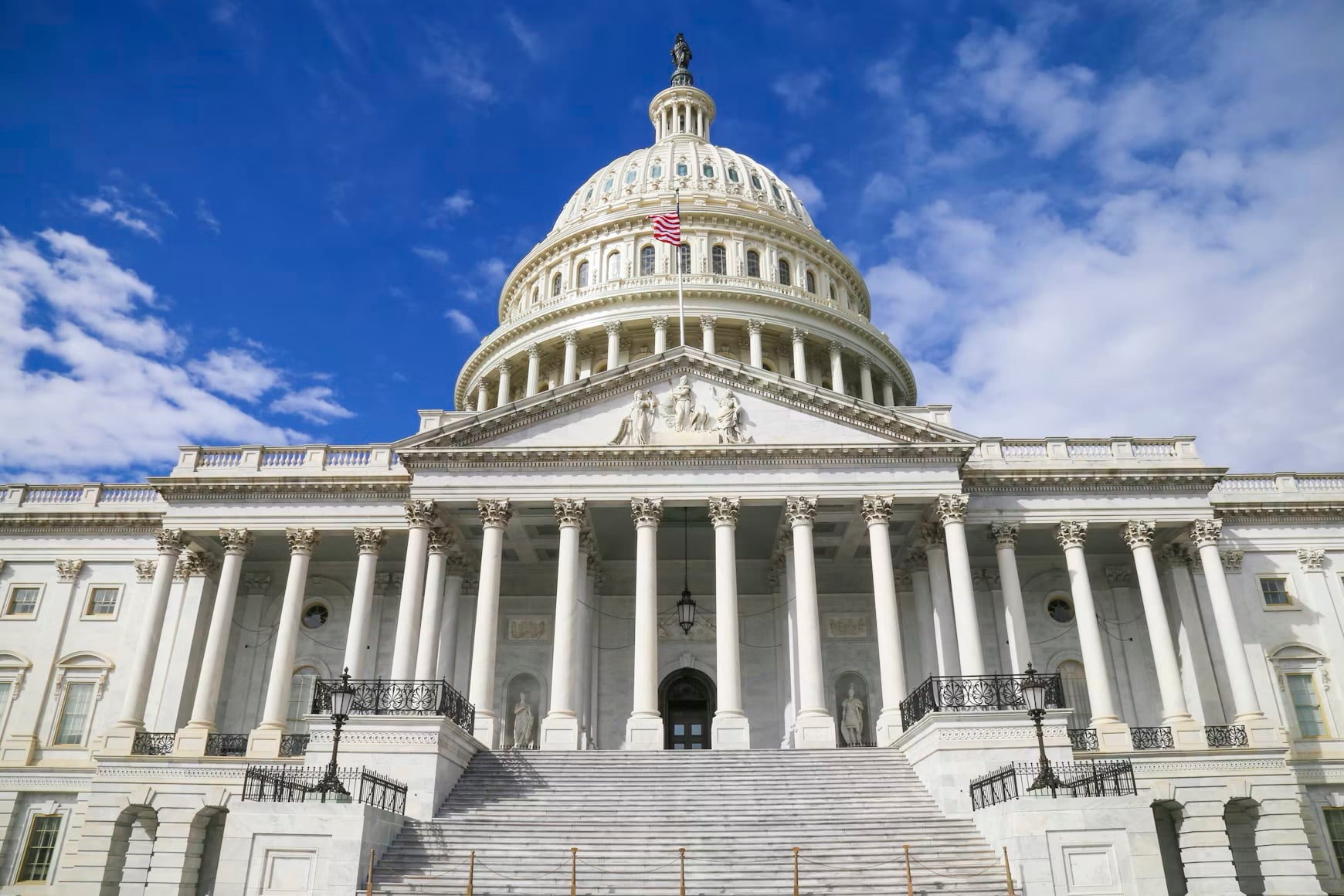
The White House says there are “no credible threats to the homeland”, while Iran has denied the allegations and security analysts have questioned the intelligence.
Iran is developing plans to detonate a so-called dirty bomb in Washington to target senior Trump administration officials, according to two US officials who spoke to CNN. The officials, who are familiar with the intercepted intelligence, described the plot as specific and said it includes locations and targets. Sources said it appears intended to give Tehran options and does not indicate an imminent attack. The White House said there were no credible threats to the homeland, and Iran’s mission to the United Nations rejected the allegations.
What officials told CNN
CNN reports that the intelligence has prompted a flurry of contingency planning in Washington. Two sources said officials held several meetings over the past week on how to counter the threat. One described the response as “prudent”.
Washington officials view the intelligence as a sign of Iran’s willingness to escalate, according to the reporting. Tehran is under pressure from continuing US military strikes and an economic blockade that senior administration officials have admitted is “devastating” the country. Insiders said it showed Iran actively planning for possible attacks on US territory, though there is no evidence it has decided to proceed.
CNN’s reporting also says the Secret Service moved Treasury Secretary Scott Bessent into military housing last week after threats from Iran. One insider claimed US intelligence had picked up Iranian chatter that bomb-making materials had been stored inside the country. Officials are divided on how credible that is. They generally believe, however, that it would be easy for Tehran to have already positioned chemical agents that could be loaded onto a conventional weapon.
A dirty bomb combines radioactive material with conventional explosives. Its main purpose is to spread fear and panic and force costly clean-ups, and not to cause mass casualties. Such devices are relatively easy to assemble, and Iran would not necessarily need to smuggle trained operatives into the US. “Any weapon like that is a weapon of terror, not a weapon of precision, just like a suicide bomber blowing themselves up,” one source told CNN. “They can make people really sick and certain areas uninhabitable.” The risk of a dirty-bomb attack has long been discussed, but none has ever been successfully carried out.
Responses
White House spokeswoman Lauren Bis said the US was “monitoring any and all potential threats”, but added: “at this time there are no credible threats to the homeland.”
A spokesman for the Iranian Mission to the United Nations in New York told CNN that Tehran “considers the use of chemical weapons under any circumstances to be wholly illegitimate and categorically rejects and unequivocally refutes the false and fabricated allegations circulated in this regard”. CNN reports that the spokesman did not explicitly address the intelligence about a possible dirty-bomb plan.
Counterterrorism expert Andy Vitek said the alleged plot “makes no sense and is utterly out of step with how Iran and the [Revolutionary Guard] have historically operated”. He told The i Paper that the US and Israel had “set fire to their international credibility” with the 2026 war, and that setting off a radiological weapon on US soil “would give it all back”.
National security consultant Adam Silverman called the reports a “Stephen Miller special” designed to “create fear and a pretext” for renewed attacks on Iran. “The Iranians are not that stupid; they know exactly what the response would be,” he said.
The wider picture
The memorandum, intelligence and court cases below do not independently confirm the Washington allegation, and none mentions a dirty bomb.
- Intelligence chief’s warning: In a memorandum dated 23 October, Director of National Intelligence Jay Clayton told Secretary of State Marco Rubio that Iranian efforts to kill Americans abroad had reached advanced stages. He said some officials facing possible threats were not cleared to see the relevant intelligence, and offered to downgrade sensitive material so the State Department could warn more staff. CIA Director John Ratcliffe was copied in. The memorandum concerns American personnel in the Middle East and elsewhere, and does not name Washington, a dirty bomb or a specific target.
- FBI listing: On 10 November the FBI added Islamic Revolutionary Guard Corps member Shahram Poursafi, also known as Mehdi Rezayi, to its Most Wanted Terrorists list. He is accused of organising a scheme to assassinate former senior US officials. Investigators allege that between October 2021 and April 2022 he tried to recruit people inside the US to carry out killings for $300,000, apparently in retaliation for the January 2020 US killing of Iranian commander Qasem Soleimani. The charges are allegations.
- Terrorism indictment: Also on 10 November, the Justice Department unsealed an eight-count indictment against Mohammad Baqer Saad Dawood al-Saadi, Mohsen Mohajeri and Mohammad Ali al-Hassani. Prosecutors allege involvement in nearly 20 attacks or attempted attacks across Europe and the US, linked to Kata’ib Hezbollah and the IRGC. They include an alleged plot against RAF Fairford in England. According to the indictment, an associate surveilled the base on 22 August 2026, and British authorities stopped vehicles at a roadblock on 26 September and arrested occupants on 27 September. Prosecutors say al-Saadi passed coded messages through calls to relatives in Iraq while imprisoned in New York. The three defendants are presumed innocent, and the indictment does not link them to the alleged Washington plan.
- Merchant conviction: On 6 March 2026 a federal jury convicted Asif Merchant of murder-for-hire and attempting an act of international terrorism. The Justice Department said he admitted at trial that the IRGC sent him to the US in 2024 to arrange political assassinations. The proposed hitmen were undercover US law enforcement officers, and the plot was stopped before any attack. He faces a possible life sentence.
- Embassy changes: The State Department ordered non-emergency staff and their families to leave diplomatic posts in Saudi Arabia in October. Axios reported that on 23 October Washington also ordered staffing reductions at US embassies in the UAE, Lebanon, Qatar and Jordan, linked to fears of Iranian operations and wider escalation. Reuters reported updated travel advisories for more than a dozen countries in the region.
- Chemical-weapons warnings: The New York Times, as covered by The Times of Israel on 3 November, reported that Israel had warned Washington and Gulf governments that Iran might consider chemical weapons use. Some US officials suspected the intelligence could be used to encourage renewed strikes on Iran, and Gulf officials reportedly found it unpersuasive.
- Surveillance powers: CNN reports that the US surveillance authority known as Section 702 lapsed in June 2026 after a dispute between the administration and Congress. Existing certifications remain valid until 16 March 2027. Attorney General Todd Blanche, Mr Clayton and Mr Ratcliffe have warned congressional leaders that delays in reauthorisation could endanger Americans at home and troops overseas. Congressional leaders in the bipartisan Gang of Eight were briefed on Iran several days before the letter, though it is not publicly known whether the briefings covered the alleged dirty-bomb plot.
What official guidance says about a dirty-bomb incident
The Centers for Disease Control and Prevention (CDC) says removing outer clothing can eliminate up to 90 per cent of radioactive contamination on an exposed person. It advises sheltering indoors for at least 24 hours in a substantial building, preferably a basement or central room, until officials give further instructions. The appropriate duration depends on the incident. The CDC also recommends closing windows and doors and switching off systems that draw in outside air, where appropriate. Its July 2026 recommendations treat a radiological dispersal device and an improvised nuclear explosive as separate emergency scenarios.
