



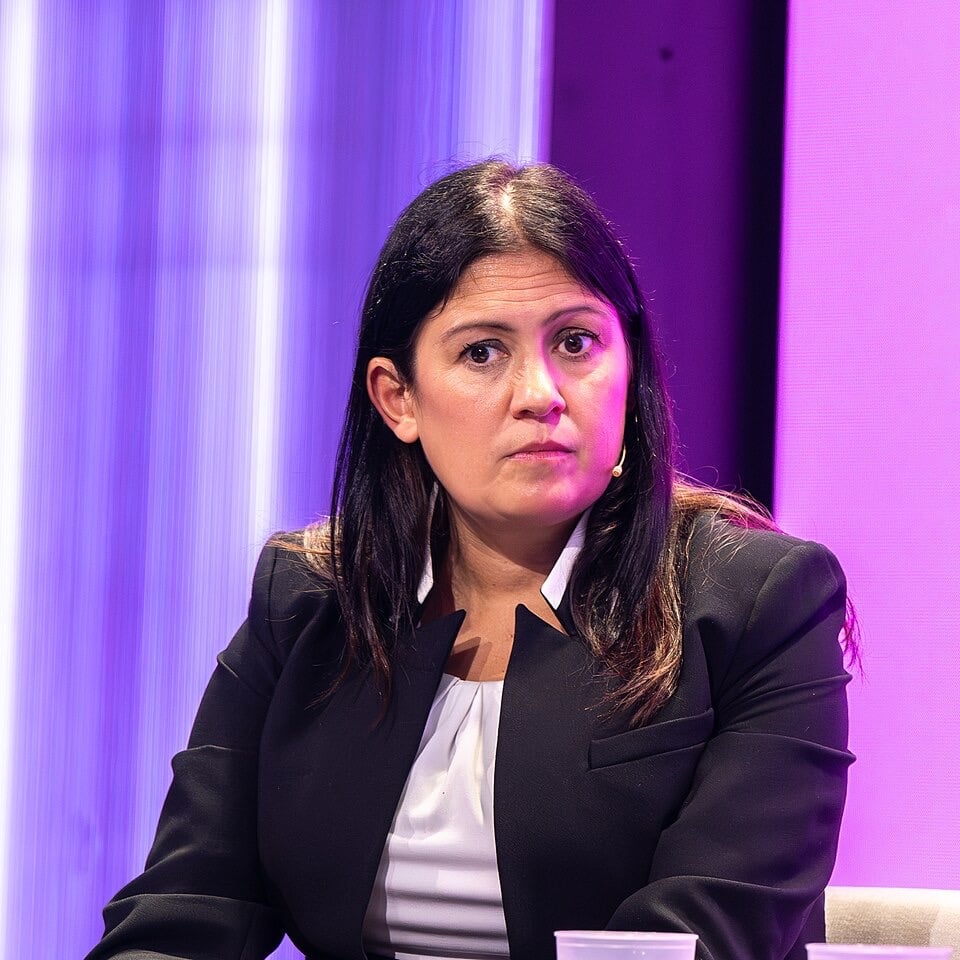
Philippa Childs of Bectu says the big broadcasters accept they “need to do better”. Ministers are reportedly considering making membership of the new industry watchdog compulsory.
Big broadcasters recognise they must “do better” on abuse in the entertainment industry, according to the head of the Broadcasting, Entertainment, Communications and Theatre Union (Bectu). Philippa Childs spoke after Culture Secretary Lisa Nandy met the heads of media, entertainment, arts and sports organisations in London on Monday, following Russell Brand’s sentencing. Ms Nandy told them that systematic change is needed through collaboration between government and industry. Among those present were BBC director-general Matt Brittin and Cecile Frot-Coutaz, Sky’s chief advertising and content officer.
The meeting
The session at the Department for Culture, Media and Sport also included Channel 4, HarperCollins, Netflix, the FA and Bafta. Ms Nandy asked what is being done to make sure bullying is routinely challenged, how whistleblowers are being supported to speak out and keep working in creative industries, and how safeguarding systems apply to freelancers. She also backed the Creative Industries Independent Standards Authority (CIISA), an independent, industry-funded body set up to improve and uphold standards in the sector.
Most attendees did not leave through the exit where journalists were waiting to ask questions.
Ahead of the meeting, Ms Nandy wrote in The Times: “Men in many areas of public life can act as prolific abusers – in plain sight – because power imbalances are huge, contracts are flexible and careers are built on reputation and contacts.” She urged the entertainment industry to “get its house in order” or face a government crackdown.
What the union said
Ms Childs told the Press Association that the large broadcasters had signed up to CIISA early on. “The BBC were very clear about needing to do more and supporting initiatives like CIISA,” she said. “The broadcasters are definitely at the forefront of saying ‘yes, we need to do more and we need to do better’.”
Representatives from sport, theatre, live events and music were also present. Ms Childs said broadcasters have had to deal with this long-standing problem through various high-profile cases, which is “perhaps” why they are further ahead in their response.
She called CIISA an “important development” because it can have a “helicopter view potentially of what’s going on”. CIISA chief executive Jen Smith told guests that the organisation is able to spot patterns of abuse across creative industries. “Provided they are properly funded and sustainable, then I think they will have a role in making sure the industry cleans up its act,” Ms Childs said. “But actually, it’s got to be everyone working across the industry. People have got to be encouraged to not only report if they’ve experienced bad behaviour, but also if they’ve seen bad behaviour as well.”
She said she felt positive. “She (the culture secretary) was clearly not wanting to be in this same situation in another year or two years’ time,” Ms Childs said. “The idea, I think, was that she wants to encourage industry to get its own house in order but, if not, then I’m sure further action will follow.” Asked what that action might be, she said she had no clear view yet, but “I suspect there will be further news fairly soon.”
Ms Childs said abusers like Brand were able to evade justice partly because freelancers fear being blacklisted from a “precarious” industry. “Whilst lots of freelancers talk about this problem constantly and could probably name others who’ve behaved badly, they feel very nervous about stepping up and reporting because of the consequences for their future.”
A compulsory watchdog?
Sky News reported on 16 November that ministers are seriously considering making registration with CIISA mandatory. Participation is currently voluntary, and compulsory registration would bring companies that have not signed up within the framework. No decision or legislation has been announced. Bectu is also pressing for compulsory financial contributions, with Ms Childs arguing that a watchdog that relies on voluntary funding may struggle to stay independent and sustainable.
According to The Times, about 50 reports had been made through CIISA’s whistleblowing service before the meeting. These are reports received, not confirmed incidents or completed investigations.
CIISA is due to publish an online directory of registered organisations on 25 November, Screen Daily reported. The BBC, Sky Studios, MultiStory Media and Two Cities Television were among the early participants that helped test its standards. Joining does not by itself show that a company’s safeguarding is effective. CIISA’s three-year framework for 2026 to 2029 sets fees by annual revenue, from £100 for organisations with turnover of £100,000 or less, and says fees will stay frozen throughout.
What the workforce says
An Equity membership survey published on 22 October found that only 13% of respondents believed employers were doing enough to prevent sexual harassment. Of the more than 2,100 members surveyed, 48% earned under £10,000 a year from performance work and 62% worked outside the creative industries to pay their bills. Only 26% were very confident they would still be working in the industry in three years. The figures describe survey respondents, not the whole workforce, and do not prove that every low-paid worker fears retaliation.
The law and the BBC
Sexual harassment disclosures have been explicitly protected under whistleblowing law since 6 April 2026, under Section 23 of the Employment Rights Act 2025, though workers must still meet the legal conditions for a protected disclosure. From 30 October, employers must take “all reasonable steps” to prevent sexual harassment, and have duties over harassment by third parties such as clients. The Act also contains provisions restricting non-disclosure agreements that silence harassment or discrimination complaints. That does not mean every confidentiality agreement is banned or that all those protections are in force.
On 12 November, Ms Nandy told the Commons that the BBC had repeatedly received similar recommendations after major misconduct investigations, citing Dame Janet Smith’s review of Jimmy Savile and the reviews into Huw Edwards and Tim Westwood. Conservative MP Rebecca Paul asked whether the government would use BBC charter renewal to demand stronger investigations and a zero-tolerance approach. Ms Nandy did not announce a new charter condition. She also confirmed that ministers have appointed two freelance champions.
Brand’s prison message
The Ministry of Justice is urgently investigating whether Brand breached prison communication rules, Reuters reported on 16 November. The inquiry follows a message he disputed his convictions in, read out by his wife, Laura Gallacher, on YouTube on Sunday. Downing Street said prisoners cannot avoid restrictions by passing statements to relatives for publication, and that disciplinary action could follow if a breach is found, ITV News reported. No finding has been announced. Sky News reported that Ms Gallacher is not herself under investigation.
Justice Secretary Alex Norris separately warned that barristers who use prohibited rape myths could face professional disciplinary consequences, The Guardian reported. Brand’s defence barrister, Ian Winter KC, has referred himself to the Bar Standards Board, which is examining professional standards, the paper said.
Brand, 51, is serving a sentence of 10 and a half years after he was convicted at Southwark Crown Court on 5 November of one count of rape and three of sexual assault.
