



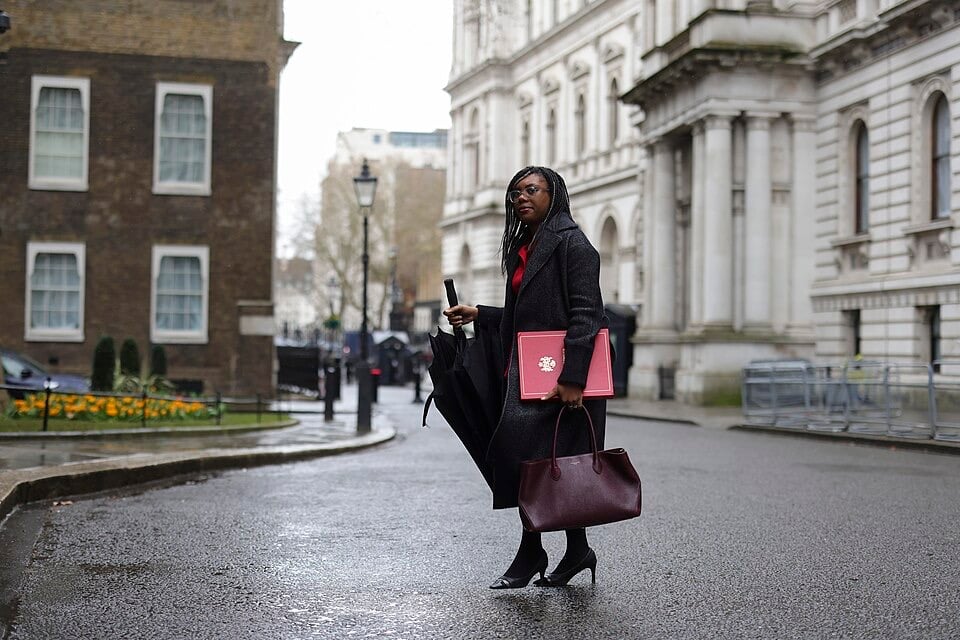
The Conservative leader told her party’s conference that a Tory government would take the family home out of inheritance tax entirely, whatever its value, as she set out a vision of lower taxes and home ownership.
Kemi Badenoch has pledged that a Conservative government would exempt the family home from inheritance tax, regardless of its value. Speaking at the party’s conference in Birmingham on Wednesday, she said couples would also be able to pass on a further £1m in assets tax-free. The policy is expected to cost around £6bn a year once fully in place, and the party says it would be funded through spending cuts rather than extra borrowing. Mrs Badenoch said the Tories “are and always have been the party of home ownership”.
The pledge
Mrs Badenoch framed the policy as the third part of a guarantee on housing taxes. “This is my guarantee: no stamp duty when you buy your home; no mansion tax when you live in your home; and no inheritance tax on your home when you pass it to your children or grandchildren,” she told delegates, to cheers.
The inheritance tax pledge follows last year’s conference promise to scrap stamp duty on primary residences, and a new commitment to scrap Labour’s mansion tax. Mrs Badenoch said those who “work hard and save should be rewarded for that effort”.
“The Labour Party think it is selfish to pass on what you have earned to your children. We don’t,” she said. She added: “Passing on your home to your family is one of the most human instincts of all. So (we) will legislate so nobody will ever pay inheritance tax on their family home.”
How the plan differs from current rules
Under the present system, an individual can leave £325,000 in assets tax-free, with a further £175,000 available when a qualifying home passes to direct descendants. Couples can therefore leave a total of £1m before inheritance tax applies. Those thresholds have been frozen, so rising property prices and asset values can bring more estates into the tax net even though the rate has not changed.
Under the Conservative proposal, the family home would be exempt completely, with no stated value ceiling. Each person would also receive a £500,000 allowance for other assets, allowing a couple to leave £1m on top of the family home. The party says the change would cut the number of people who ever pay inheritance tax by more than half.
The proposal would not abolish inheritance tax altogether. Mrs Badenoch said she hoped to scrap it eventually, but that funds were also needed for Conservative plans to build new prisons and to create a “Britannia Shield” missile defence system.
Who would benefit
The policy is designed to help families whose homes have risen substantially in value, particularly where higher house prices have pushed estates above existing thresholds. Because there would be no upper limit on the value of the exempt home, wealthier homeowners would also benefit. A household with a multimillion-pound residence could receive a much larger tax advantage than one with a home worth several hundred thousand pounds.
Mrs Badenoch said a levy originally designed to hit the “super-wealthy” had become a “tax on ordinary middle-class families in every corner of our country” after years of frozen thresholds. The proportion of deaths attracting inheritance tax is on course to rise from 4% in recent years to 9.5% by 2030. The proportion of families expected to be affected is forecast to reach 16.5% by the end of the decade.
Contrast with Labour
The Conservatives set their approach against that of the Government. Labour has extended the freeze on inheritance tax thresholds to 2031, which draws more estates into the tax by stealth. It is also introducing a mansion tax on valuable homes, and ministers are considering lowering the threshold from £2m to £1.5m before it has taken effect.
Mrs Badenoch said Labour had locked Britain into a “tax doom loop”, in which the Chancellor returned for more taxes every year to make up for growth lost because businesses were “choked by taxes”. She said the party was “addicted to welfare” and accused Prime Minister Andy Burnham of “drowning our country in debt, choking our economy with taxes and stifling every innovation with regulation”.
Wider conference message
In a speech lasting more than an hour, Mrs Badenoch warned the party to prepare for a “battle for the soul of this nation” of a kind not seen since Margaret Thatcher took on Labour in the 1970s. She said the party was ready to fight and win an election whenever one was called. Tory strategists believe Mr Burnham is preparing to hold a snap election as soon as next spring.
She made a direct appeal to Reform UK voters, saying: “Many of them are our people. We let them down and we want them to come back home.” She also confirmed several other commitments:
- £36bn in cuts to the benefits bill
- 50,000 extra prison places, which she said would allow the party to “introduce tougher minimum sentences for the worst crimes”
- Defence spending of 3% of GDP, with the warning: “The era of peace is over. If we want peace, we must prepare for war”
She branded Mr Burnham a “Paddington Bear PM” who cannot protect Britain and wants to “turn the clock back to the 1970s”. She also told him to “stop faffing around” and approve a third runway at Heathrow. The party has additionally unveiled plans to allow councils to seize private homes left unoccupied.
In a personal passage, Mrs Badenoch criticised Reform politicians who have suggested in recent days that only white people can be truly English. “I don’t want to live in a country run by people who threaten journalists, call veterans traitors and debate whether my mixed-race children are English,” she said. She added: “I don’t want to explain to my son when we’re watching our brilliant England team play football that some people don’t think our black players are English. We must not let these people take us backwards. That is not the country we are.”
The Conservatives have set out several major spending commitments at once, including the welfare cuts, prisons and defence, meaning the party would need to find savings to cover more than the £6bn annual cost of the inheritance tax measure.
