



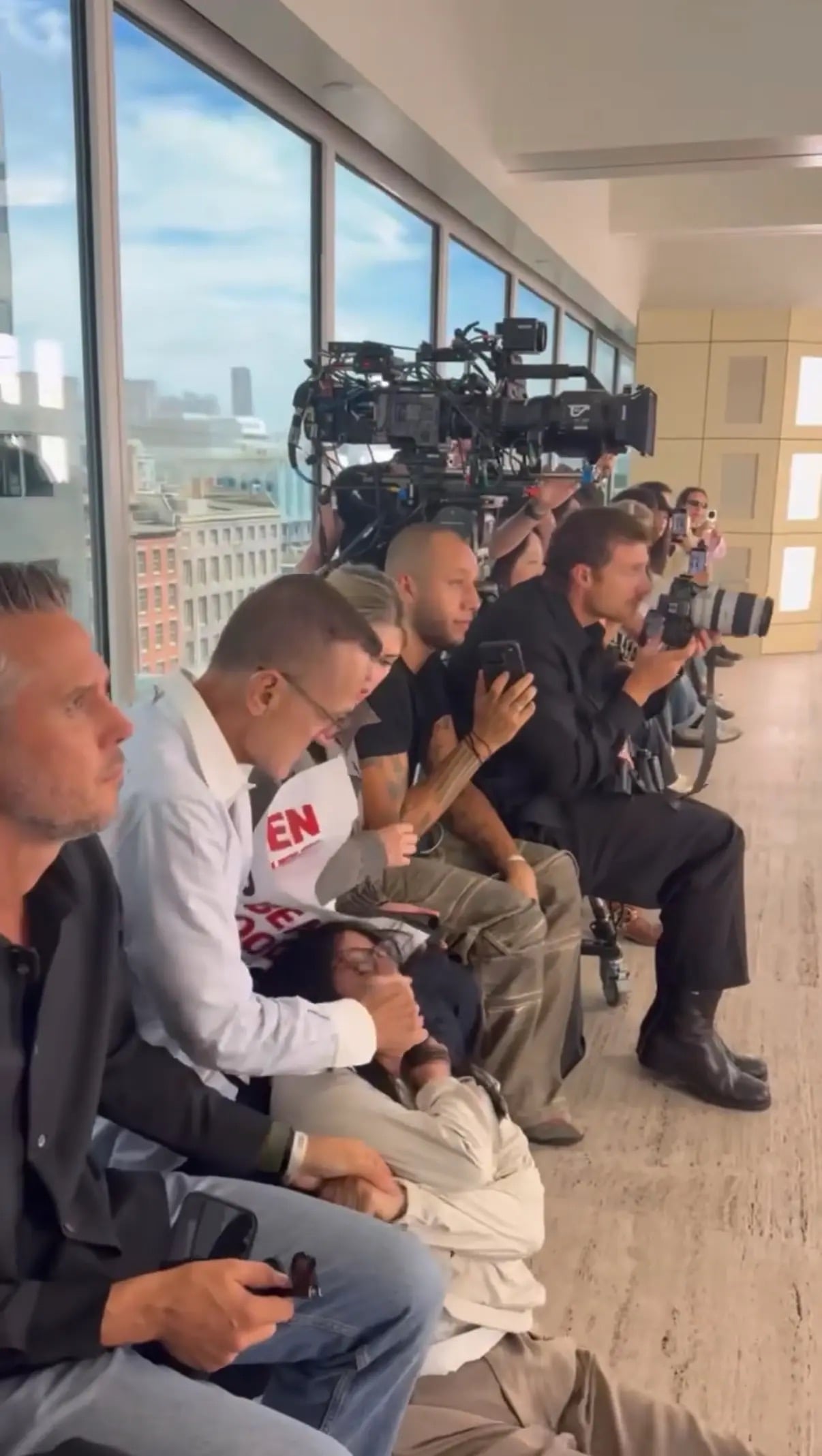
Senior executives at the fashion retailer sat down with the animal rights group following a confrontation at a New York Fashion Week show, but campaigners say the talks produced nothing to change their approach.
H&M executives met representatives of People for the Ethical Treatment of Animals (PETA) on 25 September without agreeing to stop using wool. The video call was arranged after a protest at a COS runway show in Manhattan, where a demonstrator was physically restrained. PETA’s senior director of strategy, Anne Brainard, described the discussion as a “big disappointment” and said the group would continue to target the retailer. H&M declined to comment on the meeting.
The runway protest
PETA activists disrupted a COS show in Manhattan last month. Video of the incident showed a protester being grabbed and held back by Steven Kolb, chief executive of the Council of Fashion Designers of America. He covered her mouth with his hand as she shouted about the alleged cruel treatment of sheep during shearing. The New York Post reported that an H&M executive was also involved in the incident.
Mr Kolb later apologised. H&M said at the time that it respected “everyone’s right to express their views” and believed “everyone should be treated with care and respect”. It added: “Animal welfare is very important to us, and we agree with PETA that no animals should be harmed to make fashion.” The company has declined to say whether it is taking any further action over the incident.
What was discussed
The Swedish company agreed to the meeting to discuss PETA’s investigation into the wool industry. The dispute centres on a South African wool operation that PETA says was NATIVA-certified and supplied wool through a broker that sells to H&M Group. PETA’s investigators alleged that workers kicked and struck sheep, dragged lambs by their legs and caused bleeding during shearing. These remain PETA’s allegations and have not been established by a court.
H&M was represented on the call by Cecilia Stromblad Brannsten, head of resource use for the group, and Markus Ahlberg, head of sustainability engagement.
Certification at the heart of the dispute
H&M has committed to sourcing all of its virgin wool and animal hair from farms certified under recognised animal-welfare standards by the end of 2025. Its animal-welfare policy states that it does not accept wool from farms that practise mulesing, and Australian wool must meet its non-mulesed or ceased-mulesed requirements. The company has not announced an end to wool use, and its materials policy still permits virgin wool that meets its approved certification requirements, alongside recycled wool.
That sets out the central disagreement between the two sides. H&M treats recognised certification as a safeguard, while PETA argues it does not guarantee that animals are treated humanely. PETA says it has investigated 17 wool operations covering more than 150 farms in seven countries across four continents, and uses those findings to argue that abuse can occur within certified supply chains. That figure and interpretation come from PETA.
A long-running campaign
PETA’s campaign over wool predates the New York incident. The group has staged protests at H&M stores and fashion industry events and has directly targeted senior executives. Protesters have also targeted an H&M show at London Fashion Week.
Ms Brainard said H&M and its upmarket brand COS were “our most public target at the moment regarding wool”. She added: “We are going to continue our work [disrupting] shareholder meetings and doing public demonstrations.”
The two sides have clashed for more than a decade. According to Ms Brainard, the retailer previously agreed to stop using fur, exotic skins, angora and materials from endangered species following PETA’s pressure campaigns.
