



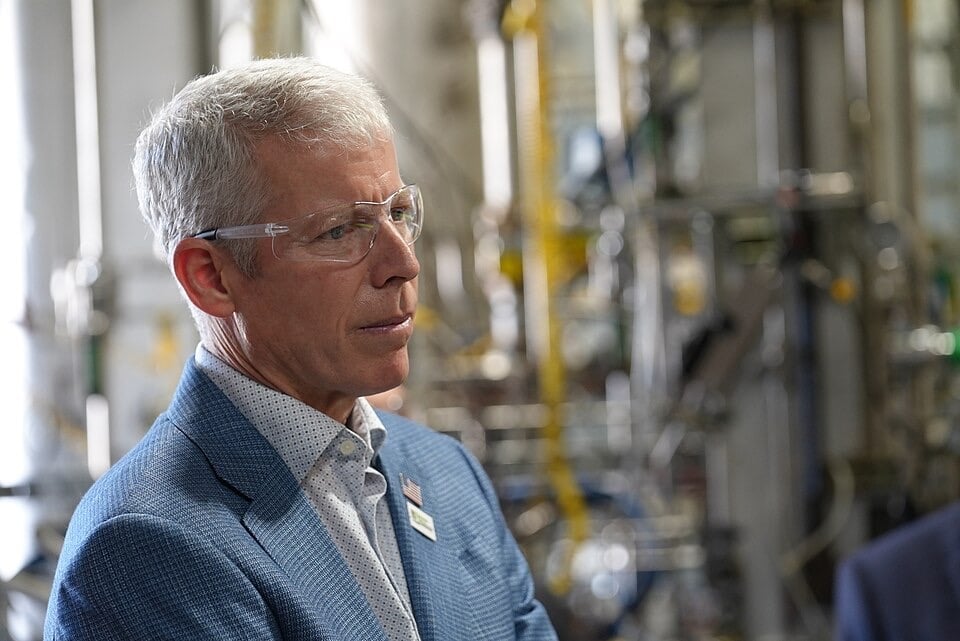
US Energy Secretary Chris Wright has signed a major new oil agreement with Venezuela’s acting President Delcy Rodríguez, granting an American-controlled company a 100-year concession over 17 oil fields holding roughly a fifth of the country’s proven reserves, in what President Trump has called the “biggest oil deal in world history.”
The United States and Venezuela have signed a sweeping new oil agreement, with Energy Secretary Chris Wright meeting acting President Delcy Rodríguez in Caracas to finalise the deal. Venezuela’s National Assembly approved the agreement ahead of Wright’s visit, despite complaints from opposition lawmakers that the full terms of the deal had not been made public before the vote.
What the deal covers
The agreement covers 17 Venezuelan oil fields containing approximately 65 billion barrels of proven reserves, equivalent to roughly one-fifth of Venezuela’s total proven oil reserves. Under its terms, North American Blue Energy Partners (NABEP) is granted a 100-year concession to develop and operate the fields.
The deal gives Washington a significant direct stake in the venture: the US government is set to receive a 35% share in NABEP’s parent company through the Department of Defense, and will hold preferential rights to purchase approximately 20% of the oil produced by the venture at production cost. The agreement further requires a majority of the company’s board members to be US citizens, with Washington holding veto power over board appointments.
NABEP is controlled by Venezuelan businessman Alejandro Betancourt, whose previous business dealings have attracted scrutiny. US officials say Betancourt was vetted before being selected to lead the project.
Investment and production targets
The Trump administration says NABEP could invest up to $100 billion in new Venezuelan oil infrastructure, with the aim of substantially boosting production. Wright said the agreements announced during his visit could more than double Venezuela’s oil output over the coming years.
Rodríguez has presented the deal as a means of restoring Venezuela’s economy, while insisting the country retains sovereignty and ownership over its underground oil resources. The Venezuelan government is projecting more than $200 billion in future tax and royalty revenues over the lifetime of the project.
Reducing Chinese and Russian influence
The agreement is also designed to reduce the influence of China and Russia in Venezuela’s oil sector, both of which became major participants in the industry during years of US sanctions on the country. US officials say several of the 17 fields now included in the agreement were previously associated with Chinese and Russian interests.
Separately, Chevron is preparing a major expansion of its own Venezuelan operations, expected to be announced during Wright’s visit, further underlining the scale of renewed American involvement in the country’s energy sector.
A shift from confrontation to cooperation
Wright described the new agreements as part of what he called an “historic transformation” in relations between Washington and Caracas, characterising the shift as a move from confrontation toward commercial cooperation. President Trump has gone further still, describing the agreement as the “biggest oil deal in world history” and arguing it could eventually boost US oil supplies and help lower petrol prices for American consumers.
Doubts over impact on prices
Despite Trump’s framing, energy analysts have cautioned that the deal is unlikely to produce any immediate reduction in US petrol prices. Venezuelan crude is relatively difficult to extract and refine, meaning any significant increase in production will require substantial investment and time to materialise. As a result, the agreement’s immediate effect on global oil prices is expected to be limited, particularly while markets remain driven by supply disruptions connected to the Strait of Hormuz.
Criticism within Venezuela
The deal has generated significant criticism domestically, particularly from opposition lawmakers who say they were not given the full written terms of the agreement before the parliamentary vote took place. Critics have also warned that granting a 100-year concession over such a substantial share of Venezuela’s oil reserves could carry consequences reaching far beyond the country’s current transitional government.
The agreement represents an extraordinary expansion of US involvement in Venezuela’s oil sector, coming in the wake of Nicolás Maduro’s removal from power in January 2026 and the subsequent emergence of Delcy Rodríguez’s interim government.
