



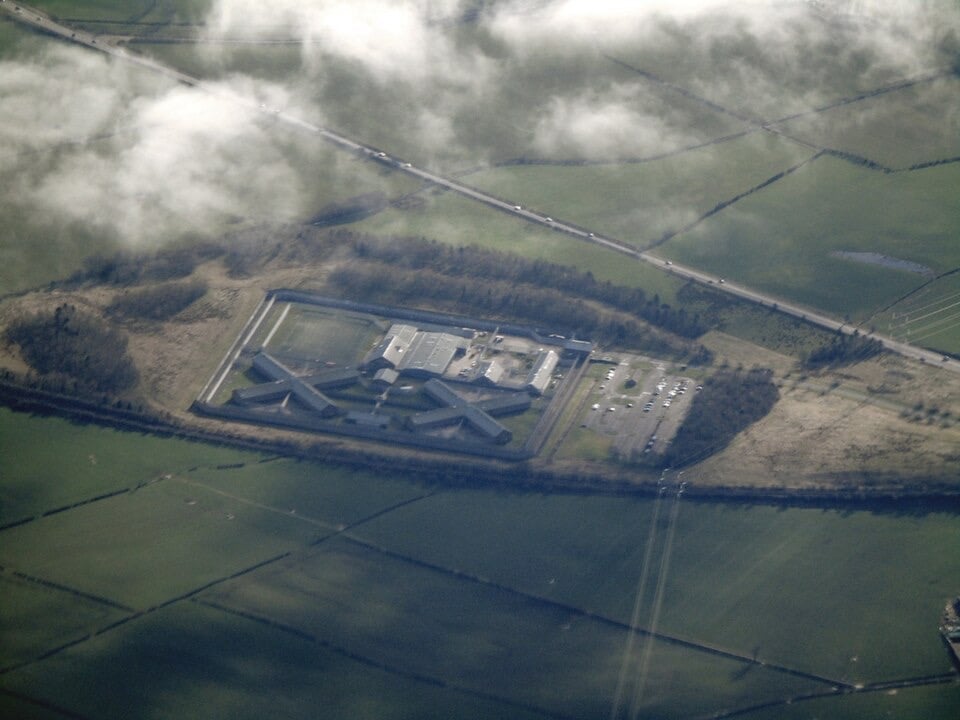
MSPs have heard that prisoners held in segregation units at Scottish jails have been left in cells with human excrement smeared across the walls for up to three days, with the Scottish Prison Service’s own chief executive confirming the practice complies with current prison rules despite acknowledging the service should “always seek to do that better.”
Prisoners held in segregation units across Scotland’s prisons are being left in cells with “human excrement” smeared across the walls for up to three days at a time, MSPs have heard. The claim was raised by David Linden MSP, deputy convener of Holyrood’s Criminal Justice Committee, following a committee visit to HMP Low Moss, where members were shown cells in this condition, cleaned only once every three days. More than 8,550 inmates are currently held in Scotland’s prisons, well above the system’s design capacity of 7,805.
Prison service confirms the practice
Linda Pollock, chief executive of the Scottish Prison Service (SPS), confirmed to the committee that similar incidents had occurred at other Scottish prisons, not just Low Moss. Significantly, Pollock said that leaving cells uncleaned for up to three days complies with existing prison rules. She explained that, where a second cell is available, prisoners can sometimes be moved between the two while one is being cleaned.
Pollock did acknowledge, however, that the SPS would “always seek to do that better,” indicating that while the practice is considered legally compliant, the service recognises it is not the preferred arrangement. The three-day period relates specifically to rules governing segregation units, rather than reflecting a general policy of leaving prisoners in unsanitary conditions indefinitely.
How segregation works in Scottish prisons
According to a 2025 study of Scottish prison segregation, segregation and reintegration units typically hold between six and twelve prisoners at any one time, with stays ranging from as little as three days to, in some cases, several years. Prisoners can be placed in segregation for three broad reasons: as punishment or discipline, for administrative security purposes, or for the protection of vulnerable prisoners.
While in segregation, prisoners generally spend the majority of their time alone in their cells, leaving mainly for activities such as showers, telephone calls and exercise. Recent research into segregation practices in Scotland has raised wider concerns about the effects of prolonged isolation and the conditions experienced by those held in these units, with one study describing segregation as a potential “jail within a jail” and noting that some prisoners experience repeated or lengthy stays.
A prison system under pressure
The conditions described to MSPs come against a backdrop of severe overcrowding across the Scottish prison estate. The prison population reached an all-time high of 8,603 on 26 May 2026, compared with a design capacity of 7,805. Figures reported by the government showed 8,466 prisoners as of 1 July 2026, with projections suggesting the average daily population could reach between 8,100 and 9,150 by March 2027, depending on how current trends develop.
Overcrowding is not evenly spread across the prison estate. December 2025 figures showed Barlinnie holding 1,395 prisoners against a design capacity of 987, while Kilmarnock held 611 against a capacity of 501, Inverness held 132 against 93, and Perth held 678 against a capacity of 631.
The Scottish Government has acknowledged that overcrowding is placing significant pressure on staff, restricting rehabilitation efforts and reducing prisoners’ access to purposeful activity.
Government response
When questioned by the committee, Justice Secretary Neil Gray declined to set a specific target for reducing the prison population. He argued that courts must retain the ability to imprison individuals who pose a risk to society, while at the same time acknowledging that Scotland is currently “substantially beyond” the level of incarceration it should have.
The Scottish Government is pursuing a number of measures aimed at addressing overcrowding, including the construction of new prisons in Glasgow and Inverness. Previous emergency early-release schemes have already resulted in hundreds of prisoners being released ahead of their scheduled dates as part of efforts to relieve pressure on the system.
