



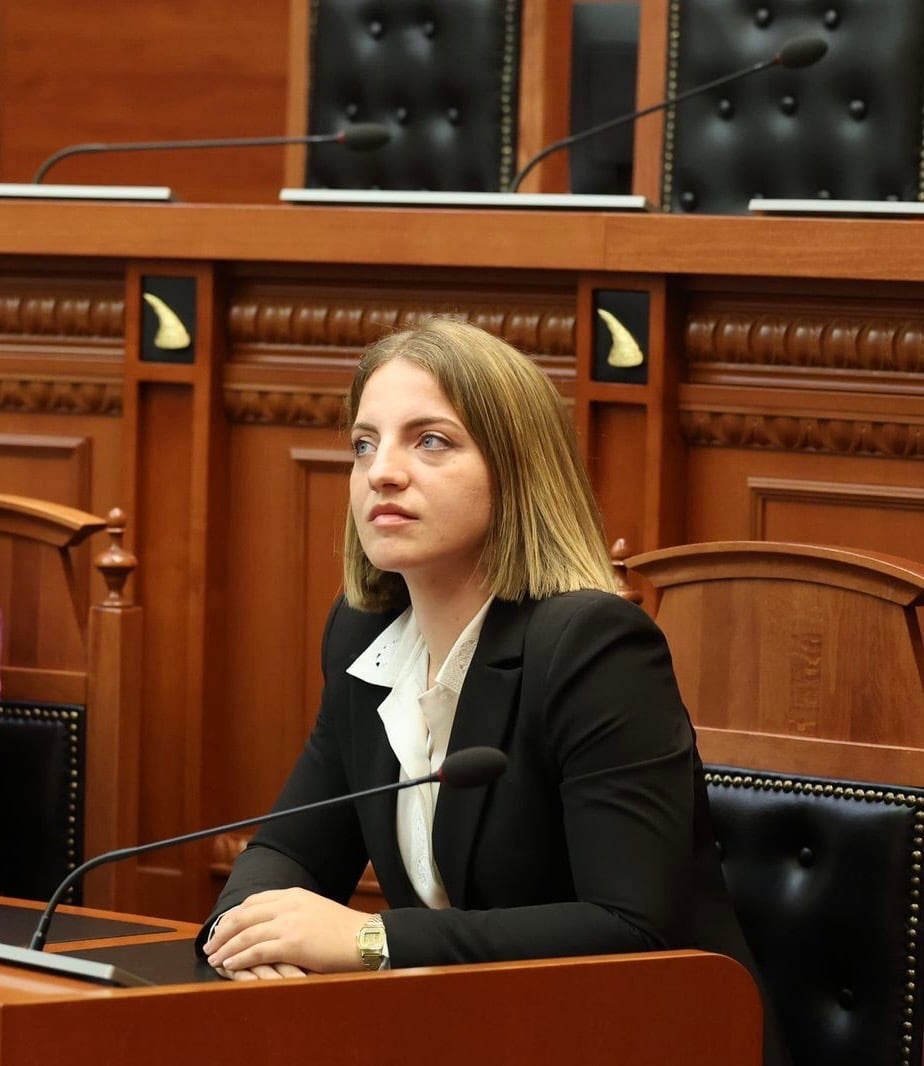
Marjana Koçeku, one of Albania’s youngest MPs and a former member of the ruling Socialist Party parliamentary group, has told Britannia Daily that the country’s mass protest movement reflects a “deeper crisis of trust” between citizens and political institutions — and has sent a direct message to demonstrators: “You are not alone.”
Koçeku, who took her seat in parliament last September before leaving the governing Socialist Party to sit as an independent MP, said growing disillusionment with the way power is exercised inside Albanian politics ultimately led her to break ranks. Defections from Albania’s major political parties are relatively uncommon — particularly among newly elected MPs from the governing majority — making her decision a rare act of political independence in contemporary Albanian politics. Her comments are particularly notable because they come from a politician who until recently sat on the government benches and is now one of parliament’s few independent voices. As one of parliament’s youngest members, Koçeku said she particularly understood the aspirations of the predominantly young demonstrators, many of whom believe Albania’s political system no longer reflects their concerns.
Her remarks offer a rare glimpse into growing disillusionment from within Albania’s governing majority at a time when the country is experiencing one of its largest protest movements in years.
Having entered Parliament less than a year ago, Koçeku’s decision to break with the governing majority has drawn particular attention because of both her age and the speed with which she became disillusioned with the political system.
Koçeku’s decision is particularly significant because she was elected as part of Prime Minister Edi Rama’s governing Socialist Party majority before deciding to break ranks and continue as an independent MP. As an independent, she is no longer bound by party discipline and says she will vote according to her conscience and the interests of her constituents.
“Parliament too often functions as a place where party decisions are simply endorsed rather than genuinely scrutinised,” she told Britannia Daily. “One of the fundamental responsibilities of an MP is to exercise independent judgment on behalf of the citizens who elected them. In practice, however, party discipline frequently takes precedence over the public interest.”
In her interview with Britannia Daily, Koçeku repeatedly returned to themes of accountability, democratic renewal and the need for a new generation of political leadership.
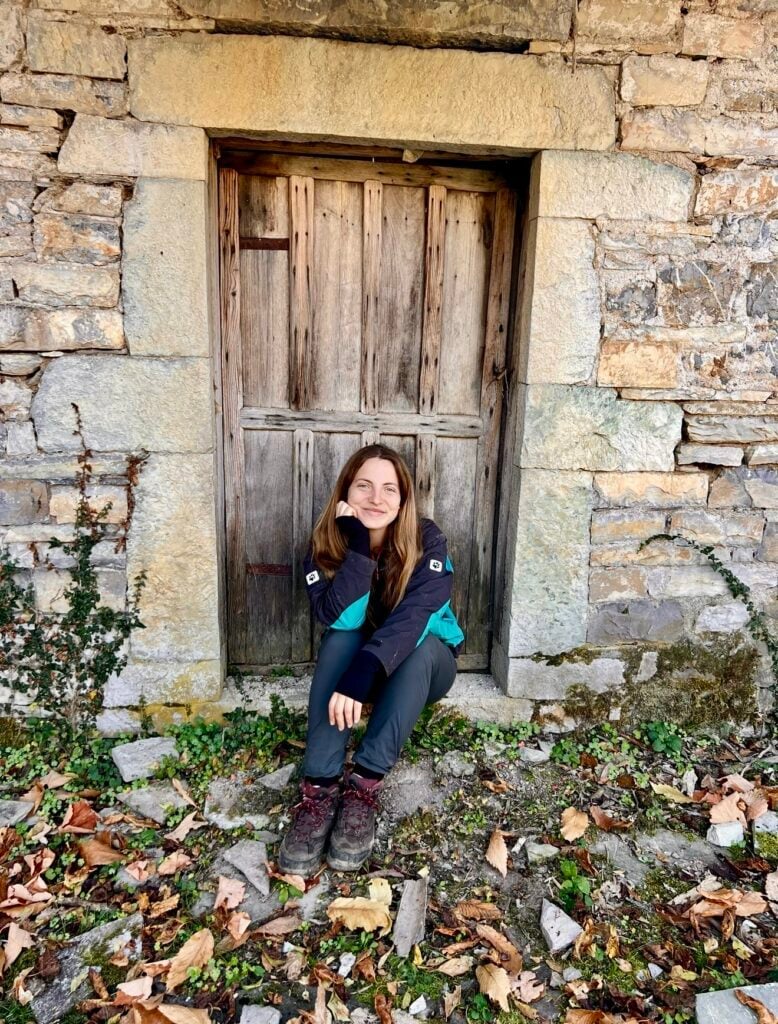
‘The Protests Reinforced My Decision’
Koçeku’s departure from the governing party comes against the backdrop of one of the most significant civic movements in Albania’s recent history, with tens of thousands of predominantly young people taking to the streets in peaceful demonstrations demanding accountability, transparency and democratic reform. The protests have become one of the defining political developments in Albania in recent months, drawing in a generation of citizens who say they feel unheard by the country’s traditional political structures.
She said the protests did not cause her departure from the party — but powerfully reinforced it.
“The protests have been among the most inspiring civic movements I have witnessed, not only in Albania but in Europe in recent years,” she said. “When tens of thousands of citizens peacefully mobilise to demand accountability and democratic change, elected representatives have a duty to listen.”
The issues raised by demonstrators — government accountability, environmental protection, transparency over major development projects and the rising cost of living — were, Koçeku said, “the very same concerns” that had led her to question the direction in which Albania was heading. Rather than viewing the movement with alarm, she described it as a source of optimism.
“I see this movement as a sign of hope rather than despair,” she said. “It demonstrates that people have not given up on democracy — on the contrary, they are demanding that it function better.”

‘It Is Only A Matter Of Time’
In one of the most striking revelations of the interview, Koçeku suggested that others within Albania’s political establishment may eventually follow her lead — a claim that is likely to cause unease within the Socialist Party.
“From my conversations and observations, I believe there is growing unease within parts of Albania’s political establishment,” she said. “I sense that not everyone is comfortable with the current direction of political leadership, even if many choose not to express those concerns publicly.”
She added: “I believe it is only a matter of time before more politicians find the courage to speak openly and act according to their convictions. Healthy democracies depend on individuals who are willing to stand for their beliefs and ideas above general political convenience.”
As for her former colleagues in the Socialist Party, Koçeku was terse. “From this point forward, all communication between us will be conducted through official channels,” she said. “I have not had any contact with any of them.”
A Crisis Of Trust — And A Call For A Political Reset
Koçeku argued that the protests are not simply a response to specific policies but a symptom of something far more fundamental: a breakdown of trust between Albanian citizens and the institutions that are supposed to serve them.
“Many Albanians feel that political decisions are increasingly made without meaningful public consultation and that institutions are becoming less responsive to the people they are meant to serve,” she said. “When citizens lose confidence that their concerns can be addressed through ordinary political channels, they naturally seek other democratic ways to make their voices heard.”
She argued that reforms cannot be credible if they are led by the same political culture citizens are protesting against, suggesting the current political establishment no longer has the trust required to deliver meaningful change. Rebuilding that trust, she said, would require far more than policy announcements.
“Rebuilding trust will require more than policy changes,” she said. “It requires a different political culture — one based on transparency, stronger democratic institutions, respect for the rule of law, and a willingness to listen to citizens even when their message is uncomfortable.”

‘This Government Can’t Do It — Neither Can The Old Political Elite’
Koçeku argued that Albania needs not merely a change of government but an entirely new generation of leaders committed to accountability, transparency and democratic dialogue. Her conclusion was unsparing.
“What Albania needs is not simply a change of individuals, but a renewal of the entire political culture. The political elite, the functioning of our institutions, and the mentality that has shaped governance for decades all require profound reform.”
She continued: “Lasting change will not come from replacing one set of political actors with another if the same practices and mindset remain intact. Albania needs a whole new generation of leadership that embraces accountability, transparency, democratic dialogue, and public service as fundamental principles of governance.”
And then, with a clarity that left little room for ambiguity: “This government can’t do it, neither can the old political elite.”
The remarks are among Koçeku’s sharpest criticisms yet of Albania’s political establishment since becoming an independent MP.
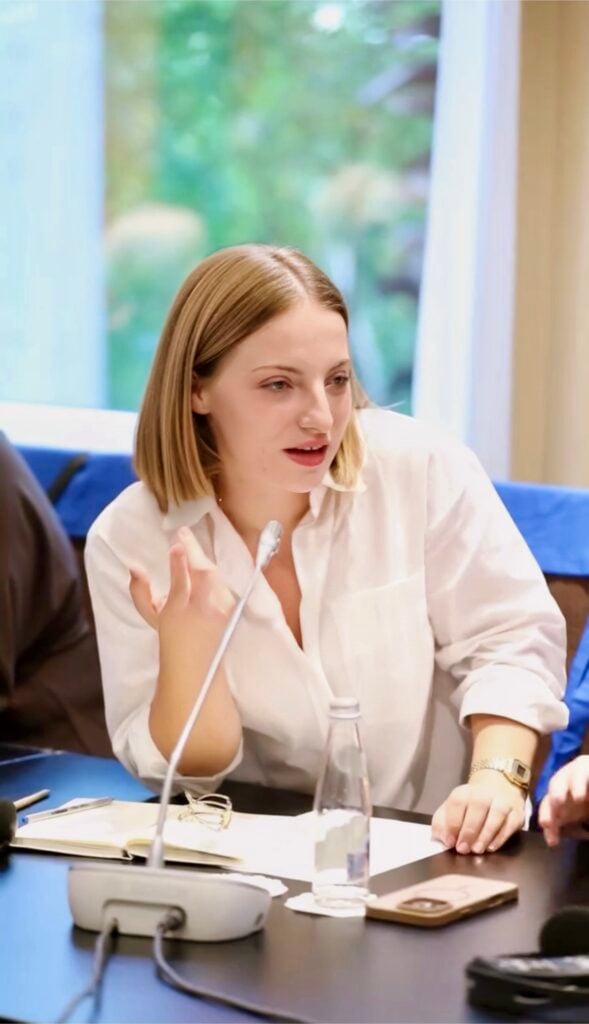
‘You Have A Mandate In Parliament Now’
Koçeku’s message to the protesters who have filled Albania’s streets was direct and personal.
“Your voices matter, and you should never believe that peaceful civic engagement is in vain,” she told Britannia Daily. “You are not alone — you even have a mandate in parliament now.”
She revealed that many protesters had personally invited her to join demonstrations on the street, which she described as “a sign of trust that I deeply value.” Since announcing her decision, Koçeku said she has received thousands of messages from ordinary citizens, members of the Albanian diaspora, academics and public figures, many telling her that her move had renewed their faith that politics can still be guided by principles rather than political expediency.
“The strength of this reaction reflects the fact that such a decision is highly unusual in Albanian politics,” she said. “It has challenged a long-standing political culture and opened a broader public discussion about political independence, accountability, and the responsibility of elected representatives to put citizens before party interests.”
Albania’s ‘Flamingo Revolution’
Albania has witnessed some of its largest and most sustained demonstrations in recent years, with tens of thousands of people taking to the streets in Tirana and other cities demanding greater government accountability, transparency and democratic reform. The movement, popularly dubbed the “Flamingo Revolution,” initially began as an environmental campaign against controversial luxury tourism developments on Sazan Island and the nearby Zvërnec peninsula, projects backed by American investor Jared Kushner, the son-in-law of US President Donald Trump, and his wife Ivanka Trump.
The developments, which include plans for high-end resorts in environmentally sensitive areas near the Vjosa-Narta Protected Landscape, have drawn fierce opposition from environmentalists, local residents and members of the Albanian diaspora, who fear damage to protected ecosystems and accuse the government of prioritising elite investment interests over public concerns.
What began as opposition to the resort projects has since evolved into a broader protest movement against alleged corruption, perceived state capture, lack of transparency and growing frustration with Albania’s political establishment. Protesters have called for profound political reform and, in some cases, the resignation of Prime Minister Edi Rama, arguing that the demonstrations are about far more than a single development project and instead represent a demand for a new political culture built on accountability and public trust.
