



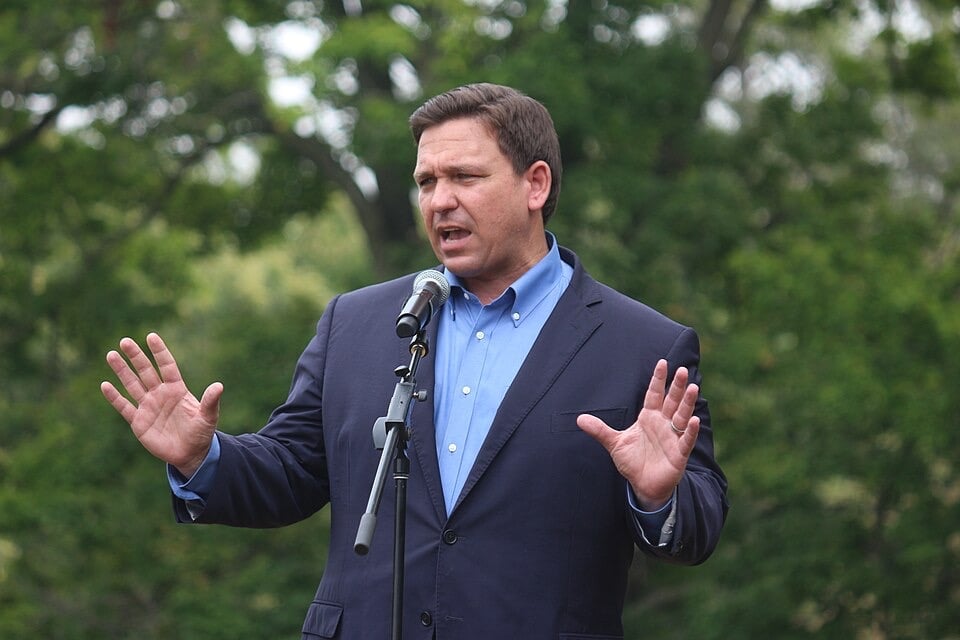
Florida, Alabama and Indiana each put a prisoner to death on Thursday 5 November. California Governor Gavin Newsom has said he intends to commute the state’s 548 death sentences, though none has yet been formally commuted.
Florida, Alabama and Indiana all carried out executions on Thursday, the second time this year that three US states have done so on the same day. Florida’s execution was its 19th of 2026, equalling the state’s record of 19 set in 2025, and another is scheduled for 19 November. The US total this year now stands at 35, according to the Death Penalty Information Center. The same week, Governor Gavin Newsom said California would commute its 548 death sentences before he leaves office.
Three executions in one day
Florida put Jesse Guardado to death on 5 November, with prison officials confirming it was completed at 6.13pm Eastern Time, 13 minutes after the scheduled start. Asked if he had a final statement, he said he wished to “once again apologize for the pain and suffering I’ve caused to the victim’s family and my own family as well”. He had pleaded guilty to fatally stabbing Jackie Malone, 75, in her Walton County home in 2004 and stealing her jewellery box. She had been helping him find a job and housing.
Guardado’s lawyers lodged a series of final appeals. The Florida Supreme Court denied a stay on 29 October, followed by the federal Eleventh Circuit on 2 November and the US Supreme Court on 5 November. The Death Penalty Information Center says he had been held at Florida’s Arthur G. Dozier School for Boys in his youth, a reform school notorious for documented accounts of physical and sexual abuse of children. It identifies him as at least the 11th former Dozier resident to be executed. Florida has acknowledged the institution’s abusive history and authorised compensation for survivors.
In Alabama, Michael Taylor, 54, was executed by lethal injection. In 1991, when he was 19, he beat Ivan Moore, 83, and his wife Lucille, 79, to death with a metal bar during a robbery. According to the Alabama Attorney General’s Office, the procedure was authorised at 5.47pm local time and Taylor was pronounced dead at 6.10pm. The office said his jury had unanimously recommended death. His lawyers and opponents of the execution had raised concerns about his age at the time of the crime and the quality of his legal representation. AP News reported that he had earlier chosen nitrogen hypoxia as his preferred method, but litigation over Alabama’s nitrogen procedures preceded the decision to use lethal injection.
In Indiana, Jeffrey Weisheit, 50, was executed by intravenous injection. He was sentenced to death after setting fire to a house, killing two children of his then girlfriend: Alyssa Lynch, eight, and her brother Caleb, five.
How rare is a triple-execution day?
Three prisoners were also executed on 13 August 2026, in Alabama, Oklahoma and Tennessee, according to the Death Penalty Information Center. Before this year, the previous day with three executions was 7 January 2010. In 1999, which remains the modern peak for executions nationwide, there were four separate days with at least three, including one with four.
The three states used different lethal-injection protocols on Thursday. Indiana used pentobarbital alone, Florida a three-drug combination beginning with etomidate, and Alabama a three-drug combination beginning with midazolam.
Florida’s record year
Florida has carried out 19 of the 35 US executions this year, more than 54%, with the other 16 spread across six states, the Death Penalty Information Center says. Before 2025, the state’s highest annual total since capital punishment resumed in 1976 was eight. DeathRowStats lists Thomas Mitchell Overton as the next prisoner due to be executed, on 19 November. If that goes ahead, Florida would surpass its modern record.
The executions have taken place under Republican Governor Ron DeSantis, who is due to leave office in January and signed the death warrants behind the state’s 2025 total. The Death Penalty Information Center says Florida’s last grant of executive clemency in a death-penalty case was in 1983.
Newsom’s pledge
The string of executions prompted Mr Newsom to say he would commute all of California’s 548 death sentences before leaving office. Experts say that, if carried out, it would be the largest mass clemency in American history.
California’s Habeas Corpus Resource Center says that none of the sentences had been formally commuted when it published its latest update. Mr Newsom has announced his intention, but the legal steps remain unfinished. According to the centre, about 30% of death-row prisoners could have their sentences commuted directly by the governor. The rest have separate felony convictions that trigger additional constitutional requirements, meaning at least four justices of the California Supreme Court would have to recommend clemency. Each commutation would replace the death sentence with life imprisonment without parole. The prisoners would not be released, and the state’s death-penalty laws would not be repealed.
Alabama’s Republican governor, Kay Ivey, responded sharply. “California may let their criminals escape justice, but not Alabama,” she said. “Here, we enforce the law and always will.”
Questions over Indiana’s execution
Indiana’s Department of Correction confirmed that it spent $275,000 on pentobarbital for Weisheit’s execution, with records showing six 50ml vials received on 29 October, according to the Indiana Capital Chronicle. The Washington Post reported that the alleged supplier, an Indianapolis pharmacy called Pharmaneek, was on probation and facing possible suspension of its licence, with allegations about drug handling, storage and operations not all resolved when the execution took place.
Weisheit’s lawyers said they had not been given evidence of the drugs’ potency, purity or storage conditions. The department said its procurement complied with Indiana law and defended its procedures. The Indiana Supreme Court rejected a last-minute request to halt the execution by a 3-2 vote, and Governor Mike Braun refused clemency and a request for an independent investigation into the state’s lethal-injection arrangements, The Washington Post reported.
Weisheit’s legal team had sought neurological investigations into possible brain injuries. According to the Death Penalty Information Center, a federal judge authorised funding for investigative work but declined to order his transfer for brain scans.
The Indiana Capital Chronicle was the only news organisation allowed to witness the execution. Its reporter said the viewing period lasted about three minutes, according to Indiana Public Radio. The blinds over the chamber window closed eight minutes before Weisheit was pronounced dead, and the reporter could not tell when the drugs were given or whether he remained conscious. The limited view prevented independent confirmation of how the procedure unfolded, but it does not in itself establish that it was mishandled.
The children’s father
Steven Lynch, the father of Alyssa and Caleb, publicly opposed the execution and submitted an affidavit asking for the sentence to be changed to life without parole, the Death Penalty Information Center reported. In his statement he wrote: “Jeffrey, I forgive you.” He argued that another death would not honour his children’s memory. Their mother, Lisa Lynch, supported the execution.
Tennessee’s attempted execution
The three executions came more than a month after the attempted execution of Christa Pike in Tennessee on 30 September, when she survived two doses of pentobarbital. Her lawyer alleged that prison staff struggled to establish intravenous access and used about 10 needles, according to ABC News. Emergency dispatch records obtained by the broadcaster show a 911 call requesting an ambulance from the prison at 8.40pm. Ms Pike was taken to hospital and returned to prison on 10 October.
Tennessee’s Department of Correction maintains that staff followed the state’s approved protocol and that it did not authorise further procedures after the two doses.
