



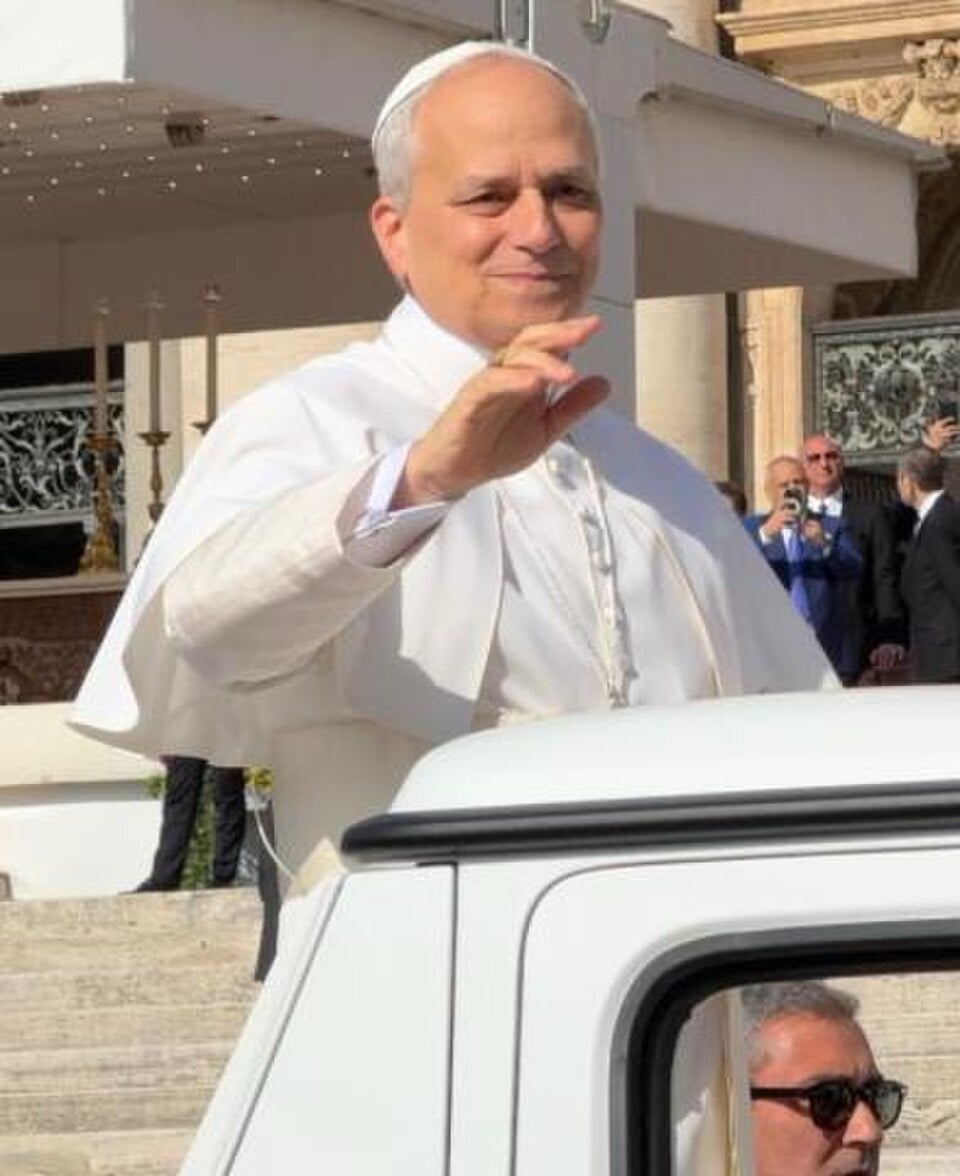
The pontiff, 71, led his first mass of the three-nation tour in Paysandú, in a country long regarded as the most secular in Latin America. The trip had been in doubt after cancer surgery last month.
Pope Leo XIV was welcomed by about 40,000 worshippers at an open-air mass in Paysandú, western Uruguay, on Saturday, the first public service of his South American tour. Crowds met his plane with the football chant “Ole, ole, ole, ole, Pope, Pope!”, according to the report. The Vatican said around 10,000 people turned up on top of the more than 30,000 who had registered in advance, despite morning rain and grey skies. The trip is part of an effort to strengthen the Catholic Church’s presence in Uruguay, which has long been considered Latin America’s most secular nation.
A tour that had been in doubt
The 71-year-old American pope had a lung cancer operation on 13 October, which cast doubt over whether the 12-day, three-nation tour would go ahead. Some in the crowd said they were moved that he had pressed on.
“He’s the representative of Christ but he’s human,” said Soledad Sanchez, 73, who drove to Paysandú from northern Uruguay, her eyes filling with tears. “And we weren’t sure if he could make it, but he pushed through for us. He made it here to give us a message of peace because he knows our world needs it right now.”
The welcome in Paysandú
Gates at the Parque París Londres, a large green space on the southern edge of the city, opened at 5.30am local time. Pilgrims in rain ponchos, many wearing the Vatican’s yellow, filed in as a band played popular Spanish hymns. When the Pope arrived in an open-sided popemobile, they cheered again, blew horns and waved yellow handkerchiefs.
Paysandú is about 375km (230 miles) from the capital, Montevideo. Many of those who attended came from Uruguay, but others travelled from neighbouring Argentina and Brazil. The city is just across a bridge from the Argentine city of Colón, which made it easier to reach for many Argentines than any of the stops on the Argentine leg of the tour.
“Argentina is a much more religious country than Uruguay, and there’s this desire to be here to witness something historic,” said Luciana Lobato, 20, an Argentine tour agent who organised buses carrying 180 pilgrims across the border.
The city itself greeted the Pope quietly, as though it were an ordinary weekend, with scant decorations and only a few homes flying Vatican flags.
The mass was dedicated to Blessed Jacinto Vera, a 19th-century priest who became Uruguay’s first bishop. On Friday, Leo praised him as a pastor who travelled the country’s roads to help the poor, and said people who met him “found something of Christ’s goodness” even before he preached.
Appealing to a secular nation
The Pope arrived in Uruguay on Friday and had a full afternoon and evening of engagements. Uruguay has a population of 3.5 million, and he is seeking to encourage its people to turn to the Catholic faith for strength in facing today’s problems.
At an evening service of vespers at Montevideo’s cathedral on Friday, he acknowledged that many people in the country know little about the faith or its heritage, which is intrinsically tied to Uruguay’s independence and nationhood. The Church had no new seminarians in the country in 2024, though a few have since begun training for the priesthood. Leo told seminarians, priests and bishops to model themselves on Christ.
“One of the secrets of evangelization is to resemble the one whom we proclaim,” he said. “In this land, where many of our contemporaries barely know Jesus Christ and so many young people have grown up far from the life of the Church, that witness has a special power.”
He was due to continue that message later on Saturday by touring a Montevideo neighbourhood affected by drug trafficking and gang violence, where the Church is working with municipal authorities to build housing and provide rehabilitation programmes for addicts. His final event of the day was expected to be a prayer vigil at Montevideo’s Centenary Stadium, which was likely to reinforce his call to reject religious indifference.
Young voices
Some young Catholics involved in local church groups hoped that seeing a pope draw large crowds would challenge Uruguay’s image as indifferent to religion. “The reality I see in my town is that there are tons of young people who are really interested in religion, who are trying to find meaning and community in difficult moments,” said Teresa Sabellini, 18, from Paysandú. “And now look around here. This place is full of people.”
Some younger attendees said his humane tone and emphasis on caring for the vulnerable resonated beyond the faithful. Santiago Biglieri, 18, a Colombian living in Uruguay, said: “I wouldn’t call myself religious, but I like this pope. He has a really good message for humanity. Even for the nonbelievers, there’s something to take from his ideas.”
The rest of the tour
After Uruguay, the Pope will visit Buenos Aires, Luján and Córdoba in Argentina. He will then travel to Peru, which he regards as his second homeland and which is the final destination of the tour.
