



The US Secretary of State gave no answer after Nvidia reinstated its chief executive. Republican senators including John Curtis and John Cornyn have questioned what officials told the board.
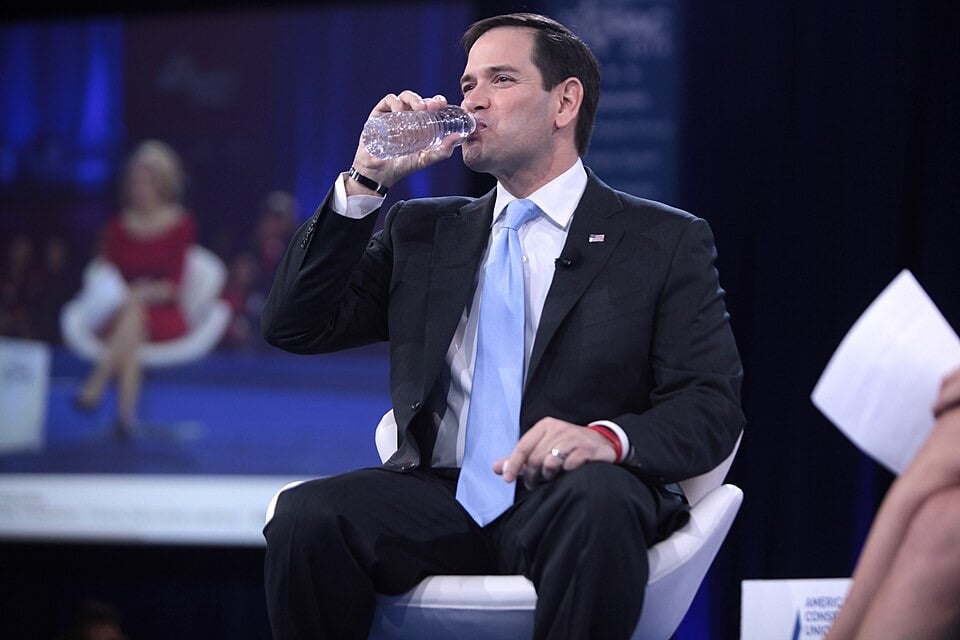
US Secretary of State Marco Rubio left a press event without answering when a reporter asked whether Nvidia’s reinstatement of Jensen Huang as chief executive posed a national security risk. The question came on Monday at the State Department, hours after Nvidia said Mr Huang was returning, 11 days after he acknowledged a relationship with a woman accused of being a Chinese spy. President Donald Trump has said his own intervention was “very important”. Republican and Democratic lawmakers have called for answers, and Mr Huang is due to testify to Congress in December.
Rubio’s silence
Mr Rubio was speaking alongside Qatar’s prime minister and foreign minister, Mohammed bin Abdulrahman Al Thani. He did not respond to the question and left the room. The New York Times has reported that Mr Rubio oversaw the drafting of a report earlier this year warning Trump administration officials that Mr Huang was believed to be in a close relationship with an alleged Chinese spy.
Trump’s role
Mr Trump told CNBC he had spoken “indirectly and directly” with Nvidia’s board in the days before the decision. “I believe my intervention was very important,” he said. He later wrote on Truth Social that Attorney General Todd Blanche had told him the government had found no evidence that Mr Huang had “engaged in any unlawful conduct”.
The Washington Post, citing unnamed people familiar with the discussions, reported that Vice-President JD Vance helped, after Mr Trump asked him to use his Silicon Valley contacts, and that only a handful of White House aides knew. It said Mr Blanche briefed Mr Trump but had no direct contact with Nvidia’s board, leaving unclear who gave the board the assurances it relied on. Mr Trump acknowledged speaking to Mr Huang on Sunday night. The Post also reported that Mr Trump and Mr Vance saw Mr Huang as an advocate for openly available AI models.
What Nvidia says
Nvidia said its board voted unanimously to reinstate Mr Huang after meetings to assess his candour and suitability. An SEC filing shows the board approved the decision on Sunday 22 November. Chairman Harvey Jones stays on, and Colette Kress, who was interim chief executive, returns to her role as chief financial officer.
Nvidia said the reinstatement does not end its own inquiry. A committee of independent directors has retained outside lawyers to investigate a suspected foreign intelligence operation targeting Mr Huang, and he has agreed to cooperate. The company is also creating a Chief Compliance Officer post, reporting to the board’s nominating and governance committee, and a National Security and Export Control Committee made up of independent directors.
Questions in Congress
Republican Senator John Curtis of Utah wrote on social media: “Nvidia’s board says it relied on input from senior U.S. officials to conclude that bringing Jensen Huang back posed no national security risk. I have some questions. Who in our government weighed in? What did they tell the board? And on what basis did the board conclude there was no risk?”
Senator John Cornyn of Texas, who lost his primary after Mr Trump endorsed his opponent, asked how far the government had investigated Mr Huang and the accused woman. He asked whether the FBI gave Mr Huang a “defensive briefing”. “If not, why not?” he said. “If so, what did they tell him about the risk? Did he ignore it?” Republican senators Kevin Cramer and Pete Ricketts also said the board’s decision does not remove the need for scrutiny, according to KFYR-TV and The Guardian. The Democratic senator Ron Wyden accused the administration of compromising national security, which is a political allegation.
Mr Huang is due to appear before House committees in closed session in early December. The House Intelligence Committee lists his interview for 1 December, with Nvidia general counsel Tim Teter on 2 December, and says Republican chairmen Rick Crawford, Brian Mast and John Moolenaar will question both. He is also due to testify publicly to the Senate Banking Committee at 10am Eastern on 3 December, at a hearing titled Protecting America’s AI Advantage: Oversight of U.S. Export Controls.
Investigations and lawsuits
The Washington Post reported that the Justice Department is still investigating the Singapore-based firm Megaspeed over whether it diverted advanced Nvidia chips to China, and is looking at the woman’s alleged contacts with China’s Ministry of State Security. No criminal finding has been made against her. Megaspeed denies unlawful activity and says she left in August 2025. Reuters reported that the SEC is examining Nvidia’s accounting practices in a separate inquiry, and that House Democrats asked Commerce Secretary Howard Lutnick for records on possible interference in export-control enforcement, with a 1 December deadline.
A shareholder lawsuit alleges that Nvidia and Mr Huang misled investors about his relationship, Reuters reported. A derivative suit seeks to hold directors to account for alleged oversight failures. Reuters also reported that Mr Huang misled senior executives, including the general counsel, about the relationship. These are allegations that have not been adjudicated.
Market reaction
Nvidia shares closed on Monday at $165.05, up $39.52 or 31.48%, MarketWatch reported, which Dow Jones Market Data says is the biggest one-day percentage gain since 9 May 2003. It added about $950bn in market value.
