



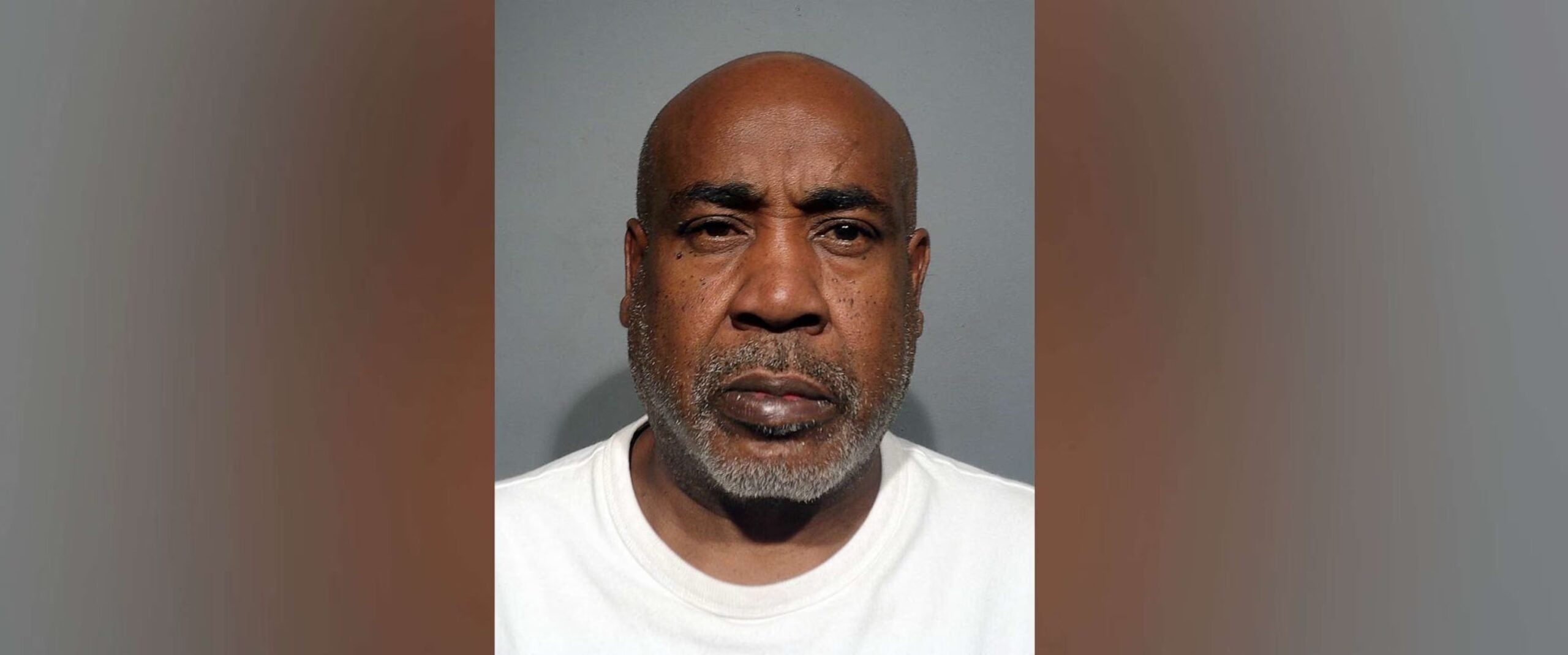
The 63-year-old, the only person convicted over the rapper’s killing, was told by the judge he could not “take a man from his family” and walk away.
Duane “Keffe D” Davis has been sentenced to 40 years to life in prison for the 1996 murder of the rapper Tupac Shakur in Las Vegas. Judge Carli Kierny imposed the term on Tuesday, including a 20-year mandatory enhancement for profiting from the killing. Davis was found guilty in August of first-degree murder with use of a deadly weapon. He is the only person ever convicted over the shooting. He was not accused of firing the fatal shots, but prosecutors argued he supplied the gun and helped orchestrate the attack.
The judge’s remarks
Judge Kierny told Davis: “You don’t get to take a man from his family. You don’t get to take his very life, his whole life, and just walk away from it, especially when that man is Tupac Shakur.”
Davis, 63, appeared in court shackled in handcuffs and wearing a navy blue prison uniform. Asked whether he wanted to address the court, including Shakur’s family, he declined. “I’m good,” he said.
Clark County Chief Deputy District Attorney Binu Palal asked for the maximum sentence, pointing to five other convictions and Davis’s public boasting. “Whatever your decision is, ultimately, in my mind, he deserves the maximum possible sentence because he’s earned through his actions, his behavior, who he is as he stands here today,” he told the judge. “He 100% deserves the maximum possible sentence.”
A sister’s statement
Shakur’s younger sister, Sekyiwa Shakur, gave a victim statement. “He would have been the promise of our parents,” she said. “I believe when you take away someone like that, you deserve the maximum sentence.”
She said her brother was “born an icon” and was raised to be a human rights activist and a protector of his family and friends. “He was a father figure to me,” she said. “It wasn’t just me in everybody in our immediate family, our extended family, and as we got older, our community as a whole.”
How the case was built
Much of the two-week trial turned on Davis’s own accounts of the killing, given to the media and in a memoir. Jurors took less than three hours to convict him. Prosecutors said the killing was precipitated by a scuffle between Davis’s nephew and Shakur on the night of his death.
For nearly 30 years, Davis’s role in the shooting was at the centre of a mystery that gripped rap fans, true-crime experts and conspiracy theorists. Investigators at the time pointed to a rivalry between East Coast and West Coast record labels, which they said led to a bloody feud between Shakur’s entourage and Davis’s associates. Prosecutors said investigators blamed Shakur, his friends and other associates for hindering their inquiry, and failed to connect the dots between known gang leaders.
The case went cold until 2019, when Davis published his memoir, Compton Street Legend. In it he described his part in the assassination and called himself a “shotcaller” for the South Side Crips. Their rivals, Mob Piru, were associated with Shakur’s record label and its co-founder, Marion “Suge” Knight.
At trial, Palal argued that Davis “went hunting” for Shakur and Knight after they were seen at a Las Vegas hotel beating up Orlando “Baby Lane” Anderson. Anderson is known as the “prince” of Compton in California because of his ties to Davis.
The aftermath
Knight was in the car with Shakur and was also shot that night. He survived. Shakur died six days later. His death set off a gang war hundreds of miles away in Compton. Six months later, the New York-based rapper Christopher Wallace, known as Notorious B.I.G. or Biggie, was killed. No one has ever been charged or convicted over his death.
