



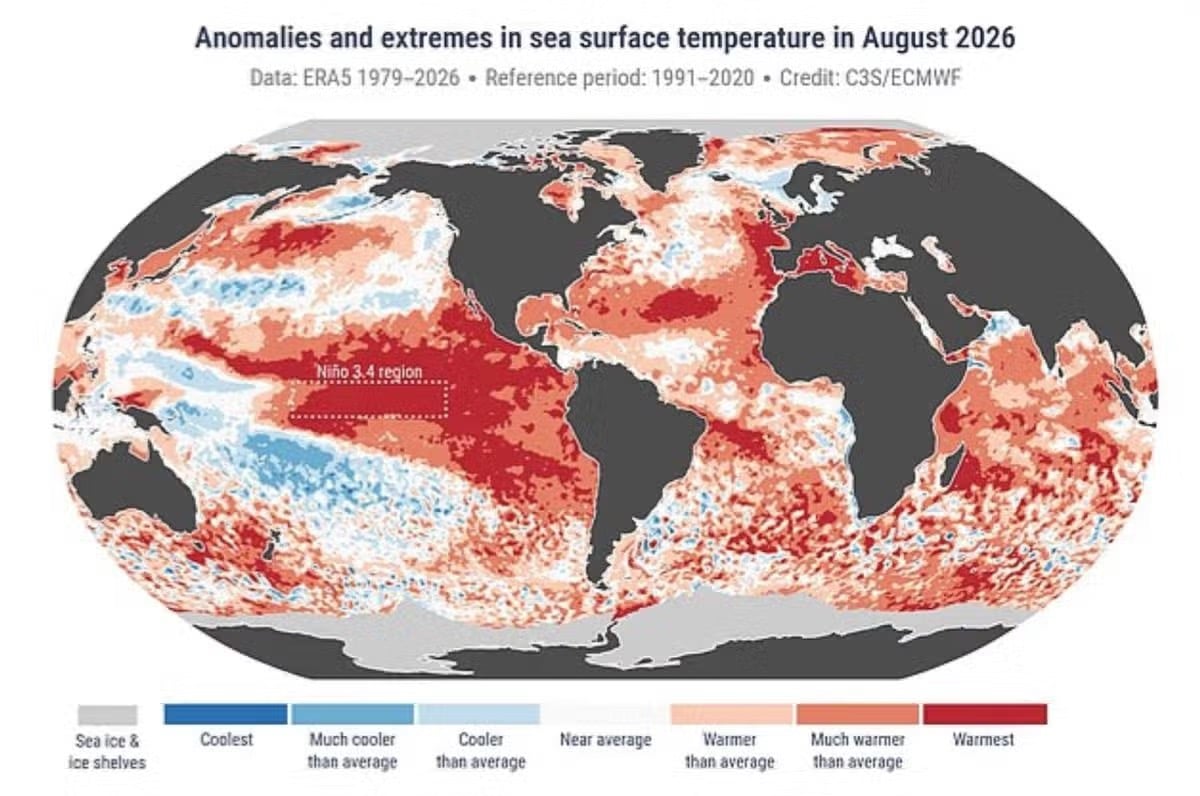
Forecasters say the climate event is building towards a December peak, with the potential to disrupt rainfall patterns worldwide and push global temperatures towards record levels.
The World Meteorological Organization (WMO) has warned that El Niño is intensifying rapidly and could become the strongest since 1950. It expects the event to keep building until it peaks in December, with a warming effect and changes to rainfall likely to be felt across the globe in the coming months. Experts say the combination of a strong El Niño and exceptionally warm oceans could bring floods to some regions and droughts to others. In the UK, scientists expect wetter and stormier weather from October.
A rapidly strengthening event
WMO secretary-general Celeste Saulo said El Niño was “firmly established and strengthening rapidly”. She added: “The ocean it’s drawing from is the warmest we’ve ever measured it. There is simply more heat available to release.”
The phenomenon involves the Pacific Ocean releasing large amounts of stored heat. Analysts say it has entered unprecedented territory, with many parts of the world forecast to experience unseasonably warm temperatures. The WMO forecasts that the average temperature anomaly between October and December could reach about 3.7C, with the highest point coming in December.
What it could mean for the UK
According to MailOnline, Dr Amulya Chevuturi, a senior hydroclimate scientist at the UK Centre for Ecology and Hydrology, said a strong El Niño was likely to raise the chances of wetter, stormier conditions in the UK between October and December. She said the North West was expected to be worse affected than the South East.
Pressure on global temperatures
The Met Office said earlier this year that the rise in global average temperatures, particularly after the winter peak, could lead 2027 to replace 2024 as the warmest year on record.
Professor Stephen Belcher, the Met Office’s chief of science and technology, said: “This summer we have experienced heat waves across Europe reminding us of the effects of climate change, this large El Niño is a reminder that natural variations in the climate system are also at play, adding to the stresses of climate change.”
