



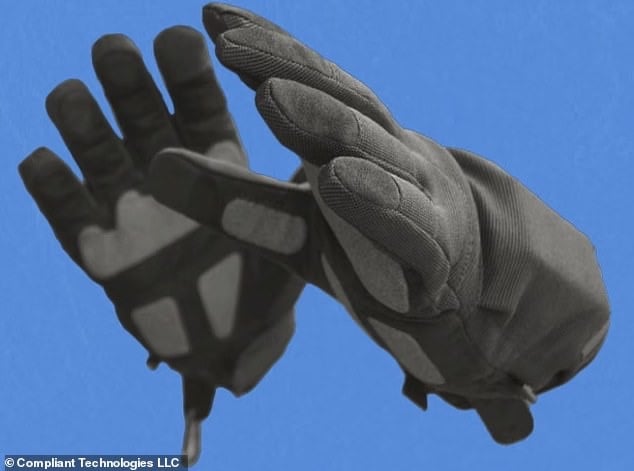
US Immigration and Customs Enforcement plans to equip officers with gloves capable of delivering powerful electric shocks, in a contract worth up to $20 million that has drawn sharp criticism from Democratic politicians and civil rights advocates amid a pending lawsuit linking the devices to a death in a Kentucky jail.
US Immigration and Customs Enforcement (ICE) is set to supply officers with gloves that deliver powerful electric shocks, in a contract that could cost up to $20 million (£15 million). The devices, known as GLOVE, an acronym for Generated Low Output Voltage Emitter, look like standard patrol gloves until an officer activates their electrical function with a button. They must make direct contact with a person’s skin to deliver a shock designed to cause pain and impair the person’s ability to respond within seconds. The rollout has drawn strong criticism from Democratic officials and civil rights advocates, who have described the plans as unnecessary and cruel.
How the gloves work
The gloves are marketed as “conductive distraction and de-escalation devices” and function as ordinary patrol gloves until switched into their electrical mode. Once activated, direct skin contact delivers a voltage intended to incapacitate the person being shocked by causing sudden, sharp pain. The scale of the planned purchase, up to $20 million, suggests ICE intends to distribute the devices to most or all of its officers.
According to reporting, similar gloves have historically been used more frequently by local law enforcement in prison settings than out on the streets. This marks a shift in context for ICE, whose officers have increasingly used force to remove people from vehicles during enforcement operations and have faced protests over their tactics as part of President Donald Trump’s crackdown on illegal immigration.
Political and legal backlash
The announcement has prompted strong condemnation from elected officials. New York Attorney General Letitia James addressed the plans at a news conference on Wednesday, saying: “We are outraged.” She warned that ICE officers who misuse the gloves within New York State could face both criminal and civil consequences.
Several Democrats in Congress also spoke out against the rollout on social media, including Representatives Pramila Jayapal, Maxwell Frost and Delia Ramirez, who argued that ICE did not need additional weapons of this kind. Jayapal wrote on X: “This won’t make anyone safer and in fact just gives ICE another dangerous tool to target citizens and immigrants alike.”
The Department of Homeland Security, ICE’s parent agency, issued a statement that did not directly reference the gloves or explain the rationale behind the purchase. It said: “ICE is constantly assessing the needs of our officers in the field to ensure they have the tools and equipment necessary to safely arrest and remove criminal illegal aliens from our country. Every decision is made with careful consideration and appropriately reviewed to ensure that any technology ICE utilizes is consistent with all applicable law enforcement policies and standards.”
Safety concerns and a pending lawsuit
Although the gloves are marketed as nonlethal and safe for the heart, they are the subject of a pending lawsuit alleging that a 43-year-old man died in 2024 after being shocked 27 times with the gloves and a further 13 times with a Taser at a jail in Richmond, Kentucky. An internal investigation into the incident found that two of the glove shocks lasted 45 and 99 seconds respectively, far exceeding the manufacturer’s recommended 15-second limit.
The investigation, carried out by the Madison County Detention Center, concluded: “These actions not only inflicted unnecessary pain but also heightened the risk of serious health complications,” according to court documents. A review by the Associated Press identified two further lawsuits alleging injuries caused by the gloves, including a man with existing heart problems who was shocked at a Las Vegas trade show, and a defendant who said he was laughed at after being unnecessarily shocked in court. Both of those cases have since been dismissed.
Manufacturer warnings and expert concerns
The manufacturer’s guidance states the devices should not be used against certain populations that ICE agents routinely encounter, including elderly people, small children, pregnant women and severely disabled individuals. The device’s user manual also warns against its use in response to verbal defiance, and states it must not be used for punishment, torture or horseplay.
Former ICE acting director John Sandweg raised concerns about potential misuse in an interview on MSNBC NOW on Wednesday. “It’s too easy for this to get misused, against a population that doesn’t pose a threat,” he said.
Michael Mannheimer, a law professor at Northern Kentucky University who has written on police use-of-force issues and federal law enforcement operations, echoed concerns about the gloves encouraging disproportionate force. “One concern I would have is if ICE agents have this at their immediate disposal, will they use it more than they should? Will they jump over lesser force that could be appropriate and successful to attain compliance and instead use this first?” he said.
Notably, the manufacturer of the Taser has recently phased out its own drive-stun feature, a comparable pain-compliance tool that had similarly been subject to misuse by some officers.
What happens next
A notice published in a Department of Homeland Security database indicated that the solicitation for a no-bid contract to purchase the gloves could be released as early as Friday, with the resulting contract running through to 31 March 2027. The founder of Compliant Technologies LLC, the company that manufactures the gloves, declined to comment on the plans.
