



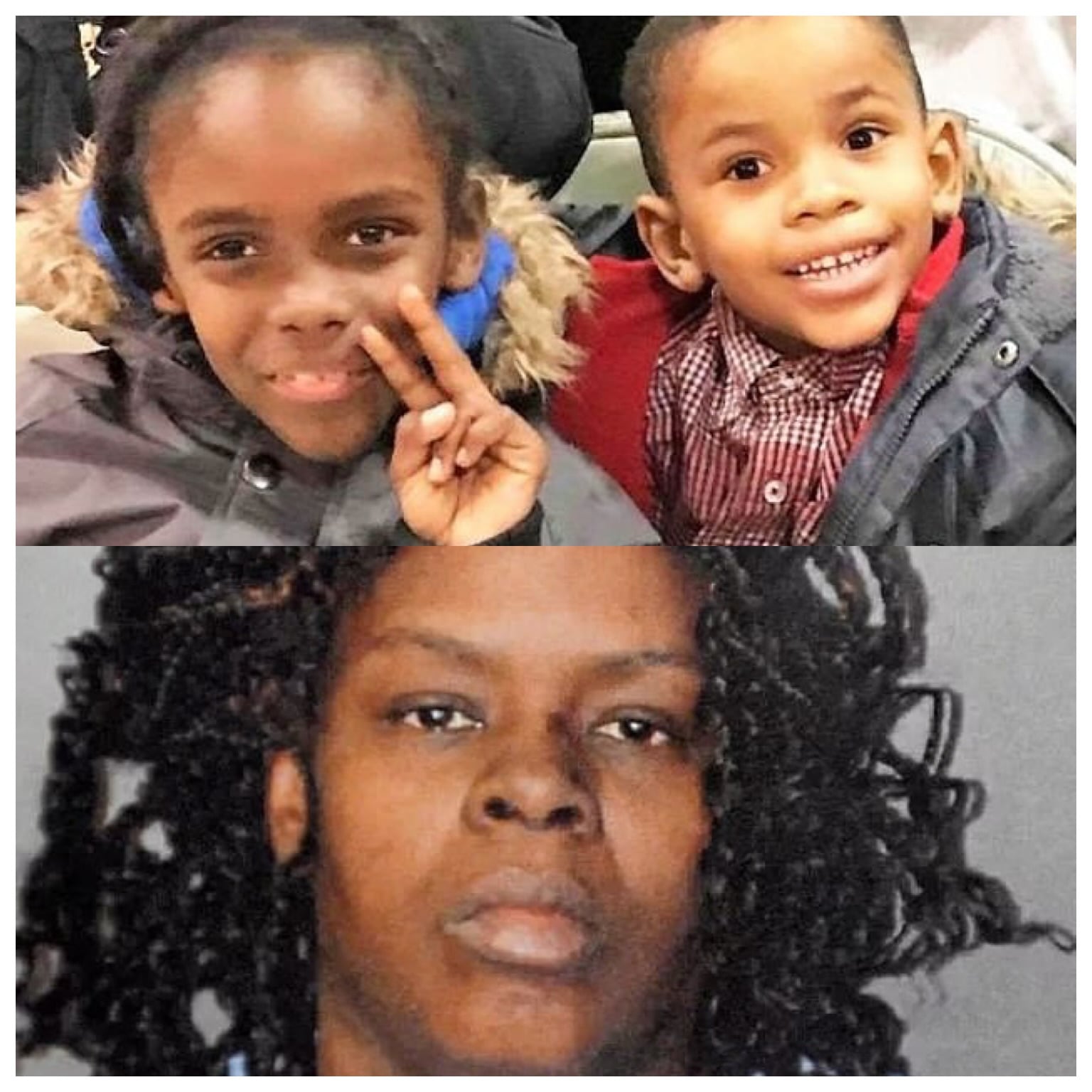
Latarsha Sanders, convicted of murdering her two young sons in a 2018 “voodoo” ritual, will face a new trial after Massachusetts’s highest court ruled that excluding her post-arrest psychiatric records from her original trial amounted to a prejudicial legal error.
A Massachusetts mother sentenced to life in prison for murdering her two young sons has had her conviction vacated, with the state’s highest court ordering a new trial. Latarsha Sanders, 51, was found guilty by a jury in December 2022 of killing her sons, Edson Brito, 8, and La’Son Brito, 5, and was sentenced to mandatory life terms without the possibility of parole. On Thursday, the Massachusetts Supreme Judicial Court ruled unanimously that her original trial was affected by “prejudicial error” after the presiding judge excluded medical records documenting her mental health diagnosis, meaning Sanders is now entitled to a retrial.
What happened in 2018
Prosecutors successfully proved at Sanders’s original trial that she had stabbed her eight-year-old son nearly 80 times and her five-year-old son more than 20 times, in what she described as a voodoo ritual. The killings took place at the family’s home in Brockton in February 2018, after which Sanders contacted emergency services. She has admitted to killing her children.
During her original trial, prosecutors argued that Sanders knew her actions were wrong, pointing to her behaviour in the immediate aftermath of the killings, while her defence maintained she was suffering from severe, untreated mental illness at the time.
The grounds for a new trial
Sanders appealed her conviction on the basis that Plymouth Superior Court Judge William Sullivan had wrongly prevented her defence from presenting the jury with her post-arrest medical records. While awaiting trial in a state psychiatric hospital, doctors had diagnosed Sanders with paranoid schizophrenia, documenting symptoms including hallucinations and delusional thinking that had reportedly gone undetected and untreated for decades. These findings were recorded across thousands of pages of medical records, but Judge Sullivan ruled that this evidence could not be used at trial.
The Supreme Judicial Court agreed with Sanders’s argument, ruling that the exclusion of these records amounted to a prejudicial error that may have affected the jury’s verdict. In its order vacating the conviction, the court wrote: “As a result, the defendant is entitled to a new trial.” The court was careful to stress that Sanders’s guilt in committing the killings was not in question, adding: “There is no doubt the defendant committed these incomprehensible crimes. The sole issue before a Superior Court jury was whether she lacked criminal responsibility.”
What an insanity defence involves
Sanders’s defence attorney argued at her first trial that she was insane at the time of the killings. Under Massachusetts law, a defendant is not considered criminally responsible if, because of a mental disease or defect, they lacked the substantial capacity either to appreciate the wrongfulness of their conduct or to conform their behaviour to the requirements of the law. An insanity defence does not seek to create doubt over whether a defendant committed a crime; rather, it attempts to establish that they lacked criminal responsibility because they did not understand the consequences or wrongfulness of their actions at the time.
What happens next
Sanders’s new trial will take place in Massachusetts Superior Court, where her defence is expected to argue insanity once again, this time with the previously excluded medical records and mental illness diagnoses available for the jury to consider. Prosecutors are expected to retry the murder charges while the defence pursues the same insanity argument.
Should the defence succeed and Sanders be found not guilty by reason of insanity, she would not be released. Instead, she would likely be committed to a secure state psychiatric hospital for evaluation and treatment, with her confinement subject to periodic review by the courts. The Supreme Judicial Court’s ruling does not declare Sanders innocent or disturb the factual finding that she killed her sons; it requires only that a new trial be held because of the legal errors identified in the original proceedings. Sanders will remain in state custody while she awaits the new trial.
