



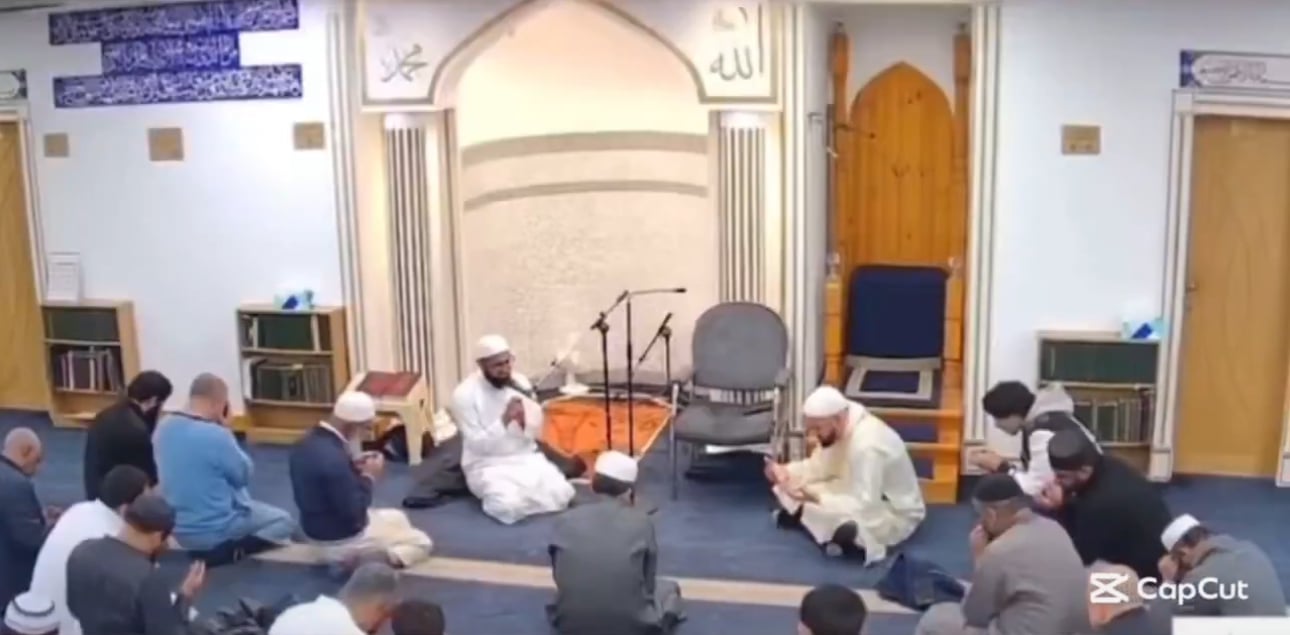
A video circulating online has sparked widespread condemnation after appearing to show imams at a mosque in Dearborn, Michigan, leading prayers calling for the deaths of Jews, Christians and Americans. The footage has reignited debate over religious extremism, free speech protections in the United States and community relations, while prompting calls from some commentators for authorities to examine the circumstances surrounding the recording.
A controversial video filmed at a mosque in Dearborn, Michigan, has generated intense online reaction after appearing to capture religious leaders reciting a prayer calling for the deaths of Jews, Christians and Americans. The footage, which has spread widely across social media, has not been independently verified, and the mosque shown has not publicly confirmed when it was recorded or the circumstances in which the prayer took place. Despite the backlash, no US law enforcement agency has announced any criminal investigation or charges linked to the video.
The footage emerged during a period of heightened political attention on Dearborn, a city with the largest Arab-American population in the United States. It has also drawn renewed scrutiny because of the city’s prominent role in national debates surrounding the Israel-Hamas conflict.
Video fuels debate over free speech and incitement
The recording has prompted calls from some commentators for authorities to determine whether the remarks amount to protected religious expression or cross the legal threshold into unlawful incitement.
Under the First Amendment to the US Constitution, even offensive or extremist speech is generally protected unless it amounts to direct incitement of imminent lawless action or constitutes what courts define as a “true threat”—a high legal standard established through longstanding Supreme Court precedent.
As a result, while the video’s contents have been widely condemned by many online, legal experts have frequently noted that inflammatory speech does not automatically constitute a criminal offence under US law.
Federal agencies, including the FBI, have repeatedly stated that they monitor credible threats linked to religious or ideological extremism regardless of the ideology or group involved.
Dearborn’s political spotlight
The video’s circulation coincides with increased attention on Dearborn following the Democratic primary for Michigan’s US Senate seat.
Abdul El-Sayed secured the Democratic nomination on 4 August after defeating rivals including Haley Stevens, receiving particularly strong support from voters in Dearborn. However, there is no evidence connecting El-Sayed, his campaign or the Democratic primary to the mosque video.
Dearborn has remained a focal point of national political discussion since the outbreak of the Gaza war, becoming a major centre for pro-Palestinian activism while also featuring prominently in wider debates surrounding antisemitism, Islamophobia and freedom of expression.
Religious tensions remain under scrutiny
The circulation of the footage has reignited arguments over the role of sermons and speeches delivered in places of worship.
Some commentators have called for greater oversight where rhetoric appears to encourage hatred or violence, while others have argued that any official response must remain consistent with constitutional protections for freedom of speech and religion.
Community leaders and public officials across the United States have repeatedly condemned antisemitic, anti-Christian and anti-Muslim rhetoric following periods of heightened religious tension connected to the conflict in the Middle East.
At the time of publication, the exact date of the recording and the circumstances in which it was made remain unverified, and no US authority has announced criminal charges in relation to the circulating footage.
