



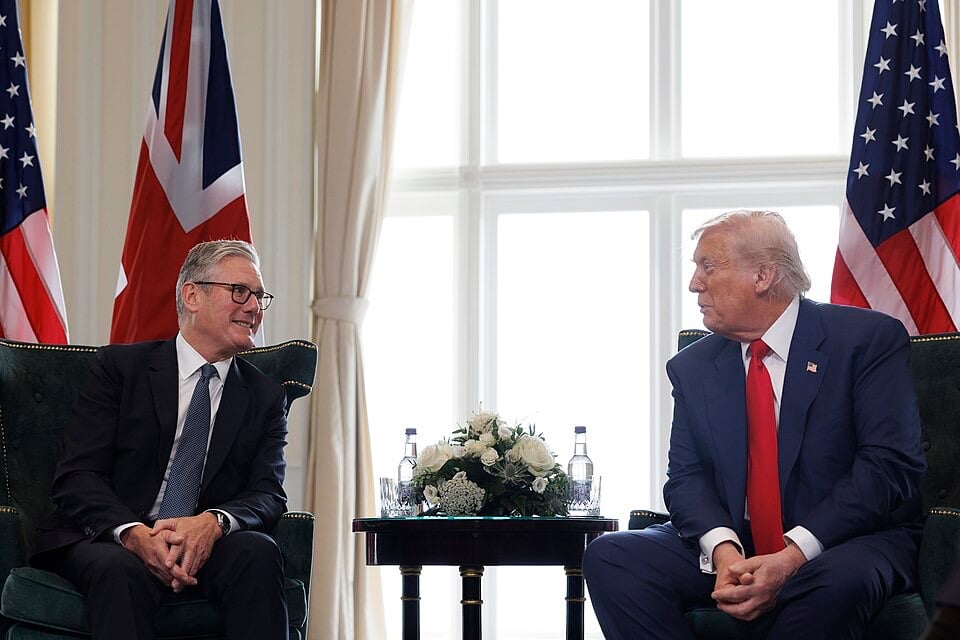
The White House has said it is monitoring the case of Lucy Connolly, who is serving a 31-month prison sentence over a social media post written in the aftermath of the Southport attacks, as tensions grow between the Trump administration and Sir Keir Starmer’s government over free speech.
The White House has confirmed it is monitoring the case of Lucy Connolly, the wife of a Conservative councillor who was jailed for 31 months over a social media post she wrote following the Southport attacks, amid rising tensions between the US and UK governments over free speech. Connolly was arrested on 6 August 2024 in the wake of widespread riots that broke out across the country following the stabbing attack carried out by Axel Rudakubana. Judges have since thrown out her appeal, meaning she will not be released before August.
What Connolly wrote
Writing on the social media platform X in the aftermath of the attack, Connolly posted: “Mass deportation now, set fire to all the fing hotels full of the b***s for all I care, while you’re at it, take the treacherous Government and politicians with them.” She removed the post fewer than four hours later, by which point it had been viewed 310,000 times. The riots that followed the Southport killings included disorder targeting hotels used to house asylum seekers, context that has shaped how prosecutors and courts have treated posts of this kind.
US officials weigh in
Connolly’s case was raised with US Secretary of State Marco Rubio by campaigners seeking to challenge hate speech laws across Europe. A State Department spokesman confirmed that “we are monitoring this matter,” adding that “the United States supports freedom of expression at home and abroad” and remained concerned about infringements on that freedom.
Criticism from British politicians
Connolly’s sentencing has also drawn criticism from British politicians, some of whom have welcomed the White House’s intervention. Former Home Secretary Suella Braverman said Connolly was “effectively a political prisoner and should be freed immediately,” describing her post as “an ill-judged tweet, soon deleted.” Braverman went further, calling the US scrutiny of the case “a sad indictment of the dire state of free speech under Two-Tier Keir,” and argued that free speech was “in crisis” under the current Labour government.
A case that continues to divide opinion
Connolly’s conviction and sentence remain a point of significant disagreement in Britain. Supporters of the sentence point to the context in which the post was written, in the immediate aftermath of the Southport killings and amid real disorder targeting asylum accommodation, arguing that calling for arson attacks on hotels crossed the line from opinion into incitement. Critics, including Braverman and now the US State Department, argue that a 31-month sentence for a deleted social media post represents a disproportionate response that chills free expression. With her appeal now rejected, Connolly is not due to be released before August, and the case looks set to remain a point of tension between London and Washington in the meantime.
