



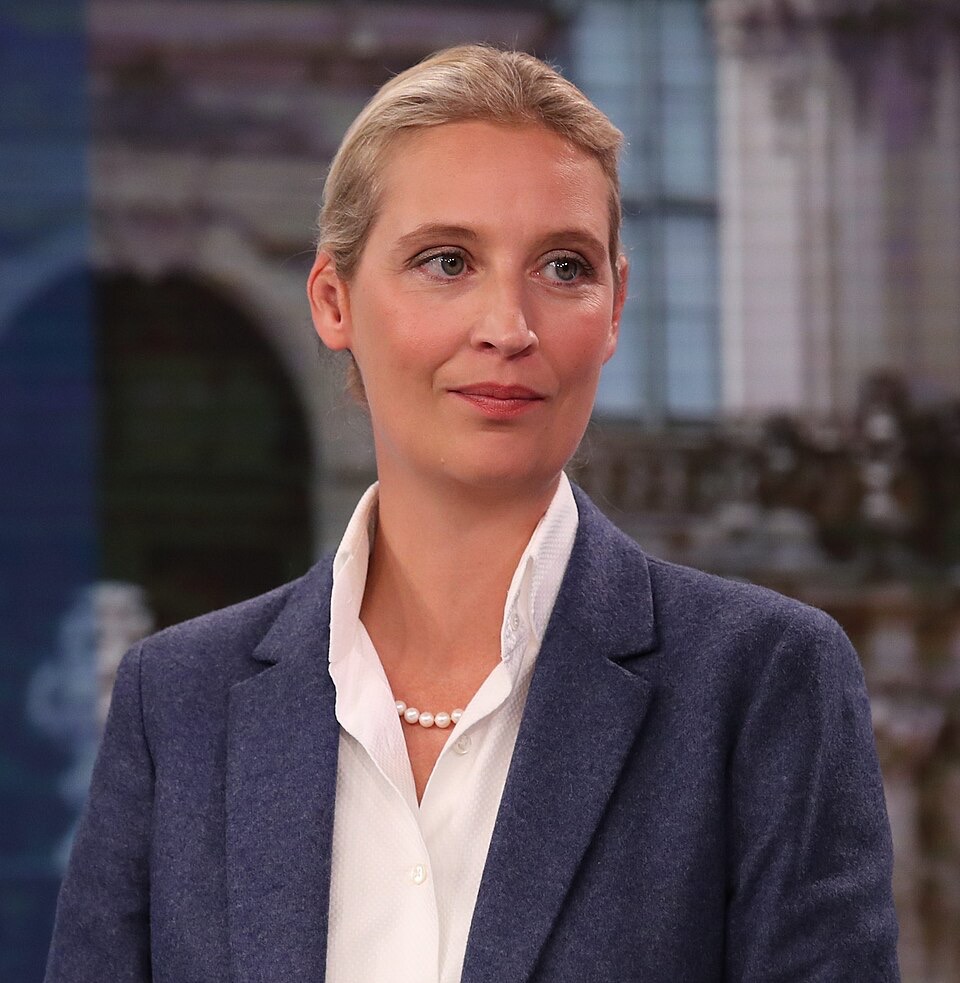
AfD co-leader Alice Weidel has amplified a claim that the deaths of the party’s candidates ahead of local elections in North Rhine-Westphalia are “statistically almost impossible,” even though police have found no evidence of foul play and the AfD’s own regional deputy leader says the available evidence does not support such suspicions.
As many as six candidates standing for Germany’s far-right Alternative for Germany (AfD) party have died in recent weeks ahead of local elections in North Rhine-Westphalia, Germany’s most populous western state. Police have said there is no evidence of foul play in any of the deaths, though the losses mean new ballots will need to be printed and some postal voters will have to recast their votes. The deaths have nonetheless become the centre of a wave of online speculation, after AfD co-leader Alice Weidel reposted a claim from retired economist Stefan Homburg describing the number of deaths as “statistically almost impossible.”
What police have actually found
According to Germany’s DPA news agency, police said the first four deaths were either the result of natural causes or that the cause was not being disclosed out of respect for family privacy. Two further deaths, involving reserve candidates, have since been described in the same terms. Around 20,000 candidates in total are standing in the state’s 14 September local elections, which cover a population of 18 million, and the state’s interior ministry has noted that candidates from other parties, including the Greens and Social Democrats, have also died in the same period.
Weidel amplifies the claim
The scale and timing of the deaths raised questions on social media, and AfD co-leader Alice Weidel made no effort to dampen the speculation, instead reposting Homburg’s claim that the deaths were “statistically almost impossible,” a framing that treats an unverified statistical assertion as though it were an established finding.
The AfD’s own regional deputy pushes back
That framing has not gone unchallenged, including from within Weidel’s own party. Asked about the rumours circulating among AfD supporters, Kay Gottschalk, the party’s number two figure in North Rhine-Westphalia, told Politico’s Berlin Playbook Podcast that the partial information available to him “doesn’t back up these suspicions at the moment.” He said his party wanted the cases properly investigated “without immediately getting into conspiracy-theory territory,” adding that the families involved, who had lost a relative, needed to be treated with care.
A party riding high nationally
The AfD became Germany’s second-largest party in February’s federal elections, expanding its support beyond its traditional eastern heartland into parts of western Germany. In May, Germany’s domestic intelligence agency classified the party as a right-wing extremist organisation, though it later paused that classification pending a court appeal. In three eastern German states, regional branches of the AfD remain officially classified as extremist.
A key electoral test
North Rhine-Westphalia’s local elections are being closely watched as the first electoral test facing voters since Germany’s new federal government took office, and AfD strategists are hoping for significant gains there. In the state’s last elections, held in May 2022, the AfD polled just 5.4 per cent, in a region that forms part of Germany’s industrial heartland in the Ruhr valley and has experienced significant job losses in recent years. By contrast, the party polled 16.8 per cent in North Rhine-Westphalia in last February’s federal elections, and current polling suggests it could come close to matching that figure in September.
Backing from across the Atlantic
The AfD has also drawn support from several prominent figures on the American right, some of whom have accused the German government of using bureaucratic means to suppress the party. Tech billionaire Elon Musk, who endorsed the AfD’s migration policies earlier this year, has repeated his support for the party in recent days, declaring: “Either Germany votes AfD, or it is the end of Germany.”
