



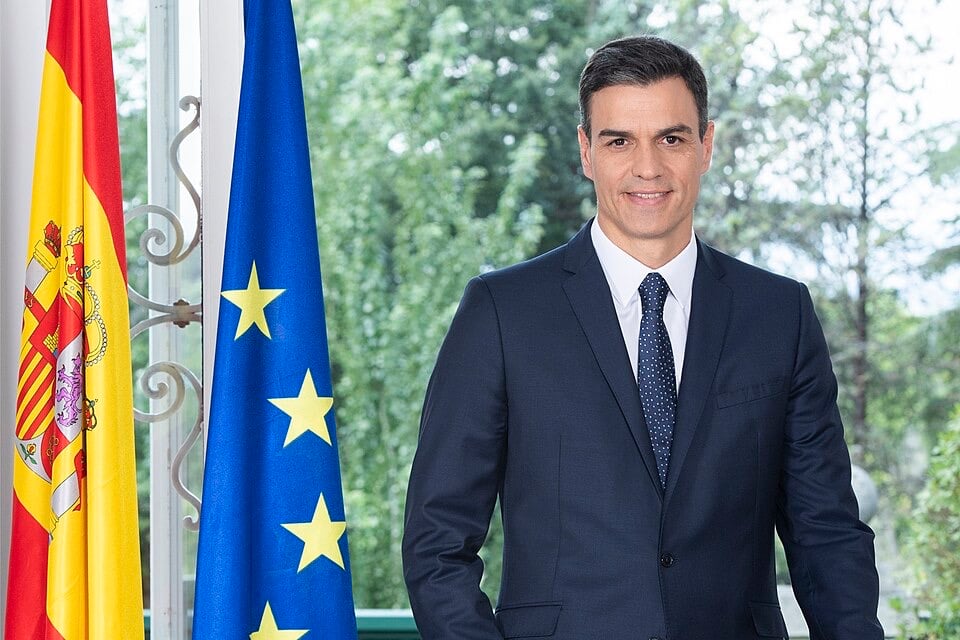
Spanish Prime Minister Pedro Sánchez has accused fellow EU governments of a “selfish” and unlawful response to the escalating crisis in Ceuta, as the confirmed death toll passed 60 and world leaders including Donald Trump and Giorgia Meloni weighed in ahead of an emergency meeting of EU interior ministers.
Spain has accused other European Union member states of responding selfishly to the deepening migrant crisis in Ceuta, as the confirmed death toll from Thursday’s mass border crossing climbed past 60. Around 60,000 people crossed into the North African enclave from Morocco in scenes captured in widely circulated footage, prompting Prime Minister Pedro Sánchez to lash out at fellow EU leaders ahead of an emergency meeting of the bloc’s interior ministers. The crisis has also drawn international attention beyond Europe, with US President Donald Trump describing the events as a “catastrophe.”
A rising death toll and a strained response
Spain has deployed thousands of additional soldiers, National Police officers and Civil Guard personnel to Ceuta in an effort to restore order and secure the border, with the government describing the crossing as one of the largest border security incidents in the country’s modern history. The scale of the arrivals has placed significant strain on emergency services and local infrastructure, with reception centres and emergency shelters in the enclave exceeding their intended capacity, forcing authorities to set up temporary accommodation for thousands of people. Rescue operations have also been launched along the coastline after large numbers of migrants attempted to reach Ceuta by sea, with search efforts continuing for those still reported missing. Humanitarian organisations have warned that the volume of arrivals is placing severe pressure on food supplies, medical services and accommodation, particularly for the most vulnerable migrants.
Sánchez accuses the EU of a selfish response
In a letter addressed to European Commission President Ursula von der Leyen, Sánchez said the European Union “cannot afford this kind of selfish, polarising and unlawful reaction,” raising what he described as serious concerns about how some member states had responded to the crisis. His government has separately drawn a distinction between voluntary solidarity among member states and binding legal obligations under EU treaties, arguing that while empathy may be optional, adherence to European law is not. Spain has accused people-smuggling networks of exploiting the situation, encouraging migrants to attempt the dangerous crossing into the enclave, and Spanish and Moroccan authorities remain in diplomatic contact as both governments try to prevent further large-scale crossings and restore stability along the border.
International reactions
The crisis has drawn commentary from well beyond Europe’s borders. President Trump, speaking at a cabinet meeting on Friday, said of the scenes in Ceuta, “It looks like an invasion of a country.” His administration went further, accusing Sánchez’s left-wing government of deliberately enabling mass illegal migration into Europe, while Vice President JD Vance described the situation as an “Invasion of the West.” Within Europe, Italian Prime Minister Giorgia Meloni called the footage from Ceuta “shocking” and urged European nations to respond urgently to illegal immigration, arguing that “defending the external borders of the Union is not the interest of a single Nation.” Her comments came after 22 of the EU’s 27 member states signed a joint letter calling for tougher action on migration.
Divisions over Schengen
The crisis has exposed clear divisions within the EU over how to respond. Italy has temporarily suspended its border-free Schengen arrangement with Spain, a move backed by Finland and Denmark. The Schengen Area comprises 29 European countries, including France, Germany and Italy, and normally allows people to travel between member states without passport checks. Danish Prime Minister Mette Frederiksen went further still, urging the EU to “consider all options, including a suspension of Schengen co-operation.” France, meanwhile, has tightened checks along its own border with Spain and said it would increase its police presence there by Saturday.
The European Commission has said it remains in contact with Spanish authorities and is monitoring developments ahead of Tuesday’s emergency meeting of EU interior ministers, called after separate requests from Spain and 22 other member states. In a joint letter addressed to Ireland, which currently holds the EU’s rotating presidency, the signatory countries said the crossings had challenged the bloc’s external frontier and risked encouraging further irregular migration. Several member states have used the crisis to call for stronger protection of the EU’s external borders, arguing it demonstrates the need for faster migrant return procedures and closer cooperation with transit countries such as Morocco.
What happens next
The crisis has reignited a broader debate across Europe over migration policy, border security, asylum rules and how responsibility should be shared between member states, with governments divided over the best way forward. Analysts believe the events in Ceuta could have lasting implications for EU migration policy more broadly, with several governments expected to push for tougher external border controls and stronger agreements with neighbouring countries in the coming weeks. Spanish security officials remain on high alert amid concerns that further attempts to enter Ceuta could follow if border controls are not reinforced quickly.
