



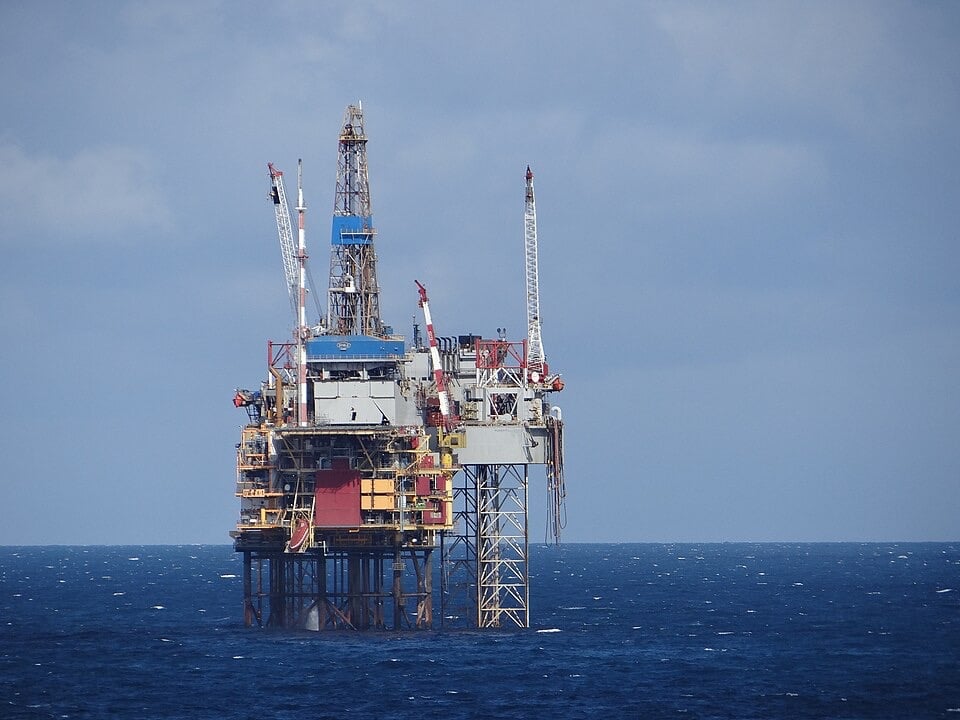
BP’s decision to put its North Sea operation up for sale, ending six decades of UK production, has intensified calls on Andy Burnham to scrap Labour’s ban on new drilling licences before further jobs and investment are lost.
Andy Burnham is facing renewed pressure to abandon Labour’s ban on new oil and gas drilling after BP confirmed it is putting its North Sea business up for sale, bringing 60 years of production in UK waters to a close. The division, which employs 1,100 people, would be “better positioned as part of another company,” BP said. Business leaders described the move as evidence the UK oil and gas industry is “at a crossroads,” while opposition politicians seized on the announcement to demand an urgent change of course from the Prime Minister.
The end of an era for BP in UK waters
BP has operated in the North Sea since 1964, making it one of the pioneers of Britain’s offshore industry and, for decades, a name synonymous with UK oil and gas. Its discovery of the Forties field in 1970, located around 110 miles north-east of Aberdeen, ranks among the largest ever found on the UK Continental Shelf; production there began in 1975 and helped transform the country’s energy sector. BP’s current North Sea portfolio includes the Clair Ridge, ETAP and Glen Lyon production hubs, along with interests in a range of fields west of Shetland and in the central North Sea. Last year, however, its three hubs west of Shetland and two in the central North Sea accounted for barely five per cent of the company’s total daily output of 2.3 million barrels of oil equivalent.
BP has said the planned sale forms part of a broader strategy to concentrate investment on its highest-return global assets while cutting costs and simplifying its upstream operations. The announcement comes just two months after reports that the company had been close to selling the division to smaller rival Ithaca Energy for £2 billion, a deal that ultimately did not go ahead.
Political reaction
Conservative leader Kemi Badenoch was among the first to respond, telling the Prime Minister he “must stop faffing about” and calling on him to approve new oil and gas licences without further delay. Aberdeen South Tory MP Douglas Lumsden, who met BP representatives shortly before the announcement, said it amounted to “a dire warning for the Labour government,” adding that the decision to increase and extend the windfall tax on energy company profits had clearly played a significant role in BP’s thinking.
Scotland’s First Minister, John Swinney, said the news created “a time of real uncertainty for workers,” and argued that the Energy Profits Levy imposed by Westminster was harming Scotland, particularly the north-east, calling on the UK Government to scrap the levy and act urgently to protect jobs. Responding for the Government, Scottish Secretary Douglas Alexander insisted that “North Sea oil is a vital national asset” and said oil and gas would remain part of the country’s energy mix for years to come. His Conservative shadow, Andrew Bowie, was more scathing, accusing the Government of pursuing what he called “Labour’s disastrous Net Zero dogma” and urging Mr Burnham to immediately approve two major North Sea projects while abandoning plans for a ban on new licences.
Industry warns of a wider crisis
The Aberdeen & Grampian Chamber of Commerce (AGCC) attributed BP’s exit to “years of policy uncertainty, punitive taxation and mixed messages” from Government. Its chief executive, Russell Borthwick, described the announcement as “a defining moment” for the new Prime Minister, and said it should not be viewed as an isolated event but as the latest sign that the UK’s offshore sector stands at a crossroads, with an opportunity still open to restore investor confidence before more damage is done.
Brian Gilvary, a former BP finance chief who now chairs rival INEOS Energy, said the combination of the windfall tax and the drilling ban “has effectively shut down investment” in the sector. David Whitehouse, chief executive of Offshore Energies UK, writing in the Mail, called BP’s decision “a warning — and a call to arms” for the politicians shaping the industry’s future, adding that whether jobs and communities dependent on the North Sea survive remains, for now, within the UK Government’s power to decide.
It has been claimed that hostility to new drilling from both Labour and the SNP, combined with a 78 per cent windfall tax on energy company profits, is deterring investors and contributing to the loss of around 1,000 jobs a month. Industry figures say uncertainty over future licensing has already led some companies to delay or cancel investment decisions, with knock-on effects for contractors, supply chains and engineering firms across the north-east of Scotland. The North Sea sector supports tens of thousands of jobs directly and indirectly across the UK, with Aberdeen remaining the industry’s centre.
Rosebank and Jackdaw: a looming test
Within weeks, Energy Secretary Miatta Fahnbulleh must decide whether to approve two major projects: the Rosebank oil field and the Jackdaw gas field, a decision widely seen as a key test for the Burnham government’s approach to the sector. Rosebank, located west of Shetland, is estimated to hold around 500 million barrels of recoverable oil, making it one of the largest undeveloped oil fields in the UK. Jackdaw, in the central North Sea, is expected to supply a significant share of UK gas demand over its operational life if development proceeds. The outcome of both decisions is regarded across the industry as an important signal of the UK’s future investment climate for offshore oil and gas.
The Prime Minister has this week promised a “pragmatic approach,” saying the UK’s offshore resources “can’t be ignored,” though specific details of the Government’s plans remain limited.
The broader argument over drilling policy
Critics of the current approach argue that restricting domestic oil and gas production risks increasing the UK’s reliance on imported fossil fuels, which may carry a higher carbon footprint once transportation and differing production standards are taken into account. Supporters of Labour’s policy counter that approving new fields would do little to lower consumer energy bills, since oil and gas extracted from the North Sea are typically sold on international markets at global prices rather than reserved for domestic use.
Environmental groups continue to oppose further North Sea development, arguing it is incompatible with the UK’s legally binding net zero commitments and would extend the country’s dependence on fossil fuels. Industry representatives, however, maintain that oil and gas will remain part of the UK’s energy mix for decades even as renewable capacity grows, and argue that domestic production is preferable to increasing reliance on imports.
