



James Alan Michaels radioed that he had a problem and was returning to the airport, but crashed in a field short of the runway. His daughter, Tonie, who was flying a second jet, was not hurt.
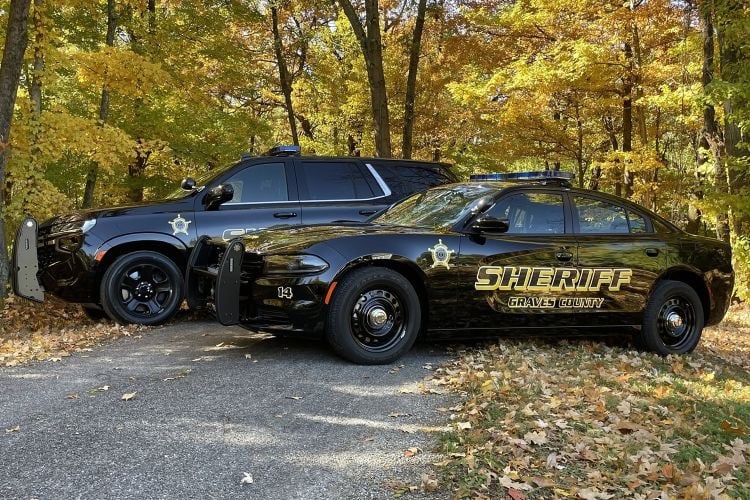
A 70-year-old pilot has died after his plane crashed in western Kentucky, 16 years after he and his daughter survived another crash by lighting signal fires in the Colorado wilderness. James Alan Michaels, from Dousman, Wisconsin, was flying home from a Mississippi air show on Sunday 8 November when he reported a problem shortly after take-off. His daughter, Tonie Michaels, 35, was in her own aircraft at the time. The Graves County Sheriff’s Office said Mr Michaels was the only person on board and died in the crash.
What happened
The two were each flying an L-39 Albatros, a military-style jet, and had stopped at Mayfield-Graves County Airport to refuel. Soon after taking off, Mr Michaels radioed Tonie to say he was having an issue and was heading back to the airport. He did not make it.
Just after 2pm local time, officials received reports that a plane had come down in a field near Spence Chapel Road and Kentucky Highway 131. When emergency crews arrived, the aircraft was “engulfed in flames”, the sheriff’s office said. FOX6 Milwaukee placed the wreckage about 1.5 miles from the airport.
The New York Post reported that Mr Michaels later said he would not be able to land. It also reported that authorities believe he was trying to put down in an open field when the jet hit a ditch, rolled and caught fire. That is a preliminary account of the impact and not an official finding on what caused the emergency.
Radio NWTN reported that Tonie landed her own aircraft safely at the airport and was flown back to Wisconsin that evening by an acquaintance.
The investigation
Graves County Sheriff Jon Hayden confirmed on Tuesday that Federal Aviation Administration (FAA) and National Transportation Safety Board (NTSB) investigators were still at the scene, KBSI FOX23 reported. A specialist recovery company was removing the wreckage, with the work expected to finish late that evening. Deputies are guarding the site, and the public has been asked to stay away. Coroner Brad Jones said an autopsy was being carried out in Louisville on Tuesday. No findings or cause of death have been released.
The FAA identifies the aircraft as an Aero Vodochody L39, and says the NTSB will lead the investigation. The FAA gives an approximate accident time of 2.25pm, while local emergency services recorded calls at 2.08pm. The discrepancy is unresolved. An independent accident database, DTSB, lists the jet as registration N339NA, an L-39C, and records Mr Michaels as holding an Airline Transport Pilot certificate and an instrument rating. That is third-party information that has yet to be checked against the FAA registry.
The NTSB told Fox News that investigators would look at the pilot, the aircraft and the operating environment, including weather, maintenance records, flight-tracking data and air traffic control communications. They will review his licences, ratings and recent flying, along with the 72 hours before the accident. The NTSB says a final probable-cause determination typically takes 12 to 24 months. It has not established whether the emergency was caused by a malfunction, the conditions or something else.
The 2010 crash in Colorado
On 8 July 2010, Mr Michaels and his daughter were flying from Greeley, Colorado, towards Aspen when they met heavy weather near the Continental Divide, according to a National Park Service report preserved in the NTSB’s records. A powerful downdraft stopped him climbing over Forest Canyon Pass, and he was forced to land among trees. The aircraft, an American Champion 8KCAB registered N56BC and owned by Michaels Air Service LLC of Oconomowoc, Wisconsin, was found at 10,800 feet on a slope of about 30 degrees in Forest Canyon, wedged between two large fir trees.
The search lasted about 18 hours. The first emergency locator signal was logged at around 12.30pm, and rangers reached the pair at 6.39am the next morning. Civil Air Patrol aircraft, park rangers and a mountain-rescue team from Boulder took part. A ground team smelled smoke shortly after midnight but could not find the wreckage in the dark. At 5.35am, searchers saw smoke rising through the trees and followed it to the father and daughter.
National Parks Traveler reported at the time that when an aircraft passed overhead, they added aviation fuel and a tyre to one of their fires to make black smoke that would be easier to see from the air. Both were conscious after the impact and moved away from the wreckage because they feared it could catch fire. They had planned to visit Aspen, Telluride and Leadville before heading home.
A helicopter could not land at the wreckage, so two rangers guided them about a mile down the valley to a landing zone. A helicopter from Grand Teton National Park evacuated them at 9.24am on 9 July. The rescue incident commander phoned James’s wife, Barbara Michaels, who is Tonie’s mother, to explain the situation and give updates.
The NTSB attributed that accident to the pilot’s decision-making in difficult mountain conditions, citing low-altitude flight in mountainous terrain, conditions conducive to downdrafts and the aircraft’s inability to climb out. It found no pre-existing mechanical failure, according to the Colorado Pilots Association’s summary of case CEN10LA380. Both wings were partly separated from the fuselage, and the National Park Service said at the time that the cockpit had survived although the canopy was torn away.
